

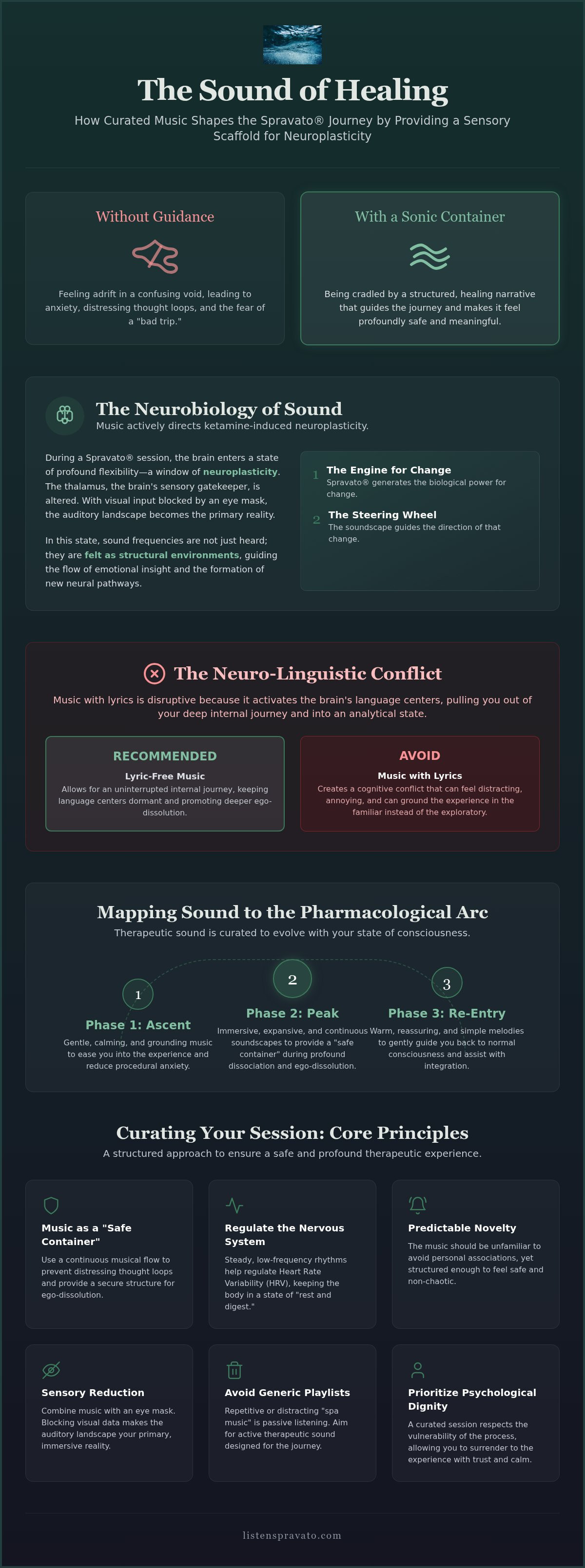
What if the most vital tool in your treatment room isn't the medication itself, but the sound waves moving through your headphones? Understanding how music affects ketamine experience is often the difference between feeling adrift in a confusing void and being cradled by a structured, healing narrative. It's common to feel anxious about the vulnerability of dissociation or the fear of a "bad trip" fueled by a lack of direction. You might even find yourself frustrated by generic playlists that feel repetitive, annoying, or entirely disconnected from your internal state.
We agree that your therapeutic journey deserves more than background noise; it requires a deliberate sensory scaffold. In this article, you'll discover how carefully curated sound acts as a protective container to guide and deepen your session, whether you are using IV infusions or Spravato®. We'll examine the neuro-biological link between auditory input and ego-dissolution, the clinical necessity of lyric-free compositions, and the practical steps to curating a session that feels profoundly safe. This exploration will move from scientific theory to the practical art of therapeutic listening, ensuring you feel fully prepared to engage with your treatment.
Key Takeaways
- Understand the biological synergy between sound frequencies and neuroplasticity, transforming a clinical session into a resonant healing space.
- Learn how music affects ketamine experience by acting as a sensory scaffold that prevents distressing thought loops and provides a safe structure for ego-dissolution.
- Discover the neuro-linguistic reasons why language centers should remain dormant; lyric-free music is essential for an uninterrupted internal journey.
- Explore how to map specific soundscapes to the pharmacological arc of Spravato®, ensuring the music evolves alongside your state of consciousness.
- Identify practical methods for curating a personalized session using structured protocols that prioritize your safety and psychological dignity.
The Neurobiology of Sound: How Music Directs Ketamine-Induced Neuroplasticity
When you receive Spravato®, your brain enters a state of profound flexibility. This window of neuroplasticity is a biological "reset" where neural pathways are more receptive to new patterns and emotional insights. Understanding how music affects ketamine experience begins here. Music doesn't just sit in the background; it actively directs the flow of this plasticity. If the medication is the engine that generates the power for change, the soundscape is the steering wheel that guides the direction of that growth.
During the peak of a session, the brain's thalamus undergoes a significant shift. Normally, the thalamus acts as a sensory gatekeeper, filtering out the constant hum of the external world so you can focus. During dissociation, this gate is altered. As you wear an eye mask to block out visual data, the auditory landscape becomes your primary reality. Because the brain is in a highly plastic state, these sound frequencies aren't just heard; they're felt as structural environments. The music becomes the ground you walk on and the air you breathe within your internal journey.
The Synaptic Connection: Sound as a Catalyst
Music acts as a biological primer for emotional processing. By engaging the limbic system, specific frequencies can "warm up" the parts of the brain responsible for memory and feeling. This is particularly vital for those who feel emotionally blocked. The impact of rhythm also extends to your physical state. Steady, low-frequency rhythms help regulate heart rate variability (HRV), which keeps the nervous system in a state of "rest and digest" rather than "fight or flight."
Scientific evidence supports this calming effect. A study published in September 2025 indicated that while the antidepressant effects of the drug remained consistent, adding music and an eye mask made the experience significantly more meaningful and emotionally rich for participants. This suggests that sound reduces the procedural anxiety often associated with clinical settings, allowing you to surrender to the process with dignity and calm.
Beyond Background Noise: The Active Role of Audio
There's a vital distinction between passive listening and active therapeutic sound. Passive listening is what happens when you hear a generic "spa music" playlist that feels repetitive or distracting. Active therapeutic sound is a curated sequence designed to mirror your pharmacological arc. Projects like Music for Psychedelic Therapy demonstrate how sound can be composed to align with the specific duration and intensity of a session. In this context, music acts as a non-pharmacological co-therapist, holding the space when language fails. Therapeutic scaffolding is the structural use of sound to support ego-dissolution by providing a reliable path for the mind to follow.
Music as a "Safe Container": Providing Structure to Ego-Dissolution
In psychedelic-assisted therapy, the "Safe Container" is a psychological boundary that provides a sense of security when the boundaries of the self begin to dissolve. While many clinics focus on physical amenities like weighted blankets or aromatherapy, the most critical container is actually the auditory one. A continuous, intentional musical flow prevents the mind from falling into "thought loops" or becoming "stuck" in a single, repetitive emotion. This is a primary way how music affects ketamine experience; it provides a reliable current that keeps the journey moving forward, even when your sense of direction feels lost.
The concept of "predictable novelty" is essential for this container. The music should be unfamiliar enough to avoid specific personal associations, yet structured enough to feel safe. This balance allows the mind to explore new emotional territory without feeling overwhelmed by chaos. By providing a predictable structure, the music allows you to surrender to the experience, knowing that the sound will carry you through to the other side.
Tethering the Self During Dissociation
During the peak of a Spravato® session, the ego may fade, leading to a state of profound dissociation. Music acts as a tether, a subtle reminder of presence that doesn't disrupt the internal work. Low-frequency sounds, such as deep cellos or ambient drones, provide a literal sense of "grounding" through their physical resonance. This isn't just a subjective feeling. A randomized clinical trial on music and ketamine showed that carefully selected audio can even help manage physiological responses, such as mitigating spikes in blood pressure during treatment. By providing a steady path for the mind to follow, sound ensures that the peak experience remains productive rather than overwhelming.
The Emotional Resonance of Harmonic Structure
The movement between major and minor keys can shift the entire emotional trajectory of your session. Minor keys often facilitate the exploration of "shadow" work or difficult memories, while major keys offer a sense of hope and expansion. True psychological closure often mirrors musical phrasing; the "resolution" of a chord provides a sense of completion that the brain can mirror. To understand more about the technical side of this arrangement, you can read our guide on Music for Spravato: Sound as Therapeutic Scaffolding. By curating these harmonic shifts, you create a narrative arc that leads toward a feeling of wholeness. For those looking to implement these protocols with precision, exploring a dedicated resource like Listening to Spravato can help you build your own safe container.
The Neuro-Linguistic Conflict: Why Lyrics Disrupt the Ketamine Experience
One of the most frequent questions patients ask is why they shouldn't simply listen to their favorite songs during a session. While your favorite music brings comfort in daily life, it often acts as a cognitive anchor during treatment. This tethering effect is a primary example of how music affects ketamine experience at a biological level. Lyrics require the brain to engage in decoding narrative and meaning, which can pull you out of the expansive, non-linear state required for deep healing.
When you listen to narrative language, you activate specific regions of the brain that are best left dormant during dissociation. This semantic interference creates a conflict between the external story being told in your ears and the internal story your mind is trying to process. Instrumental music, by contrast, provides the emotional texture without the linguistic baggage, allowing for unrestricted internal imagery. It creates a blank canvas for your subconscious to paint upon.
The Language Center vs. The Emotional Center
The brain's language processing hubs, known as Broca’s and Wernicke’s areas, are designed to make sense of the world through structure and logic. During a Spravato® session, the goal is often to suppress the Default Mode Network (DMN), the system responsible for your sense of "self" and repetitive thought patterns. Narrative lyrics can inadvertently re-activate these areas. They trigger "autobiographical loops" where a specific word or phrase reminds you of a past event, a person, or a worry, effectively anchoring you to the very ego you are trying to transcend.
It's helpful to distinguish between "lyrics" and "vocalizations." Chanting, choirs, or wordless vocal textures don't carry narrative weight. These sounds are processed as instruments rather than information. They provide a human resonance that feels supportive without forcing the brain to decode a message, preserving the clinical intentionality of the session. Understanding how music affects ketamine experience through this neuro-linguistic lens allows you to select audio that supports, rather than distracts from, your internal work.
Choosing Instrumental Textures Over Narrative
To maximize the therapeutic potential of your session, prioritize genres that focus on texture rather than melody or story. Ambient soundscapes, neo-classical compositions, and world-fusion are excellent choices. These genres provide a steady, evolving atmosphere that supports the pharmacological arc of the medication. You might feel a strong urge to listen to a favorite artist for comfort, but remember that familiar songs often carry heavy emotional "residue" that can limit your perspective.
Vetting your playlist is a practical step toward a safer journey. Listen through your selections beforehand to ensure no sudden spoken word segments or hidden vocal narratives appear. By choosing instrumental textures, you give your mind the freedom to build its own visual and emotional landscape, unburdened by the external definitions of a songwriter.
The Three Phases of Sound: Mapping Music to the Pharmacological Arc
A therapeutic session is not a static event. It's a dynamic arc that moves from the physical act of administration to the deep waters of dissociation, and finally back to grounded reality. Understanding how music affects ketamine experience requires us to view the two-hour window as three distinct pharmacological phases. Each phase demands a specific auditory texture to ensure the mind feels supported throughout the entire metabolism of the medicine. Treating the session as a single, flat experience is a missed opportunity for deeper healing.
The Onset: Building the Runway
The first 20 minutes of a Spravato® session are a delicate transition period. During this time, pre-session cortisol levels can be high due to the clinical environment or personal anticipation. Rhythmic, steady music acts as a "runway," providing a predictable pulse that helps lower the heart rate and establishes a baseline of trust. Volume management is also critical here; the music should be present enough to mask clinic distractions but soft enough to allow for the focus required during administration. For a deeper look at this initial stage, explore our guide on the Spravato Onset Phase: Music for the First 20 Minutes.
The Peak and the Return: Navigating the Deep
As the medication reaches its peak between 20 and 60 minutes, the ego begins to recede. This is the time for "boundless" music. These are expansive soundscapes that lack a driving beat or a predictable melody, allowing the mind to move in non-linear directions. Without a rigid structure, the music facilitates the feeling of vastness often reported during dissociation. It becomes the environment itself rather than something you are simply listening to. This phase requires a total surrender to the sound, which acts as the primary reality while the external world fades away.
As the peak begins to subside and the medication is metabolized, the music must transition once more. The final phase, the Integration or Return (60, 120 minutes), requires warmth and melodic resolution. This grounded sound helps cement the insights gained during the peak. It acts as a gentle bridge back to the physical world, ensuring you don't feel "dropped" back into reality too abruptly. To master this transition and ensure every minute of your treatment is supported, consider using the protocols found at Listening to Spravato to curate your own pharmacological sound arc.
Curating Your Session: The "Listening to Spravato" Approach
Moving from the theoretical understanding of how music affects ketamine experience to the practical application of these insights is a transformative step. It marks the moment you stop being a passive participant and become the active architect of your own healing. The Listening to Spravato guide, available in print, digital, and audiobook editions, provides the specific framework needed to build this architecture. Created by Justin Page, a conservatory-trained musician who has walked this path as a patient, the book offers detailed, genre-by-genre guides that demystify the selection process. This guide is now used by both patients and clinicians to ensure the sensory environment is as carefully managed as the medication itself.
The audiobook edition offers a unique advantage for those preparing for treatment. It allows you to hear the subtle shifts in texture and resonance that the text describes, providing an immersive preview of the protocols. Understanding the difference between a "grounding" low-frequency drone and a "boundless" peak soundscape is much easier when you can experience them through your own headphones first. This preparation builds a sense of quiet confidence, reducing the anxiety of the unknown and empowering you to act as your own sensory engineer.
The Essential Session Toolkit
High-quality, noise-canceling headphones are a non-negotiable requirement for a successful session. Clinical settings are often filled with the hum of medical equipment, hallway conversations, or the distant ringing of phones. These external sounds can shatter the delicate internal state you are trying to cultivate. By using noise-canceling technology, you ensure that the only input your brain receives is the intentional, therapeutic soundscape you have chosen. It's about protecting the dignity of your internal space.
The interplay between eye masks and sound is equally vital. While the eye mask provides visual deprivation, the headphones provide auditory immersion. Together, they create a sensory vacuum that forces the mind inward, facilitating the deep work of dissociation. It's also wise to prepare an offline "backup" playlist. Digital interruptions or unexpected emotional shifts might require a change in tone, and having a pre-downloaded alternative ensures your container remains intact without needing to look at a screen or rely on a spotty connection.
Implementing the Protocol
Don't hesitate to discuss your musical choices with your Spravato® clinician. Many providers welcome this level of patient agency, as it demonstrates a commitment to the therapeutic process and helps them understand your needs. You can use the curated playlists provided by Justin Page as a starting point, or apply the book's framework to build something entirely personal that resonates with your specific history and goals. By treating your session music with the same intentionality as your medical protocol, you maximize the potential for lasting neuroplastic change.
Get the complete Listening to Spravato guide for your next session
Steering the Narrative of Your Recovery
Your therapeutic journey is more than a biological reaction; it's a sensory experience that requires meticulous curation. By understanding how music affects ketamine experience, you transform a clinical appointment into a directed, resonant narrative of growth. We've explored how sound acts as a structural scaffold for neuroplasticity, provides a safe container for ego-dissolution, and why instrumental textures are essential to prevent linguistic interference. Mapping your audio to the three phases of the pharmacological arc ensures you remain supported from the first spray to the final integration.
You don't have to navigate this complex landscape alone. To implement these protocols with precision, you can Order the "Listening to Spravato" Guide & Audiobook. Written by a conservatory-trained musician and patient, this resource is endorsed by leading esketamine clinics and includes curated playlists for every treatment phase. Take agency over your sensory environment and walk into your next session with the quiet confidence of a prepared traveler. Your path to healing is waiting to be heard.
Frequently Asked Questions
Can I listen to my favorite music during my Spravato session?
While it's tempting to seek comfort in the familiar, listening to your favorite music is usually discouraged. Favorite songs often carry heavy emotional residue or specific memories that anchor your mind to the external world. This prevents the "un-tethering" required for deep therapeutic work during a Spravato® session. To achieve a truly expansive state, choose unfamiliar, curated soundscapes that allow your subconscious to explore new territory without the weight of personal history.
Why is instrumental music preferred over songs with lyrics for ketamine therapy?
Instrumental music is preferred because it avoids "semantic interference." Lyrics force the brain's language centers to decode narrative meaning, which keeps the Default Mode Network (DMN) active. During treatment, you want these regions to remain dormant so you can engage with internal imagery. Instrumental textures provide the necessary emotional support without the linguistic baggage that can pull you out of a profound, non-linear experience; they allow the mind to wander freely.
How loud should my music be during a ketamine infusion or Spravato treatment?
Your volume should be set at a level that feels immersive but never overwhelming. It needs to be loud enough to mask the ambient sounds of a clinical setting, such as equipment hums or hallway voices, yet soft enough to remain a supportive background. Many patients find that lowering the volume slightly during the initial nasal spray administration and increasing it as the onset begins helps maintain a sense of calm control throughout the peak.
What happens if I don’t like the music playing during my session?
If the music feels repetitive or annoying, it can create a sense of "stuckness" that hinders your progress. This is why having a pre-vetted backup playlist is a vital part of your session toolkit. If you find yourself distracted by the audio, take a mindful breath and gently switch to your secondary selection. Empowering yourself to adjust your environment ensures that you remain the architect of your own sensory safety and psychological dignity.
Is it better to use headphones or listen to music through speakers?
High-quality, noise-canceling headphones are far superior to speakers in a clinical environment. They provide a level of isolation that speakers cannot match, creating a private "sensory vacuum" that facilitates deeper immersion. This isolation is critical for protecting the dignity of your internal journey; it ensures that the only input your brain receives is the intentional, therapeutic soundscape you have carefully selected for the session. It also helps block out distracting clinic staff movements.
How does music affect the "dissociation" aspect of ketamine?
Music provides a structural scaffold that guides you through the dissociation process. Understanding how music affects ketamine experience reveals that sound acts as a reliable tether when your sense of self begins to fade. Instead of feeling lost in a confusing void, the auditory environment provides a "pathway" for the mind to follow. This structure allows you to surrender to the experience with a sense of safety, purpose, and quiet confidence.
Are there specific genres that work best for treatment-resistant depression?
Genres like ambient soundscapes, neo-classical, and world-fusion are highly effective for those managing treatment-resistant depression. These styles prioritize texture and atmosphere over rigid melodies or driving beats. The Listening to Spravato guide offers detailed, genre-by-genre recommendations that help you build a playlist designed to support the pharmacological arc of the medication. These selections are curated to foster a sense of hope, emotional resonance, and deep internal expansion.
Can music prevent a "bad trip" during ketamine therapy?
While no tool can guarantee a specific outcome, intentional soundscapes significantly reduce the risk of a distressing experience. Music acts as a protective container, providing a predictable current that prevents the mind from falling into fearful "thought loops." By learning how music affects ketamine experience, you can use rhythmic, grounding sounds to lower pre-session cortisol and maintain a steady, calm presence even during the most intense phases of ego-dissolution.


