

The peak of your session begins to recede, and the familiar walls of the clinic slowly come back into focus. For many, this transition feels like a sudden descent from a high altitude, leaving you disoriented or struggling to hold onto the fleeting insights of the experience. It's a vulnerable moment where external noise or a lack of structure can easily disrupt the sense of peace you worked so hard to achieve. You aren't alone in feeling that the most difficult part of the journey is actually the return to the ordinary world.
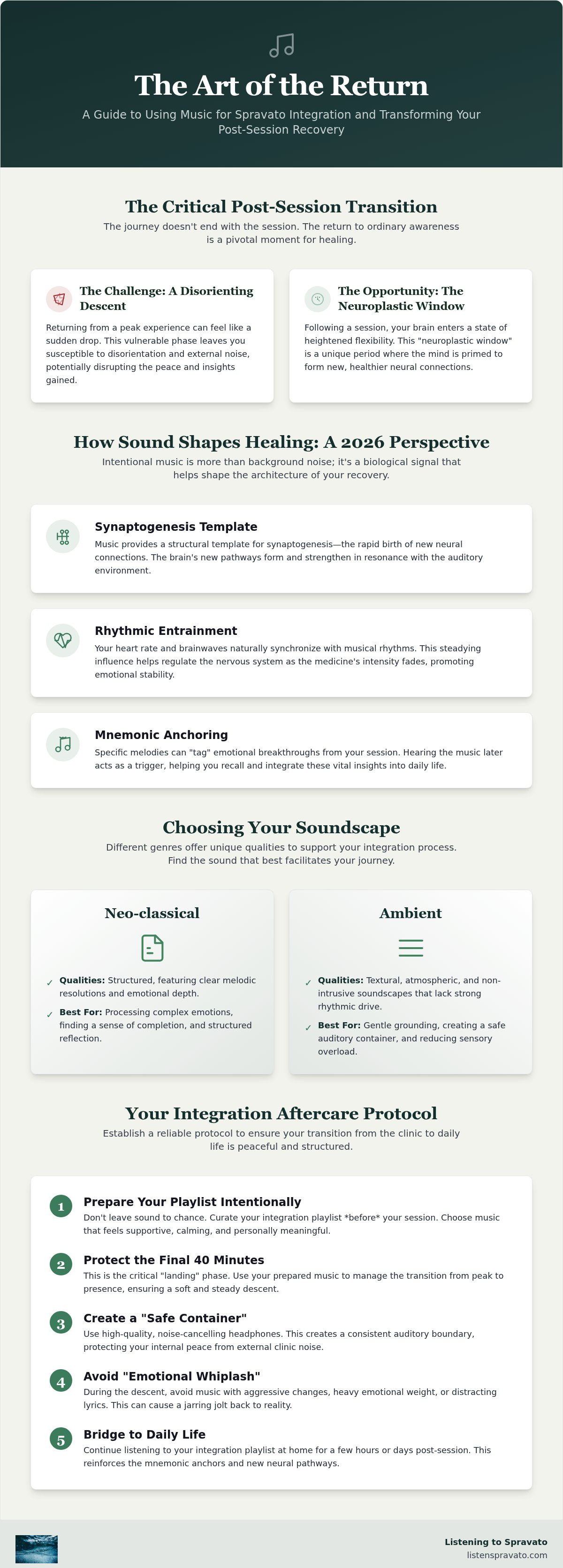
This article provides a clear framework for using music for spravato integration to anchor your therapeutic breakthroughs. By selecting the right auditory environment, you can extend the window of neuroplasticity and transform the "comedown" into a period of deep emotional safety. We will examine how to build a personalized aftercare checklist that bridges the gap between your clinical session and your daily life in 2026, ensuring that every note serves as a supportive companion on your path to recovery. Through intentional sound, you can turn a disorienting transition into a structured facilitation of long term healing.
Key Takeaways
- Understand how to utilize the open neuroplastic window following your session to anchor fleeting insights through intentional sound.
- Learn the 2026 scientific perspective on how rhythmic entrainment supports synaptogenesis and emotional regulation during the "comedown."
- Compare the grounding qualities of Neo-classical and Ambient genres to find the soundscape that best facilitates your unique integration process.
- Establish a reliable aftercare protocol using music for spravato integration, ensuring your transition from the clinic to daily life remains peaceful and structured.
- Discover how specialized "Coming Back" protocols can transform your post-session recovery into a period of profound personal growth.
What is Spravato Integration Music and Why Does it Matter?
Integration is the delicate art of making sense of the profound. In the context of esketamine therapy, it refers to the process of weaving the abstract insights gained during a session into the fabric of your daily life. It's the difference between a fleeting dream and a lasting transformation. When the peak of the medicine begins to recede, your brain doesn't simply return to its previous state. Instead, it enters a "neuroplastic window," a period of heightened flexibility where the mind is uniquely capable of forming new, healthier neural connections. Utilizing music for spravato integration during this time is not just about relaxation; it is a strategic clinical intervention.
During the two-hour observation period, the clinic environment can be unpredictable. Distant conversations, the hum of an air conditioner, or the sound of a door closing can feel jarring to a sensitive nervous system. Music serves as a "safe container," a consistent auditory boundary that protects your internal peace from external disruption. As the sense of dissociation fades, sound provides a gentle tether, grounding your physical body and helping you inhabit your physical space with a sense of dignity and purpose.
The Transition from Peak to Presence
As the primary effects of esketamine (Spravato) begin to wane, the brain undergoes a significant shift. You move from an "unbound" state, where the usual constraints of the mind are relaxed, back toward the Default Mode Network (DMN). This is the part of the brain associated with your sense of self and routine thinking. This transition is a critical phase of the journey. If the music choice is too aggressive or emotionally heavy at this stage, it can cause "emotional whiplash," a sudden and uncomfortable jolt back to reality that can lead to anxiety or a sense of loss.
Intentionality in the final 40 minutes of your clinic stay is paramount. You are essentially landing a plane. The descent requires a specific rhythm and atmosphere to ensure the insights you gathered at high altitudes remain intact as you touch down. A structured approach to music for spravato integration ensures this landing is soft, steady, and meaningful.
Music as a Mnemonic Anchor
The human brain has a remarkable ability to link sound with memory. This is why a certain song can instantly transport you back to a specific moment in your past. In therapy, we use this as "musical tagging." By listening to specific, curated melodies during the integration phase, you can "tag" the emotional breakthroughs or realizations you experienced during the peak. When you hear those same sounds later, they act as a mnemonic anchor, triggering the recall of those vital insights and making them easier to apply to your recovery.
- Structure: Music provides a predictable framework for the mind to follow.
- Resonance: Melodies can mirror the emotional depth of the experience.
- Recall: Sound bridges the gap between the subconscious and conscious mind.
Integration music is a bridge between the internal journey and the external world.
The Science of Sound and Neuroplasticity in 2026
Esketamine facilitates synaptogenesis, which is the rapid birth of new neural connections within the brain. In 2026, clinical understanding has evolved to recognize that these nascent pathways are highly malleable during the hours following treatment. Music for spravato integration acts as a template for these new connections. It isn't merely pleasant background noise. It is a biological signal that helps shape the architecture of your recovery. Rhythmic entrainment allows your heart rate and brainwaves to synchronize with the music, providing a steadying influence as the medicine's intensity fades.
Your brain is exceptionally sensitive to timbre and texture during this phase. A warm cello or a soft, resonant synthesizer feels physically supportive to a mind that is still "wide open." This heightened sensory state is why "resolving" chords are so vital. When a musical phrase moves from tension to a clear, harmonic resolution, it signals a sense of completion to your nervous system. This mirrors the psychological need to find closure after a deep session. Much of the research on music therapy for depression emphasizes how these structural elements can foster emotional regulation and stability.
Why Lyrics Re-enter the Picture
During the peak experience, lyrics often act as a tether to the ego, which can be counterproductive. However, as you enter the integration phase, language processing begins to return. Lyrics can now serve a purpose. They help you "label" the complex emotions you've just navigated. Choosing tracks with poetic depth or simple mantras can be incredibly grounding for the drive home. It provides a narrative structure to the abstract feelings of the session, helping you translate a silent experience into a conscious insight.
The Role of 432 Hz and Therapeutic Frequencies
The conversation around 432 Hz and "healing frequencies" has gained significant traction in 2026. Within a clinical context, these frequencies provide a "sonic buffer" against the harsh, high-frequency noise of the outside world. Binaural beats are particularly useful here. They can help your brain transition from the deep, dream-like Theta states of the session back to the alert Beta states required for daily life. This intentional transition prevents the "sensory shock" that often occurs when leaving the clinic. For those seeking a deeper dive into these auditory protocols, the curated playlists found in our guide offer a structured way to navigate this sensitive window with dignity and grace.
Choosing Your Soundscape: Integration Genre Comparison
The music that carries you through the peak of a session is often vast and formless, designed to facilitate a sense of expansion. However, as the medicine begins to fade, your needs shift. Music for spravato integration requires a return to structure, melody, and rhythm. We categorize these soundscapes by their grounding or uplifting qualities. Grounding music helps you inhabit your body again; uplifting music prepares your spirit for the world outside. Selecting the right genre is a matter of intentional curation that respects the sensitivity of your nervous system.
A vital element of this phase is the "tempo ramp-up." As your awareness returns, your music should mirror that physiological awakening. Starting at approximately 60 beats per minute (BPM) aligns with a relaxed resting heart rate. As you move toward the end of your clinic stay, transitioning to tracks at 90+ BPM helps nudge the brain back toward an alert state. This gradual increase prevents the lethargy that can sometimes follow a session. Familiarity also plays a crucial role. While the peak might benefit from new sounds, the integration phase is often best served by music you already know and love. Familiar melodies provide a sense of safety and continuity, acting as a bridge to your personal identity.
Neo-Classical and Modern Piano
The piano is a tactile instrument. There's a "human touch" in the sound of a wooden hammer striking a metal string that provides a profound sense of physical reality. Neo-classical artists, such as Max Richter or Joep Beving, offer a structured harmonic environment that isn't emotionally demanding. The clarity of the piano helps the mind organize scattered thoughts. Strings, particularly the cello, can also be instrumental during the comedown. Their deep resonance can facilitate a gentle emotional release, allowing you to process the session's insights without feeling overwhelmed.
Nature Soundscapes and Field Recordings
Human beings possess an innate "biophilia," a biological pull toward the natural world. Nature soundscapes, such as the steady rhythm of ocean waves or the soft rustle of wind through trees, can be incredibly effective for integration. These field recordings help re-anchor your senses to the earth. They provide a "sonic buffer" that softens the transition from the internal journey to the external environment. It's important to be selective, however. Avoid recordings with startling or "predatory" sounds, such as sudden, loud bird calls or cracking branches, which can trigger a startle response. Aim for consistent, gentle textures that suggest a peaceful, living world.
The Integration Checklist: Setting the Stage for Aftercare
Preparation is the foundation of a successful recovery journey. When you step out of the clinical environment, the world can feel loud and demanding. Having a structured plan allows you to maintain the internal quiet you've cultivated during your session. This checklist is designed to help you manage the sensory transition with mindful intentionality, ensuring your music for spravato integration remains a reliable support system.
- Create a 20-minute "Transition Playlist." This is specifically for the walk from the treatment chair to your vehicle. It acts as a sonic bridge, softening the impact of clinic hallways and lobby noise.
- Verify your hardware. Ensure your headphones are fully charged before you arrive at the clinic. The 2-hour post-session window is critical, and a dead battery can cause unnecessary stress.
- Select one "Anchor Track." Choose a single piece of music that feels exceptionally safe and grounded. Play this track whenever you feel overwhelmed or "lost" in the 48 hours following treatment.
- Check for "Fading" structures. Avoid playlists with abrupt endings or jarring silences between tracks. Smooth crossfades help maintain the "container" of the experience.
The Immediate Post-Session (0-2 Hours)
The first two hours are a time for reflection. Minimize verbal communication during this window; let the music speak first. Talking too soon can sometimes "crystallize" an experience before you've had the chance to fully feel its depth. Use "Soft Focus" music, such as gentle ambient textures, while journaling your initial thoughts. For those who find comfort in a guided experience, the audiobook version of Listening to Spravato provides a supportive narrative and immersive music references to help you navigate these early moments.
The Integration Window (2-48 Hours)
The 48 hours following your session are the most vital for long term change. This is the heart of music for spravato integration. During this time, you can use your curated soundscapes to revisit the "feeling" of the session without the presence of the medicine. This reinforces the new neural pathways being formed.
Create an "Integration Sanctuary" at home. Set up a dedicated speaker in a quiet corner where you can sit and listen without distraction. Unlike the peak of the treatment, lyrical music is now a helpful tool. Choose songs with lyrics that match your therapeutic goals or offer a sense of hope. These words can help you label and process the emotions that surfaced during your journey. To build your perfect aftercare kit, explore our curated playlists and guides designed to support every phase of your recovery.
Transitioning with the "Listening to Spravato" Guide
The journey toward mental wellness does not conclude when you step out of the clinic doors. In many ways, the most vital work begins during the return to your daily environment. The Listening to Spravato book serves as a permanent reference for this delicate transition, offering a structured roadmap for the hours and days following your treatment. Central to this resource are the "Coming Back" protocols, which provide specific instructions on how to stabilize your nervous system and preserve the clarity gained during your session. By utilizing music for spravato integration as outlined in the text, you ensure that your recovery is supported by a consistent, scientifically grounded framework.
Clinicians in 2026 are increasingly adopting these guides to standardize integration protocols within their practices. Having a unified resource allows providers to offer a higher level of aftercare that extends beyond the mandatory two-hour observation period. For patients who find visual focus difficult immediately following a session, the audiobook edition provides a gentle, immersive alternative. It delivers the same specialized guidance through a medium that respects your sensory sensitivity, allowing you to simply close your eyes and listen as you begin to process your experience.
A Companion for the Journey
Justin Page brings a unique perspective to this guide, blending his background as a conservatory-trained musician with his personal insights as a Spravato patient. This "Learned Guide" approach ensures the content is both technically precise and deeply empathetic. One of the most significant benefits of the book’s curated playlists is the relief from "decision fatigue." During the integration phase, the last thing a patient needs is the stress of scrolling through thousands of tracks to find something that feels "right." These meticulously selected soundscapes do that work for you, providing an immediate sense of safety. There is a profound sense of dignity and purpose found in a structured integration plan that honors the depth of your internal experience.
Next Steps: From Session to Life
It is helpful to view integration not as the end of a medical session, but as the true beginning of your healing process. The insights gathered under the medicine are seeds; the integration phase is the soil in which they grow. We encourage you to explore the full suite of resources available at listenspravato.com to further personalize your aftercare routine. For those seeking a more comprehensive understanding of how to prepare for every phase of treatment, our spravato patient guide offers the deeper preparation necessary for a transformative journey. With the right tools and a mindful approach to sound, you can bridge the gap between the clinic and a more resonant, connected life.
Cultivating Lasting Resonance in Your Recovery
The hours following your treatment are not merely a time to wait for the medicine to wear off; they represent a significant opportunity to solidify the progress you've made. By utilizing music for spravato integration, you transform a potentially disorienting transition into a period of structured healing. We've explored how specific frequencies and genres, like modern piano or nature soundscapes, serve as a protective container for your mind as it returns to its daily rhythm. This methodical approach ensures that the insights you gathered don't fade, but instead become a permanent part of your narrative.
To fully master these protocols, order your copy of Listening to Spravato for a complete integration guide. Authored by a conservatory-trained musician and used by clinics worldwide, this resource is available in print, digital, and audiobook formats. It provides the meticulous curation you need to move from the clinic chair to a life defined by newfound clarity. You have the tools to land safely. Now, let the music carry you home.
Frequently Asked Questions
Can I listen to music with lyrics during the Spravato integration phase?
Yes, lyrics are often beneficial during the integration phase. While lyrics can be distracting during the peak of the treatment, they become useful as your language processing returns. Words can help you label complex emotions and provide a narrative structure to your experience. Choosing tracks with poetic depth or meaningful mantras during your return home can bridge the gap between abstract feelings and conscious insights.
How long should my integration playlist be?
An effective integration playlist should span at least two hours to cover the critical post-session window. It's helpful to break this down into segments: a 20-minute "transition" set for leaving the clinic and a longer set for your initial time at home. This ensures you have a continuous sonic container that prevents abrupt silences from disrupting your peace. Longer playlists help you stay anchored while the brain's neuroplastic window remains open.
Should I use the same music for every integration session?
Using the same music for every integration session can build a powerful sense of safety and "musical tagging." Familiar melodies act as mnemonic anchors, making it easier to return to a grounded state. However, if you feel a session requires a different emotional tone, feel free to adjust. The goal of music for spravato integration is to provide a reliable framework, so consistency is generally more helpful than constant change.
What happens if I don’t use music during my comedown?
Without music, the transition back to reality can feel jarring or hollow. You are more likely to experience sensory shock from clinic noises or traffic, which can cause emotional whiplash. Music serves as a buffer that protects your nervous system. It also helps you retain insights that might otherwise slip away as the Default Mode Network re-engages and the medicine's primary effects begin to fade after the session.
Is it better to use headphones or speakers for integration at home?
Headphones are superior for the clinic and the commute because they offer essential noise isolation. Once you are in your integration sanctuary at home, switching to high-quality speakers can be more grounding. Speakers allow the sound to fill the room, helping you feel physically present in your environment. This shift from the internal focus of headphones to the external resonance of speakers mirrors your intentional return to the world.
How does the "Listening to Spravato" book help with integration?
The "Listening to Spravato" book provides a comprehensive roadmap for the entire treatment journey. It features genre-by-genre guides and specific "Coming Back" protocols that remove the stress of decision-making. By following the structured plans authored by Justin Page, you can focus on your healing rather than technical details. It's a supportive companion that ensures you use music for spravato integration effectively and with clear, mindful intentionality.
Can music help if I had a "challenging" or scary session?
Music can be an invaluable anchor if you've had a difficult or overwhelming experience. Familiar, grounding tracks provide a sense of order and safety when the mind feels fragmented. Soft, resonant instruments like the cello or modern piano can facilitate a gentle emotional release, helping you process the scary elements without re-traumatization. Sound provides a steadying rhythm that reminds your nervous system that you are safe and back in your body.
What are the best genres for the drive home after treatment?
Neo-classical and modern piano are excellent choices for the drive home because they provide structure without being demanding. These genres offer a human touch that feels physically real and grounding. Nature soundscapes or Organic Electronic tracks with a steady tempo of 60 to 90 BPM are also effective. These sounds help re-anchor your senses to the earth and provide a soft buffer against the overstimulation of the outside world.


