

What if feeling anxious before Spravato isn’t a sign that you’re unready, but a cue to ask for more support and clarity? If you’re experiencing spravato anxiety before treatment, you may be wondering what the session will feel like, whether your nerves could get in the way, or what to tell your care team. Those questions are understandable. Nervousness doesn’t mean you’re failing or that treatment can’t proceed; it’s information you can share with your team.
This guide explains why anxiety may arise before a session and offers a simple way to prepare: identify what is worrying you, write down questions, and tell your care team what support might help. You’ll also find gentle preparation ideas, including intentional music choices that may help create a more familiar atmosphere for some people. Music and grounding exercises are optional, not substitutes for clinical guidance. You don’t have to feel perfectly calm to speak up. Start with what you’re noticing and take the next step with support.
Key Takeaways
- Anticipatory anxiety is worry about an upcoming event, not a diagnosis or proof that you’re unready.
- With spravato anxiety before treatment, uncertainty, waiting, and concerns about control can shape what feels difficult. Identifying a trigger can help you decide what to ask.
- Try a flexible preparation sequence: name the worry, choose one comfortable grounding action, and jot down questions for your care team.
- Tell your care team what feels worrying and what kind of support might help. They can discuss your concerns and guide decisions about treatment.
- Listening to Spravato’s book, audiobook, and playlists offer optional educational and listening resources, not medical care or a guaranteed way to ease anxiety.
Why anxiety before Spravato can make sense
A Spravato appointment can feel significant, especially if the setting or treatment process is unfamiliar. You may feel hopeful, uncertain, or both. Nervousness doesn’t mean you’re doing anything wrong. Anticipatory anxiety describes worry about an event that hasn’t happened yet. It’s an experience, not a diagnosis.
Learning about the treatment may make the appointment feel less abstract. For a general overview of the medication and its background, read Esketamine (Spravato). General information can’t tell you exactly what your own appointment will feel like, however. Experiences differ, and your Spravato care team is the source for guidance about your individual treatment.
What might be behind the nerves?
Sometimes the worry is broad: “I don’t know what to expect.” It may also point to a practical question about the clinic environment, sensory details, or the treatment process. When information is missing, it’s easy to get caught up in possibilities. You don’t need to find the perfect question before starting a conversation. Even saying, “I’m not sure what part worries me most,” gives your team a place to begin.
Not everyone feels anxious before treatment, and concerns vary from person to person. Notice whether your unease is mostly about the unknown or tied to something specific, such as an instruction you don’t understand or a detail of the appointment you want clarified. That distinction can help you explain what you need without assuming your experience should match anyone else’s.
Does anxiety mean you are not ready for treatment?
Not by itself. Feeling nervous isn’t a reliable measure of readiness, and it can’t predict how a session will go or what outcome to expect. Anxiety deserves attention, but it does not determine treatment results.
If distress feels intense, changes suddenly, or raises new questions for you, tell your Spravato care team before treatment. Describe what you’re experiencing in plain language: what you’re worried about, when it tends to arise, and what information or support might help. Your team can offer clinical guidance and discuss concerns relevant to your care. This article can help you prepare for that conversation, but it can’t assess your symptoms or determine whether treatment should proceed.
How uncertainty and anticipation can intensify before a session
Unanswered questions leave room for the imagination to supply its own answers. If you’re unsure about timing, the clinic environment, or what will be expected of you, your thoughts may circle through possibilities before you have reliable information. That’s one reason spravato anxiety before treatment can feel more intense as an appointment approaches. It doesn’t mean you’re imagining things or that you’ll experience any particular sensation.
Why the unknown can feel especially difficult
Waiting can give uncertainty more space. A new setting, unfamiliar sounds, or concern about not feeling fully in control may add to the emotional build-up. These are possible sources of worry, not universal parts of the experience. Your questions may be quite different.
For practical details, the manufacturer’s Preparing for your SPRAVATO® treatment guide outlines information about treatment day, including the monitoring period and transportation. Use it as a starting point, then write down what it doesn’t answer for you. For example, note questions about the clinic’s instructions, what to bring, or what part of the visit feels unclear. A short list can turn a vague “What if?” into specific questions your care team can address.
When thoughts begin to repeat
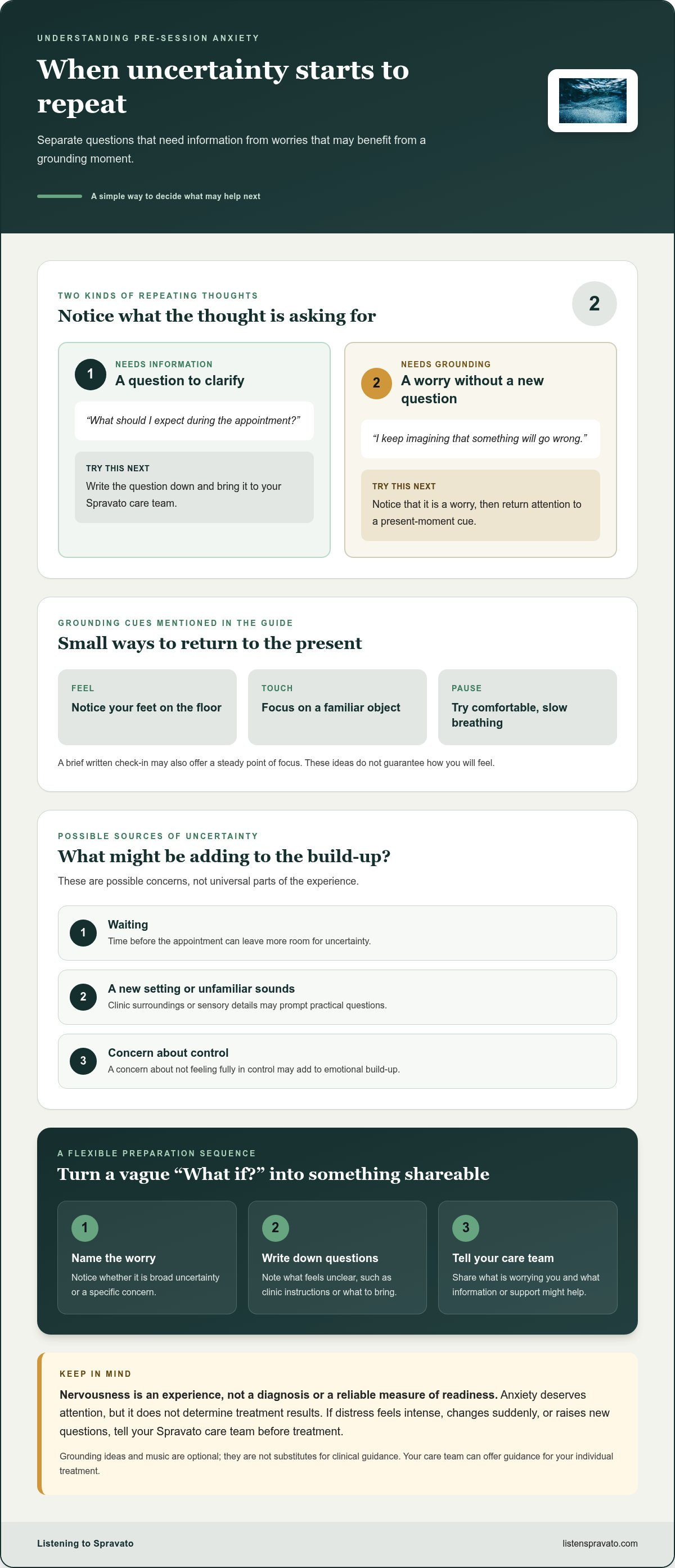
A concern may return even after you’ve considered it. That repetition isn’t a personal failing, and it doesn’t by itself mean you have an anxiety disorder. Try sorting the thought into one of two kinds:
- A question that needs information: “What should I expect during the appointment?” Write it down for your care team.
- A thought that needs grounding: “I keep imagining that something will go wrong.” Notice that it’s a worry, then gently bring your attention to what’s present, such as your feet on the floor or the feel of a familiar object.
This distinction doesn’t require you to force the worry away. It helps you choose a next step: seek an answer when you need clinical information, or return to a simple present-moment cue when there’s no new question to solve. Slow, comfortable breathing or a brief written check-in may offer a steady point of focus; neither guarantees how you’ll feel.
Keep clinical questions with your Spravato care team, especially if your concerns change or feel difficult to manage. If music is part of how you prepare, explore Spravato listening resources for optional ideas about session music. These resources are not medical care or a substitute for your team’s guidance.
Is pre-Spravato anxiety normal or a concern?
There isn’t one correct emotional response to a Spravato appointment. Mild nerves, practical questions, or stronger distress can all be reasons to pause and notice what you need. The comparison below can help you decide what to communicate. It isn’t a diagnostic tool or a measure of whether treatment should go ahead.
| What you notice | What it might look like | A useful next step |
|---|---|---|
| Manageable nerves | Mild worry, asking the same question more than once, or wanting reassurance. | Name the feeling and note what might help you feel more informed or supported. |
| A specific practical question | Uncertainty about clinic instructions, preparation, or a medication you take. | Write the question down and raise it with your Spravato care team. |
| Severe or changing distress | Anxiety that feels intense, a new symptom, or a noticeable change in how you’re feeling. | Contact your care team to describe what has changed and ask for individualized guidance. |
What can ordinary pre-session nerves look like?
For some people, nerves show up as a passing sense of unease or repeated requests for reassurance. Others feel calm or have a different response altogether. These examples aren’t diagnostic criteria, and they can’t establish whether you should continue or postpone treatment. You don’t need to suppress anxiety or prove you’re calm. Noticing what you feel can help you explain what support or information you need.
Which concerns belong in a conversation with the care team?
Bring up new or concerning symptoms, intense distress, medication questions, and anything unclear about your clinic’s instructions. Follow the guidance your clinic has given you; don’t change medication or preparation on your own based on general information. If you’re unsure what to say, try a direct opening: “I’m feeling more anxious than I expected, and I have a question about…”
Your care team is the right source for individualized treatment questions. This article can’t assess your symptoms or determine whether treatment should proceed. Searching for reassurance about spravato anxiety before treatment may help you find words for your concern, but your team is best placed to answer questions about your health and care plan.
A gentle plan for easing anxiety before your Spravato appointment
A plan doesn’t need to make you feel completely calm. Its purpose is to give you a few steady points of reference when thoughts start to gather. If spravato anxiety before treatment is on your mind, try this flexible sequence: name the worry, choose one grounding action, write down your questions, and tell your care team what support would help.
Build a brief grounding routine
Choose something simple and comfortable. Feel your feet supported by the floor, notice colors and shapes in the room, or name a few things you can hear or touch. If slow, comfortable breathing feels pleasant, let your breath move naturally without counting or forcing it.
Keep the exercise optional. Stop or adapt it if you feel uncomfortable or more distressed. A grounding cue isn’t a test, and there’s no single technique that works for everyone. Even noticing your surroundings can offer a brief pause before you decide what you need next.
Prepare questions and choose supportive music
Write down one or two questions for your Spravato care team. A short list can keep you focused on what matters instead of searching indefinitely for answers. For a patient-focused overview, read this guide to navigating the Spravato treatment experience, then bring personal or clinical questions to your team.
Music may also be part of your preparation if it suits you and fits your clinic’s instructions. Consider sounds that feel familiar or comfortable. Some people prefer lyric-free music; others choose something different. Explore ideas about music for Spravato treatment as an optional listening resource. Music can shape the atmosphere for some listeners, but it can’t guarantee that anxiety will ease or predict a treatment outcome.
Keep every preparation choice consistent with your clinic’s directions. Don’t change medication or other treatment-day instructions on your own; ask your care team if anything is unclear. For optional listening and music-planning resources, explore Listening to Spravato.
Make room for support before treatment, and know where music fits
You don’t have to untangle every worry on your own before an appointment. A short, direct conversation with your Spravato care team can turn a vague sense of unease into a question they can respond to. You might say, “I feel anxious about the session and would like to talk through what is worrying me.” That’s enough to begin.
How to tell your care team what you need
If a clinic procedure or instruction still feels unclear, ask the team to explain it in language that makes sense to you. You can name the kind of support that might help, such as knowing what to expect next or having a moment to ask questions. You don’t need to present your concerns perfectly.
For spravato anxiety before treatment, an article or listening resource can offer general ideas and help you reflect, but neither can make individual clinical decisions. Your care team is the right source for guidance about your treatment and personal concerns.
When a listening guide may be useful
Music is a personal choice, not a requirement. Some people may find familiar or carefully chosen music supportive as part of the session environment; others may prefer quiet or a different soundscape. Your clinic’s instructions should guide whether and how music fits your appointment. There’s no promise that music will prevent anxiety or change treatment outcomes.
The Listening to Spravato book, audiobook, and playlists are educational and listening resources, not medical care. The guide offers a structured way to explore music and session planning at your own pace. For more context, read the Spravato book guide. Take what feels useful, leave what doesn’t, and bring clinical questions to your care team.
If you’d like to explore optional music and session-planning resources, Explore Listening to Spravato resources.
Take your next step with clarity and support
Nerves before Spravato don’t need to be hidden or solved before you speak up. Uncertainty can make worries feel larger, so naming your concern and bringing specific questions to your care team can help you get guidance suited to your situation. A simple grounding cue or familiar music may offer a personal point of comfort, but neither needs to change how you feel or shape a treatment outcome.
If spravato anxiety before treatment is weighing on you, remember that feeling anxious doesn’t predict how your session will go. Your care team guides clinical decisions; educational and listening resources can support reflection without taking the place of that care.
Listening to Spravato was independently authored by Justin Page, a conservatory-trained musician and Spravato patient. Its print, digital, and audiobook resources are distributed through global retailers, alongside curated playlists for optional music planning. Explore Listening to Spravato resources to find a book, audiobook, or playlist for your own music planning. You can take this one step at a time, with your questions and needs heard.
Frequently Asked Questions
Is it normal to feel anxious before Spravato treatment?
Feeling anxious before Spravato can be an understandable response to an unfamiliar appointment or unanswered questions. Some people feel nervous, while others don’t; there’s no single expected emotional response. Mild worry doesn’t mean you’re doing anything wrong or predict how your session will go. Write down your questions and bring them to your care team for guidance specific to your treatment.
Can anxiety affect my Spravato treatment session?
Anxiety may shape how you feel as you approach an appointment, but it can’t predict what your session will be like or determine your treatment outcome. Experiences differ from person to person. If worry is making it hard to feel settled or you have concerns about participating, tell your Spravato care team. They can discuss what you’re experiencing and provide guidance relevant to your care.
What can I do to calm down before a Spravato appointment?
Try a simple, low-pressure preparation: name what’s worrying you, choose one grounding cue, and write down a question for your care team. You might notice your feet supported by the floor, look around and name a few things you see, or take a slow, comfortable breath. There’s no need to force an exercise. Stop or adapt it if it feels uncomfortable, and follow your clinic’s treatment-day instructions.
Should I tell my Spravato care team that I feel anxious?
Yes. Let your Spravato care team know if you feel anxious, especially if the distress is intense, has changed, or comes with new concerns. You could say, “I feel anxious about the session and would like to talk through what is worrying me.” Share medication questions or anything unclear about clinic instructions, too. Your care team is the right source for individualized treatment guidance; don’t change medication or preparation on your own.
Can I listen to music before or during Spravato treatment?
Music may be a personal comfort choice, but whether and how you can listen during an appointment depends on your clinic’s instructions. Ask your care team about using headphones or choosing music in the treatment setting. Some people prefer familiar or lyric-free sounds; others may choose quiet. Listening resources and curated Spravato playlists can help you consider music options, but they aren’t medical care and can’t guarantee anxiety relief or a particular treatment experience.
What happens if I feel too anxious on the day of Spravato treatment?
Tell your care team how you’re feeling before treatment and describe any new symptoms or concerns. You can ask them to clarify instructions or talk through what feels difficult. The team can provide guidance based on your situation; an article can’t assess your symptoms or decide whether treatment should proceed. Follow the clinic’s direction, and don’t change medication or preparation independently. If you’re unsure how to reach the team, use the contact instructions provided by your clinic.
Does feeling nervous mean Spravato is not right for me?
No. Feeling nervous by itself doesn’t establish whether Spravato is appropriate for you, measure your readiness, or predict your outcome. Those are individual clinical questions for your care team. Share what you’re worried about, including any changes in how you feel, and ask for guidance about your own treatment plan. You don’t need to hide anxiety or decide what it means on your own; start by describing it plainly to the team.


