

What if a playlist’s role during Spravato is not to change the treatment, but to make the listening environment feel more familiar? It’s natural to wonder what music might feel comfortable during an unfamiliar session, and whether your choices could affect the experience. Curated playlists for spravato can offer a thoughtful starting point, but they can’t guarantee a particular response or replace clinical care.
Spravato is administered under healthcare-provider supervision, with monitoring for potential effects such as sedation, dissociation, and changes in blood pressure. That clinical structure matters. Music is a personal listening choice, not a medical intervention, and clinic procedures should guide whether and how you listen.
This article explains what Spravato may offer, which risks call for clinical attention, and how to approach music with care. You’ll learn how to weigh your preferences, avoid treating a playlist as a promise of benefit, and bring questions or concerns to your care team.
For a more structured approach to listening, Justin Page’s Listening to Spravato offers genre-by-genre guidance and playlists organized around treatment phases. Drawing on Page’s experience as a conservatory-trained musician and Spravato patient, it’s a resource for preparation, not a substitute for your clinician’s guidance.
Key Takeaways
- Understand what Spravato is used for and why its potential benefits should be considered alongside clinical risks and monitoring.
- Consider curated playlists for spravato as an optional listening choice, not a proven way to improve treatment outcomes.
- Choose audio around clinic procedures and your own preferences. Familiar sounds, steady transitions, and comfortable volume can help you decide what feels suitable.
- Pay attention to how music feels during a session. It may be comforting, neutral, distracting, or uncomfortable, and your care team can help address concerns.
- Use structured music guidance as a preparation resource while keeping treatment decisions and safety questions with your healthcare team.
Spravato Benefits and Risks: Understand the Treatment Before Choosing Music
Before considering a soundtrack, understand the treatment setting. Spravato is the brand name for esketamine, a prescription nasal spray used under healthcare-provider supervision. It’s distinct from IV ketamine, a different formulation that is not interchangeable with Spravato. For background on the medication, see Esketamine (Spravato). For treatment indications, warnings, and monitoring, rely on the current FDA prescribing information.
What does Spravato treatment involve?
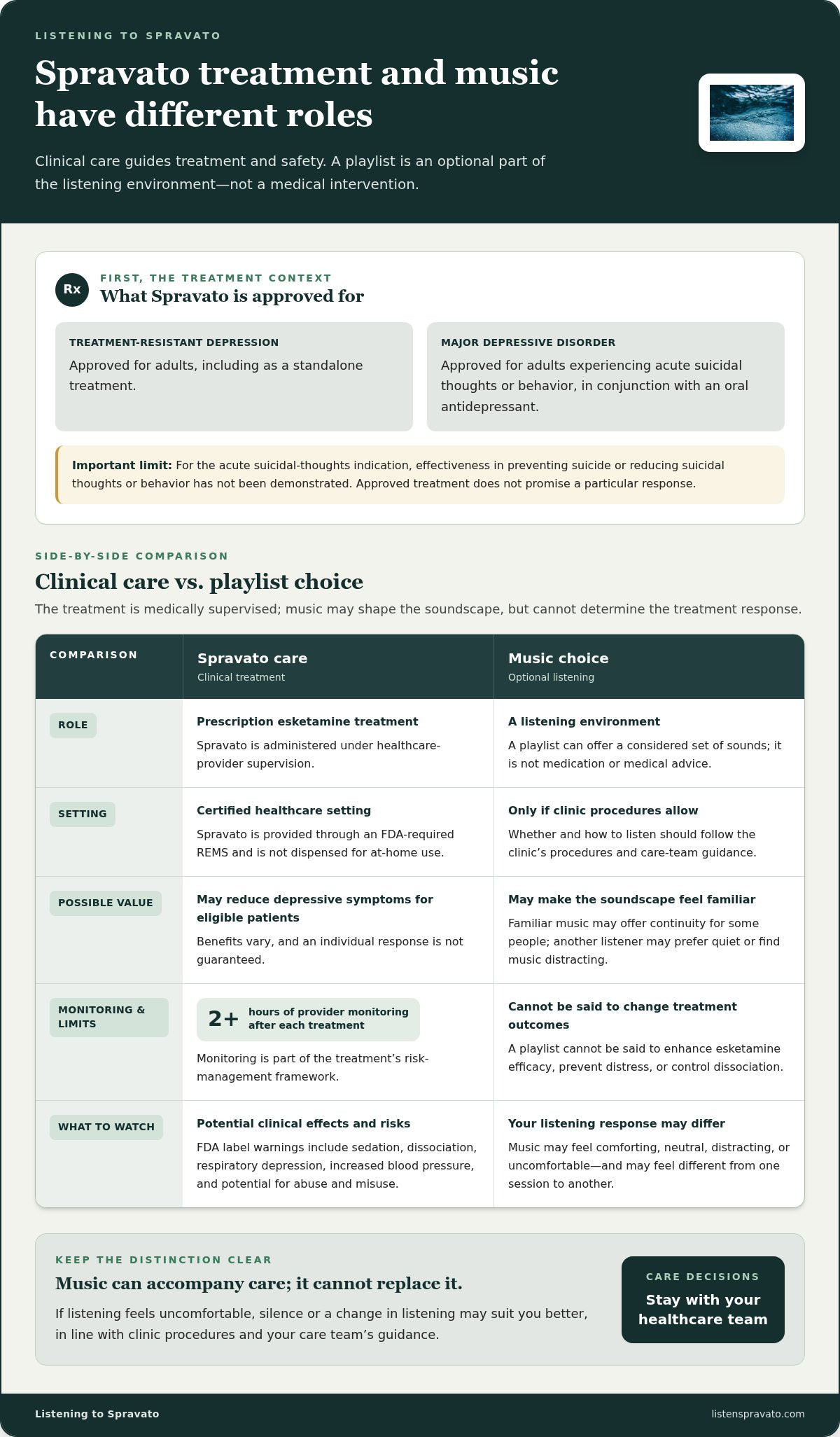
Spravato is available through an FDA-required Risk Evaluation and Mitigation Strategy (REMS). It must be administered in a certified healthcare setting, where a provider monitors the patient for at least two hours after each treatment. It isn’t dispensed for at-home use. This supervision is central to treatment, not an optional detail, and the care team directs the clinical process.
Which benefits and risks belong in a balanced overview?
The FDA has approved Spravato for adults with treatment-resistant depression, including as a standalone treatment, and for adults with major depressive disorder experiencing acute suicidal thoughts or behavior, in conjunction with an oral antidepressant. For eligible patients, treatment may reduce depressive symptoms. Benefits vary, and approval does not promise a particular response. For the acute suicidal-thoughts indication, the prescribing information states that effectiveness in preventing suicide or reducing suicidal thoughts or behavior hasn’t been demonstrated.
Safety deserves equal attention. The FDA label warns of sedation, dissociation, respiratory depression, increased blood pressure, and the potential for abuse and misuse. Because these effects can require clinical assessment, Spravato’s REMS monitoring is part of its risk-management framework. The current FDA label provides the full warnings, precautions, and possible adverse reactions. A brief overview cannot replace it or individualized guidance from a clinician.
Treatment evidence and music claims are separate. The approved benefits and known risks relate to esketamine treatment, not to a playlist. Curated playlists for spravato can provide an optional listening structure, but they aren’t medication or medical advice, and they can’t be said to improve outcomes or prevent adverse effects. They are not a substitute for professional care.
What Curated Playlists for Spravato May Add, and What They Cannot Prove
A playlist shapes what a treatment space sounds like, but it can’t determine what a listener will feel. Familiar music may offer a sense of continuity for some people, while another listener may prefer quiet or find the same sounds distracting. Neither response is unusual, and neither tells us whether the medication is working.
How might music shape the listening environment?
Sound can influence attention and atmosphere, and music may bring personal memories or associations to mind. A steady instrumental piece, for example, might feel unobtrusive to one person and emotionally charged to another. Mood, musical history, personal preferences, and the clinical setting all matter. Thoughtful selection may help create a more familiar soundscape, but comfort isn’t assured.
This is the distinction behind music as therapeutic scaffolding: music can be considered part of the listening environment, not a proven way to control a treatment experience. For a broader clinical overview of esketamine, see Johns Hopkins Medicine’s Esketamine for Treatment-Resistant Depression. Clinical information about the medication and evidence about music answer different questions.
Where does the evidence end?
Research on music in general can explore how people respond to sound, emotion, or attention. Those findings don’t automatically establish that a particular playlist, musical style, or listening plan changes Spravato’s effects. Claims about brain mechanisms or music’s effect on esketamine treatment need specific, reliable evidence. Without it, they should be presented as possibilities or left out.
That boundary matters in practice. Curated playlists for spravato can give someone a considered set of listening options, but they can’t be said to enhance esketamine’s efficacy, prevent distress, or control dissociation. A listener’s experience matters, but an individual impression isn’t proof of a clinical outcome.
Music can accompany care, but it can’t replace treatment. Listening is optional. If a sound feels uncomfortable, silence or a change in listening may suit you better, in line with clinic procedures and your care team’s guidance. For a structured starting point, Spravato listening guidance offers another way to consider music without mistaking it for medical care.
Potential Playlist Benefits and Risks During a Spravato Session
Music can make a treatment room feel more familiar, but the same sound may land differently for different listeners, or from one session to another. A remembered melody might feel reassuring, or it might bring up an unwanted association. Treat curated playlists for spravato as optional listening, not a universal recommendation or a way to manage the medication’s effects.
When might listening feel supportive, or distracting?
Consider the details of the sound as well as the music itself. Lyrics can draw attention toward words and meaning. Abrupt changes in volume, tempo, or texture may feel jarring, while unfamiliar, emotionally charged, or overly stimulating music may not suit every listener. Even a gentle instrumental track can feel irritating or simply unhelpful on a particular day.
Some people may appreciate a steady, familiar soundscape. Others may prefer quiet or find that music makes it harder to settle their attention. There’s no single response to aim for. If listening becomes uncomfortable, let clinic staff know and follow their direction about what is permitted in the treatment setting. Don’t use headphones or adjust audio in a way that conflicts with clinic procedures.
What should patients know about treatment safety?
A playlist can’t prevent or manage a medical adverse event. Spravato’s FDA labeling includes warnings about sedation, dissociation, and increased blood pressure, among other safety considerations. Questions about your individual risks, monitoring, or symptoms belong with your clinician and care team, who can respond within the supervised treatment setting. The Esketamine treatments for severe depression overview from VA News offers broader context about esketamine treatment. It doesn’t replace the current FDA prescribing information or personalized clinical guidance.
For a wider look at preparing for and understanding a session, read this guide to the Spravato treatment experience. The central point is simple: music may accompany care, but it isn’t a safety measure. If you want a structured listening resource, curated Spravato playlists can help you explore options while keeping your care team’s instructions first.
How to Choose Curated Spravato Playlists That Fit Your Preferences
A useful playlist isn’t the one someone else calls ideal. It’s one that fits your preferences and the clinic’s instructions. Use the considerations below to make practical listening choices, not to find a medically optimal sound or guarantee a particular treatment response.
A preference-led checklist
- Start with clinic rules. Ask what the clinic permits regarding headphones, devices, and audio during treatment. Follow those instructions first.
- Check what you actually enjoy. Do you prefer instrumental music, vocals, familiar pieces, or minimal sound? There’s no universally best answer.
- Consider the musical texture. Notice whether particular instruments or sounds feel comfortable, neutral, or distracting. Familiarity may matter more to you than genre.
- Look for an even listening flow. Smooth transitions and consistent volume may suit you if abrupt changes tend to catch your attention. They aren’t clinical requirements.
- Decide how you feel about lyrics. Words may draw your attention, while instrumental music or silence may suit you better. Choose based on your own response.
- Prepare playback simply. If the clinic allows personal audio, test the controls beforehand, set a comfortable volume, and reduce avoidable interruptions. Keep device use consistent with clinic guidance.
Make the playlist fit the clinic setting
Audio is only one part of a supervised session. Before treatment, discuss your listening preferences with the care team, especially if you’re unsure whether headphones or a personal device are appropriate. Follow staff instructions during the session, and speak up if the sound feels uncomfortable or you’d rather stop listening. A playlist should never distract from communicating with staff or following clinical guidance.
There’s no need to settle on a single sound profile in advance. One person may like steady instrumental passages; another may prefer familiar songs with vocals or no music at all. Curated playlists for spravato can provide structured options to consider, but your comfort and the clinic’s procedures remain the guide.
For an optional starting point, explore curated Spravato playlists. Use them to reflect on what you might enjoy, not as a prescription for how a session should feel.
Use Spravato Playlist Guidance as a Companion, Not a Substitute for Care
Spravato’s potential benefits and risks belong in the clinical conversation. Music has a different, optional role: it may offer a personally meaningful listening environment, but it isn’t a treatment, a safety measure, or a guarantee of comfort. Keeping these roles distinct makes it easier to explore sound while leaving medical decisions and care with the treatment team.
What can a music guide help a reader prepare?
Listening to Spravato is an educational guide for patients and clinicians, not a clinical service. Independently authored by Justin Page, a conservatory-trained musician and Spravato patient, it offers genre-by-genre music guidance and playlist ideas organized around treatment phases. Readers can use that structure to reflect on their preferences, such as whether they might want familiar instrumentation, vocals, or quieter stretches of sound.
The guide is available in print, digital, and audiobook formats. Its music suggestions can support personal preparation, but they don’t determine what will feel right in a session. Nor can a guide account for each person’s medical history, current needs, or clinic procedures. It doesn’t replace individualized advice from the treatment team, and it shouldn’t be used to interpret symptoms or make treatment decisions.
What is a sensible next step?
Before a session, write down questions specific to your care. You might ask about treatment risks and monitoring, what to do if you feel uncomfortable, or whether listening to audio is permitted in the clinic. A written list can make it easier to raise concerns and hear clear answers from your clinician.
If you’d like a structured resource for exploring music choices, you can explore Listening to Spravato. Its guidance and curated playlists for spravato are optional companions to clinician-led care, not claims about treatment outcomes. Keep the distinction in view: a playlist offers sound to consider, while clinical guidance addresses treatment and safety.
Your preferences matter, including a preference for silence. Choose what feels personally comfortable within clinic procedures, and bring medical questions to your care team. Both belong in a thoughtful approach to treatment.
Choose a Listening Approach That Keeps Care at the Center
Spravato’s potential benefits and risks are clinical questions best discussed with your care team. Music has a more personal role. Curated playlists for spravato may offer a considered listening option, but they can’t promise comfort, change treatment outcomes, or replace professional care.
Let your preferences guide your audio choices, and let clinic procedures guide whether and how you listen. Familiar music, vocals, instrumental sound, or silence may feel right to different people, or at different times. If you have questions about treatment, safety, or monitoring, write them down and bring them to your clinician.
For structured music guidance, explore Listening to Spravato, an educational guide independently authored by Justin Page, a conservatory-trained musician and Spravato patient. It includes music guidance and playlist ideas, and is available in print, digital, and audiobook editions. Explore the Listening to Spravato guide as an optional resource for personal preparation.
Your listening choices can be thoughtful and flexible. Keep clinical guidance close, and give yourself permission to choose the sound, or quiet, that feels most comfortable within your care setting.
Frequently Asked Questions
Is music proven to improve Spravato treatment outcomes?
No, a playlist hasn’t been established as a way to improve esketamine treatment outcomes. Music may shape the listening environment, and a person may describe it as comforting or distracting, but those personal experiences don’t prove a clinical benefit. Keep claims about music separate from evidence about Spravato itself. For questions about treatment effectiveness, indications, or risks, consult your prescribing clinician and current official treatment information.
Can I listen to a curated playlist during Spravato treatment?
Possibly, if the clinic’s procedures and your session plan allow it. Follow your care team’s instructions about headphones, devices, and listening, and make sure audio doesn’t interfere with communication or monitoring. Curated playlists for spravato are an optional listening choice, not a required part of treatment. If you’re unsure whether audio is appropriate, discuss it with the clinic before your session rather than assuming it will be permitted.
What kind of music is best for a Spravato session?
There’s no single genre or sound profile that’s best for everyone. Consider what you personally prefer: familiar or unfamiliar music, vocals or instrumental pieces, or perhaps quiet. Lyrics, volume, transitions, and personal associations can shape how a piece feels, but no style is medically optimal or guarantees a particular experience. Choose only within clinic guidance, and remember that your preference may change from one session to another.
Can a playlist make Spravato side effects less intense?
No, a playlist shouldn’t be relied on to prevent, treat, or manage Spravato side effects. Some listeners may find music comforting; others may prefer silence or find sound distracting. If you experience symptoms or have a safety concern during treatment, follow the clinic’s instructions and tell the care team. Audio is a personal listening option, not a medical response, and it can’t replace clinical monitoring or guidance.
What are the main risks of Spravato treatment?
Spravato has important risks that require supervised care. The current FDA prescribing information describes warnings including sedation, dissociation, respiratory depression, increased blood pressure, and potential for abuse and misuse. This list isn’t a complete account of possible risks or precautions. Your clinician can explain how the official labeling relates to your health history and treatment plan. Ask your prescribing clinician about individual risks and monitoring before treatment.
Should I use headphones during a Spravato session?
Use headphones only if the clinic’s instructions allow them and they fit your session plan. Procedures may differ, and staff need to communicate with you during supervised care. If listening is permitted, follow directions about devices and volume, and choose an arrangement that doesn’t obstruct clinic communication or monitoring. If you’re uncertain, ask the care team before treatment. You can also choose not to listen; music isn’t required.
Are curated Spravato playlists a substitute for therapy or medication?
No, playlists are audio resources, not medication, psychotherapy, or clinical treatment. They may accompany a session if the clinic permits and you prefer listening, but they can’t replace your prescribed treatment plan or professional guidance. Don’t change or stop treatment based on a playlist or music resource. Discuss treatment decisions, symptoms, and concerns with the qualified clinician overseeing your care, who can offer guidance based on your individual situation.


