

A Spravato session follows a supervised process, but there is no guaranteed script for how it will feel. If you’re wondering what the spravato nasal spray experience may be like, it helps to know that treatment takes place under healthcare provider supervision and includes a monitoring period. Sensations vary from person to person and can differ from one session to the next.
It’s understandable to feel uncertain when personal accounts describe unusual or intense effects. Some people report feeling dreamlike or disconnected; others notice dizziness, nausea, or sleepiness. Not everyone has the same response, and the intensity of a sensation doesn’t predict whether treatment will help.
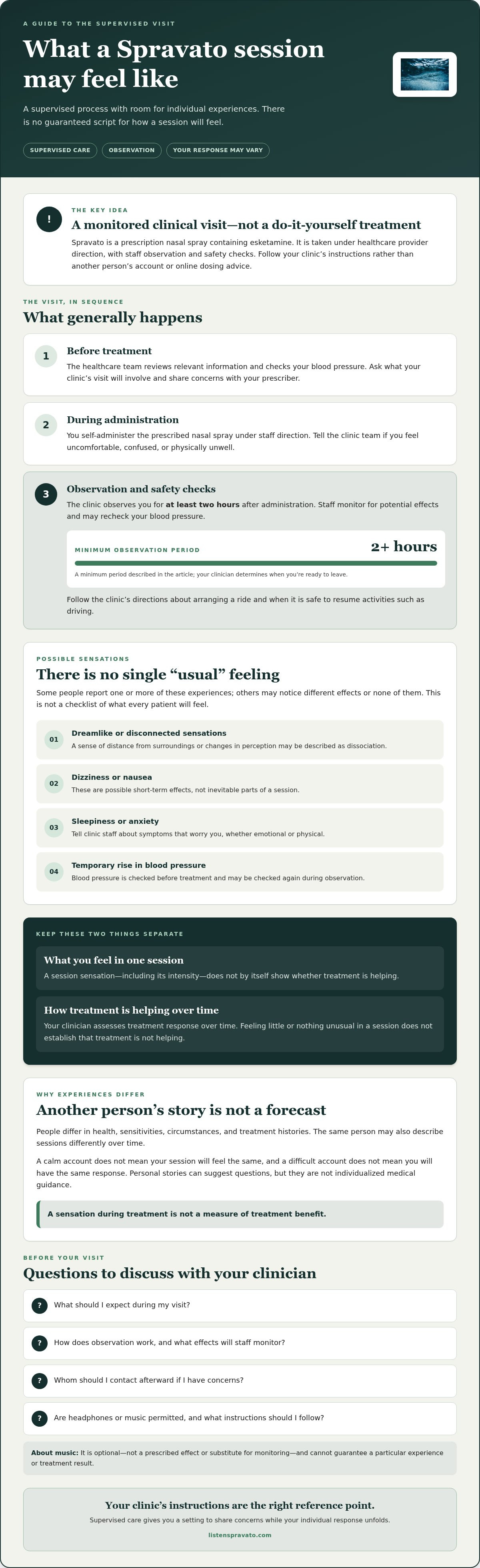
This article outlines the general sequence of a supervised visit, possible sensations, and why other people’s accounts can’t forecast your experience. It also suggests questions to discuss with your prescribing clinician so you can understand the clinic’s instructions before treatment. Knowing what to ask can make the visit feel less mysterious while leaving room for your own response.
Key Takeaways
- A Spravato nasal spray experience follows a supervised clinical process, including observation and safety checks. Ask your clinic what your visit will involve.
- Some people report dreamlike or disconnected sensations; others notice different effects or none of these experiences.
- Dissociation isn’t universal, and a sensation during a session can’t show by itself whether treatment is helping.
- Before treatment, ask your clinician what to expect, how observation works, and whom to contact afterward.
What happens during a Spravato nasal spray experience?
It’s understandable to feel unsure before a first appointment. A visit has a supervised structure, but what you notice may differ from another person’s experience or from one session to the next. Spravato is a prescription nasal spray containing esketamine. For a general overview of the medicine and its uses, see Esketamine (Spravato).
Spravato is a supervised esketamine treatment, not a nasal spray to use on your own. In a clinic, healthcare staff can observe you and respond if concerns arise. This differs from unsupervised use and from other forms of ketamine treatment, which may involve different medicines, protocols, and settings.
How a supervised Spravato appointment is generally structured
Your healthcare team guides the visit. Before treatment, staff review relevant information and check your blood pressure. You then self-administer the prescribed nasal spray under their direction. Follow the clinic’s instructions rather than relying on someone else’s account or online dosing advice.
After administration, the clinic observes you for at least two hours, as required by the current Spravato safety framework. Staff monitor for potential effects, including sedation, dissociation, and changes in blood pressure. They may recheck your blood pressure during this period. Your clinician determines when you’re ready to leave. Because treatment can affect alertness, follow the clinic’s instructions about arranging a ride and when it’s safe to resume activities such as driving.
The overall sequence is part of supervised care, but details can vary. Your health, care plan, and clinic procedures may affect what staff ask, check, or recommend before and after administration.
Why the setting matters to the experience
Observation provides structure while the medicine’s effects unfold. It also means you can tell the clinic team if you feel uncomfortable, confused, or physically unwell instead of trying to manage an unexpected sensation alone.
Sound may be part of how you experience the room, but music isn’t a prescribed effect or a substitute for monitoring. If you’re considering headphones or music, ask the clinic whether they’re permitted and follow staff instructions throughout the visit. Music is optional; it can’t guarantee a particular experience or treatment result.
This overview can help you picture the visit, but it can’t replace guidance from your prescriber. Before treatment, ask what to expect, how observation works, and whom to contact afterward. For your own spravato nasal spray experience, your clinic’s instructions are the right reference point.
What might Spravato feel like, and why does it vary?
There isn’t one expected inner experience. During the supervised period, some people notice changes in perception or a sense of disconnection, called dissociation. Others may feel dizzy, nauseated, sleepy, or anxious, or experience a temporary rise in blood pressure. These are possible effects, not a checklist every patient will experience. Your prescribing clinician can explain which effects to watch for based on your health and treatment plan.
Possible sensations during the observation period
For some people, surroundings may seem distant or dreamlike, or thoughts may feel different from usual. These sensations can be unfamiliar. They aren’t automatically a sign that something has gone wrong, but don’t dismiss them if they feel distressing. Tell clinic staff about symptoms that worry you, whether emotional or physical. They can assess what’s happening while you’re being monitored.
Short-term effects during or after administration are different from changes in depression symptoms over time. A sensation during a session doesn’t establish whether treatment is helping. Likewise, feeling little or nothing unusual doesn’t establish that it isn’t. Your clinician assesses treatment response over time, not by the intensity of one moment.
Why one person’s account cannot predict another’s
People differ in their health, sensitivities, circumstances, and treatment histories. The same person may also describe sessions differently over time. One account can help you imagine a possibility, but it can’t forecast your own spravato nasal spray experience. Online stories are personal reports, not individualized medical guidance or proof of what will happen to you.
That distinction matters when accounts sound vivid or certain. A calm session for one person doesn’t mean yours will feel the same, and a difficult account doesn’t mean you’ll have the same response. Use stories as a starting point for questions, then discuss your concerns and relevant health history with your prescriber.
For another patient perspective, read what Spravato treatment can feel like, remembering that it describes one person’s experience. If you’re considering music as an optional part of the setting, explore Spravato listening resources and check with your clinic first. Music isn’t a treatment and can’t guarantee a particular response.
Does every Spravato nasal spray experience include dissociation or relief?
No. A Spravato nasal spray experience doesn’t follow a universal emotional or sensory script. Some patients notice dissociation; others don’t. A person may feel different during a session without experiencing immediate relief from depression, and mood changes may occur on a different timeline. None of these responses alone determines whether treatment is working.
Dissociation is a possible experience, not a required milestone
In plain language, dissociation can mean feeling detached from yourself or as though your surroundings seem unfamiliar or unreal. The prescribing information identifies it as a possible side effect, alongside effects such as dizziness, nausea, and sedation. It can feel unusual, and people may experience it differently. It isn’t a goal to reach or a sign that you should try to intensify the sensation.
If a sensation feels distressing or concerning, tell the supervising clinical team. Describe what you’re noticing as clearly as you can, even if it’s difficult to put into words. Staff can assess your experience in the moment. You don’t need to assume you must simply endure a troubling symptom.
A session feeling is not the same as a treatment outcome
A vivid experience doesn’t prove that treatment is helping, just as a quiet or uneventful session doesn’t prove it isn’t. The intensity of dissociation isn’t a reliable measure of benefit. Temporary changes in perception or alertness during a visit differ from changes in depressive symptoms, which you can discuss with your prescriber over time.
For example, one person might feel disconnected during a session but notice no immediate mood change. Another might report few unusual sensations and later discuss improvement with their clinician. These examples aren’t predictions or diagnoses. Your prescriber can assess your response and decide whether treatment adjustments are appropriate. Don’t change or stop treatment based on a single sensation or appointment without discussing it with them.
Music may shape the atmosphere of a visit for some people, but it doesn’t establish whether treatment is effective or guarantee a particular response. For a balanced look at its limits, read what music can and cannot do in ketamine therapy. Follow your clinic’s instructions, and share both helpful and difficult experiences with your care team.
What safety monitoring and recovery should patients understand?
Safety monitoring is part of the Spravato treatment process, not an optional extra. Under the FDA-required REMS framework, Spravato is administered in a certified healthcare setting, where the clinical team can observe you for potential side effects. This structure supports a safer visit, but it can’t remove every risk or replace individualized care.
What the clinic monitors during a Spravato visit
Current safety requirements call for observation for at least two hours after administration. During that time, staff monitor for effects such as sedation, dissociation, and changes in blood pressure. The team follows your condition and the clinic’s protocol, which may include blood pressure checks. Ask which checks to expect and how staff will decide when you’re ready to leave.
Before treatment, tell your clinician about your medications, health conditions, pregnancy or plans for pregnancy, and any other safety concerns. This information can help your care team consider your individual situation and answer questions specific to you.
Plan your journey home according to the clinic’s instructions. Current guidance says patients shouldn’t drive or operate heavy machinery until the day after treatment, after a restful sleep. Confirm transportation arrangements and any other recovery directions with your treatment team, which can advise you based on your care plan.
When to raise a concern with the care team
Tell clinic staff promptly if you feel severely unwell, notice an unexpected effect, or become worried about what you’re experiencing. You don’t need to decide on your own whether a symptom is important. The team can assess it and determine what support or next steps are appropriate.
If you experience a medical emergency, contact your local emergency services. Before leaving the clinic, ask whom to contact if a concern arises and what symptoms should prompt urgent attention. Monitoring is an important safeguard, but it doesn’t mean you should ignore a serious or worsening problem.
Music may be a personal comfort, but it isn’t a safety measure and shouldn’t replace clinical instructions. If you’d like an optional listening resource, browse curated Spravato playlists, then ask your clinic whether listening during a visit is permitted. For your spravato nasal spray experience, the care team’s guidance remains the reference for monitoring, transportation, and recovery.
How can you approach your Spravato experience with informed expectations?
You don’t need to predict exactly how a session will feel. A grounded approach is to ask your clinic what to expect, follow its instructions, and tell the care team what you notice. Your experience is personal, and questions are a useful part of preparing for care.
Questions to discuss with your prescribing clinician
Before treatment, ask what health details and medications your care team needs to know. Confirm the clinic’s preparation and observation procedures, transportation guidance, and aftercare instructions. Knowing whom to contact with concerns between appointments can also make the plan clearer.
Ask how your response will be assessed over time rather than judging it by one sensation or visit. You might write down questions beforehand and share observations afterward, including anything that felt comfortable, unusual, or concerning. Your clinician can interpret those details in the context of your care.
Where a listening guide may fit
If music feels supportive to you, ask the clinic whether listening is allowed and follow staff directions. It’s an optional personal preference, not a treatment or a way to control medication effects. The Spravato treatment preparation guide offers another way to think through practical preparation, while keeping your clinic’s instructions primary.
Listening to Spravato is an independently authored educational guide by Justin Page, a conservatory-trained musician and Spravato patient. It explores music and treatment-session context, but it isn’t medical advice or clinical care. For an audio-format resource, you can also explore the Esketamine audiobook guide.
Let your care team guide clinical decisions, and use educational resources only to support your own reflection. If you’d like to learn more about the guide and its listening resources, explore Listening to Spravato.
Approach Your Spravato Sessions With Clarity
A spravato nasal spray experience takes place within a supervised clinical process, but reported sensations and emotions can differ. Dissociation isn’t inevitable, and a particular feeling during a session doesn’t determine whether treatment is helping. Your prescribing clinician is best placed to discuss your response and answer questions about your care.
Before an appointment, ask what the clinic’s observation and recovery instructions involve, how to share concerns, and whom to contact afterward. Follow the team’s guidance and describe your experience in your own words. If music appeals to you, ask whether your clinic permits it. Treat it as an optional personal resource, not a treatment or a promise of a certain outcome.
For a music-focused educational perspective, Listening to Spravato was independently authored by Justin Page, a conservatory-trained musician and Spravato patient. The guide is available in print, digital, and audiobook formats through retailers, with music-focused resources and curated playlists. It doesn’t replace clinical advice or treatment. Explore the Listening to Spravato guide as you prepare to discuss your questions with your care team.
Clear information and an open conversation can help you approach the next step with greater confidence.
Frequently Asked Questions
What does the Spravato nasal spray experience feel like?
A Spravato nasal spray experience varies, and there’s no single sensation everyone should expect. Some people report feeling dreamlike or disconnected, while others may notice dizziness, nausea, or sleepiness. These effects don’t happen to everyone, and their intensity can differ. Your clinic observes you during treatment, so tell staff if a sensation feels distressing or concerning. Other patients’ stories describe possibilities, but can’t predict your response.
How long does a Spravato treatment session take?
Plan for at least two hours of observation after administration, as required under the Spravato safety program. The full clinic visit may take longer because it can include preparation, clinician-directed administration, checks, and time for staff to assess your recovery. Ask your clinic how long to set aside and follow its instructions about leaving, transportation, and activities afterward. Procedures and care plans may differ.
Does Spravato always cause dissociation?
No. Dissociation, which can feel like being detached from yourself or as though your surroundings seem unreal, is a possible side effect, not an inevitable part of treatment. Some people experience it; others don’t. Its presence or intensity doesn’t show whether treatment is working. If you notice dissociation or feel unsettled, let the supervising clinic team know so they can assess how you’re doing.
Can you feel better immediately after using Spravato?
Some people may notice improvement early, but an immediate change isn’t guaranteed. The timing and degree of symptom relief vary, and a temporary sensation during a session isn’t the same as a lasting change in mood. Not feeling better right away doesn’t establish that treatment won’t help. Discuss symptom changes with your prescriber, who can assess your response over time and guide treatment decisions.
Is Spravato administered at home or in a clinic?
Spravato is administered in a certified healthcare setting under clinical supervision, not as an at-home treatment. Patients self-administer the prescribed nasal spray under a healthcare provider’s direction, then remain for observation. This setting allows the care team to monitor for side effects and follow required safety procedures. Your clinic will explain its process and any instructions to follow before and after your appointment.
Can I listen to music during a Spravato session?
Possibly, but ask your clinic first. Whether headphones or music are permitted depends on clinic policy and staff instructions, which take priority during treatment and observation. Some people may find music personally comforting, while others may prefer quiet. Music is optional; it doesn’t treat depression, change medication effects, or guarantee a particular session. Check with your care team before bringing or using audio equipment.
What should I do if I feel uncomfortable during a Spravato session?
Tell clinic staff promptly if you feel distressed, unwell, or concerned about an unexpected sensation. You don’t need to judge whether it’s serious before speaking up; the team can assess what’s happening and respond. If you experience an emergency after leaving the clinic, contact local emergency services. Before treatment, ask whom to contact afterward and what to do if concerns arise between visits.


