

The most useful Spravato resource may not be the most detailed one. It may be the format that fits what you need right now. A search for spravato treatment resources can bring up clinical information, personal accounts, guides, and playlists, but these materials serve different purposes.
Before treatment or during a monitored session, it’s understandable to want clear, practical support. A music guide can provide context for listening, while a playlist lets you listen without reading. Neither replaces medical advice, your clinician’s instructions, or care from your treatment team.
This article compares resources by purpose, format, and level of support. You’ll learn how official treatment information differs from supplementary session materials, what a music guide can and can’t provide, and when print, digital, audiobook, or playlist formats may suit you. The goal is to help you find accessible support while leaving clinical decisions to your healthcare team.
Key Takeaways
- Separate official clinical information from supplementary materials before choosing a resource.
- Match the format to the need: a guide offers context, an audiobook provides narrated material, and a playlist provides music.
- Compare spravato treatment resources by credibility, purpose, accessibility, practical detail, and clearly stated limits.
- Follow your clinician’s instructions for treatment and preparation questions. Session-support materials cannot replace medical guidance.
- Consider Listening to Spravato as optional music and session-orientation material, available in print, digital, and audiobook formats.
What counts as a Spravato treatment resource, and what does not?
A broad search for spravato treatment resources may turn up clinical information, preparation materials, and personal perspectives. These can all offer context, but they don’t carry the same authority or serve the same purpose.
A Spravato treatment resource is supplementary material that may help someone understand, prepare for, or reflect on care; it is not the clinical care itself. A guide or playlist may offer educational context or an optional listening choice. It can’t assess whether treatment is appropriate, set an individual treatment plan, or replace a prescriber’s directions.
Clinical information versus supplementary patient resources
Questions about eligibility, dosing, side effects, safety, or what to do during treatment belong with the prescribing clinician. Follow your clinic’s instructions and consult current official Spravato information for treatment requirements, including any applicable REMS guidance. If you need urgent help, contact local emergency or crisis support rather than relying on a book, playlist, or online account.
Educational guides and music playlists have a narrower role. They may explain ideas or offer optional music for a session, but they aren’t clinical instructions, a treatment protocol, or a substitute for professional care. For a general overview of the medication and its uses, see Esketamine (Spravato). For decisions about your own treatment, use official product information and speak with your care team.
Who may use Spravato resources, and for what purpose?
Different readers may need different kinds of support. Someone considering treatment might want plain-language background to discuss with a clinician. A patient may want a practical guide to organize questions or explore music as an optional part of a monitored session. A caregiver may seek context to better understand what a loved one is asking about. Clinicians may review music references as supplementary material while relying on professional judgment and official guidance for care.
These learning needs are valid, but they aren’t the same as an individual clinical assessment. A resource can help you frame a question, but it can’t determine whether a specific treatment is suitable for you. Not everyone wants music, a guide, or the same session structure. Personal preference matters, along with the instructions and options provided by the clinic.
When comparing spravato treatment resources, start by naming what you need to understand or prepare for. Then check who created the material, what it can reasonably offer, and where its limits are. This helps you use supplementary resources without mistaking them for medical advice.
How Spravato guides, audiobooks, and playlists serve different needs
Different formats support different kinds of engagement. Official clinical sources help with treatment questions; a guide offers practical context; an audiobook or playlist makes listening central. Comparing spravato treatment resources by purpose and limits can help you choose a format without expecting it to do more than it can.
| Resource | May help with | Limit |
|---|---|---|
| Official clinical sources and care team | Treatment, safety, and medication questions | Only your qualified care team can apply guidance to your individual situation. |
| Practical guide | Exploring music references and session context | Supplementary education, not a clinical protocol. |
| Audiobook | Engaging with the guide through narrated material | Audio format doesn’t make the guide medical advice. |
| Playlist | Listening to selected music based on personal preference | Music is optional and doesn’t establish a required treatment approach. |
When a written or audio guide may be useful
Print may suit you if you like to browse at your own pace, revisit passages, or make notes. A digital edition may be convenient on a compatible device. These are access formats for the same guide, not different treatments. If you prefer narrated material, the audiobook offers another way to engage with the guide’s music references and session stories. See the Spravato audiobook guide for details about the audio format.
When playlists or clinical resources may fit better
A playlist gives you music to listen to. It doesn’t tell you what treatment to receive or how your session should unfold. A curated selection can be a starting point if you want to explore music, while free playlist resources may offer an accessible way to listen. Neither promises a therapeutic outcome. Whether to use music at all is something you can consider with your clinic.
For questions about proper use, side effects, and precautions, consult your care team and reliable medical sources such as the Mayo Clinic Guide to Esketamine Treatment. For a closer look at what music can and cannot offer, read this overview of sound and ketamine therapy. If you’d like to explore music-support materials, Listening to Spravato resources include a guide and curated playlists.
How to compare Spravato treatment resources without expecting a cure
A guide or playlist can offer context, but it can’t treat depression, determine whether Spravato is appropriate, or replace care from a qualified clinician. Judge a resource by what it clearly helps you do and whether it is honest about what it cannot do. Be cautious of any format that promises symptom relief or stronger treatment effects.
To compare spravato treatment resources, consider five practical points: who created the material and what expertise they state; its purpose; whether it’s accessible to you; how specific and useful its information is; and whether its limits are easy to find. Lived experience and music expertise may inform a guide’s perspective, but they aren’t medical or clinical credentials. Keep those forms of knowledge distinct.
Questions to ask before relying on a resource
- Who made it? Check the author’s stated background and whether the resource distinguishes personal perspective from clinical expertise.
- What is it for? Look for a clear description, such as providing music references or general session context, rather than claims to direct your care.
- Where are its boundaries? It should make clear that it doesn’t make medication decisions, offer individual medical advice, or replace a prescriber.
- Are clinical details current? Check treatment claims against official product information and your care team’s instructions, especially before acting on them.
What music guidance can and cannot offer
Music may provide a sense of structure or personal comfort for someone who chooses to listen. A playlist can create an intentional listening experience, but it can’t predict how you’ll feel, guarantee calm, or determine how treatment unfolds. Preferences differ: you may welcome music, prefer quiet, or want to decide in the moment. A resource should leave room for those choices rather than presenting one approach as necessary.
A practical guide can help you prepare without making clinical promises. Use it to organize questions, consider your preferences, or decide what you may want to discuss with your clinic. This calm Spravato preparation checklist offers additional preparation context. Follow your care team’s instructions for your individual needs.
Potential advantages: a well-scoped guide may be easy to revisit, while a playlist can offer music without requiring you to read. Limitations: neither assesses your health, answers personal safety questions, nor guarantees a particular experience. Choose the resource that fits your learning or listening preference, and leave clinical decisions with your care team.
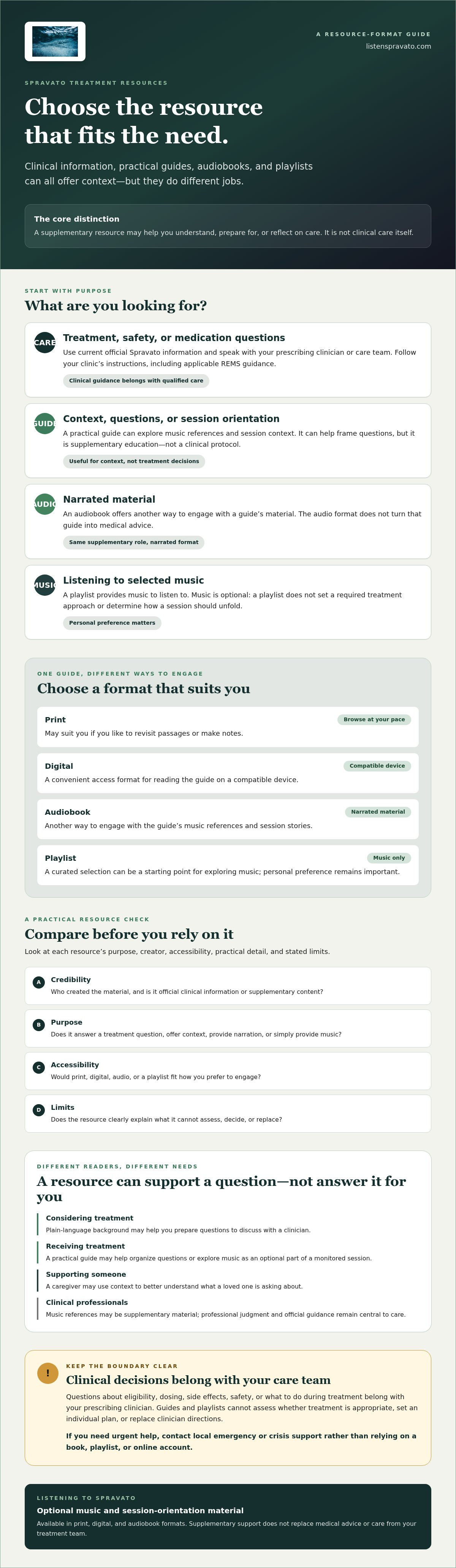
Which Spravato resource fits your situation? A practical decision guide
Start with the question you need answered, not the format that looks most appealing. This process can help you choose among spravato treatment resources while keeping personal care decisions with your clinician.
- Name the need. Is it a medical or safety question, practical preparation, or an interest in music?
- Choose the resource type. Ask your prescribing clinician about treatment questions. For general context, consider educational material; for music exploration, consider a guide or playlist.
- Check its limits. Confirm that the resource explains what it can and can’t provide, and doesn’t present optional music as a treatment requirement.
- Consult your care team. Follow clinic-specific instructions and bring unanswered questions to your clinician.
Choose by the question you need answered
For questions about medication, side effects, eligibility, or safety, contact the prescribing clinician or treatment clinic. For preparation, a practical checklist may help you organize questions or remember what to ask, but clinic directions take priority. If your interest is music, a guide can offer context and a playlist can provide listening material. Neither should shape treatment decisions.
When preparing, make a note of the details you need to confirm with your clinic, such as which instructions apply to you and what you should bring or arrange. A playlist can’t answer those questions.
| Reader | Possible starting point | Keep in mind |
|---|---|---|
| Patient | Clinician for treatment questions; checklist for preparation; guide or playlist for optional music exploration | Your clinic’s directions are specific to your care. |
| Caregiver | Educational material for general context | Personal treatment decisions belong to the patient and care team. |
| Clinician | Music guide or playlist as supplementary material to review | Use professional judgment and official clinical information for care. |
Choose by access, attention, and preferred format
Consider what you can comfortably use and revisit. Do you prefer reading, narrated material, or simply playing music? Check whether you have access to the device you need, whether an edition is available in your region, and whether you can return to the resource when useful. No single format suits everyone, and you can choose not to use music.
If you’re exploring music references or playlists as optional session-support material, explore Listening to Spravato resources. Use them to inform your preferences, not to replace a conversation with your care team.
Explore Listening to Spravato as a music and session-support resource
Once you’ve separated clinical guidance from optional support, a music-focused resource may be useful if you want context for listening during treatment. Listening to Spravato is an educational guide about music-assisted esketamine treatment. It offers music references, practical session context, and curated playlists, including music organized around session phases. This material is optional. It isn’t a clinical protocol, a required part of treatment, or a promise of a particular experience.
What the Listening to Spravato guide includes
The guide discusses music across genres and provides context for considering how different listening choices might fit your preferences. Print, digital, and audiobook editions offer different ways to engage with the material. Curated playlists provide a direct way to listen without needing to read or follow a particular structure. Regional access to editions can vary, so check current availability with the retailer.
The author, Justin Page, is a conservatory-trained musician and Spravato patient. That background brings music expertise and lived experience, not clinical credentials. The guide and playlists don’t provide medical advice, treatment, or medication instructions, and they don’t replace guidance from a prescriber or treatment clinic.
A gentle next step for readers who want music guidance
Think about how you prefer to engage. Choose a written guide if you want to browse music references and practical context; consider the audiobook if narrated material suits you better; or explore a playlist if you simply want listening material. You may decide that music isn’t right for you. There’s no single format or listening approach that suits everyone.
Among spravato treatment resources, a guide or playlist has a focused role: supporting personal learning or music exploration, not making care decisions. If this supplementary material feels relevant, you can explore Listening to Spravato resources at your own pace. For questions about your treatment, safety, medication, or clinic instructions, speak with your prescribing clinician.
Choose the Support That Fits Your Next Step
The most useful spravato treatment resources depend on what you need. Take clinical questions to your prescribing clinician. Supplementary guides and playlists can offer context or music to explore, but they don’t replace care or promise an outcome.
Listening to Spravato combines music guidance with practical session context, with print, digital, and audiobook editions for different ways of engaging. Its author, Justin Page, is a conservatory-trained musician and Spravato patient, not a clinician. The resource is educational and music-focused, not medical advice or treatment.
If you’d like to see whether a written guide, audiobook, or curated playlist fits your preferences, explore Listening to Spravato resources. Choose the format that feels accessible, and bring treatment-specific questions to your care team.
Frequently Asked Questions
What resources are available for people receiving Spravato treatment?
Spravato treatment resources include clinical information from official sources and your treatment team, as well as optional educational guides, audiobooks, and playlists. Clinical sources address medication and safety; supplementary materials may offer general context, preparation ideas, or music to explore. Listening to Spravato offers print, digital, and audiobook guide editions, plus curated playlists. Check current regional availability for specific editions, and ask your clinician for guidance tailored to your care.
Can a Spravato guide or playlist replace advice from my clinician?
No. A guide or playlist can’t assess your individual health, recommend a dose, determine whether treatment is appropriate, or replace clinic instructions. Contact your prescribing clinician or treatment clinic with questions about eligibility, medication, side effects, and safety. Supplementary materials may help you organize questions or explore music, but they aren’t clinical advice. If you need urgent help, contact emergency or crisis support rather than relying on a resource.
How do I choose between a Spravato book, audiobook, and playlist?
Choose based on how you prefer to engage. A print or digital book may suit you if you want to browse, revisit passages, or read music references. An audiobook may fit if narrated material is easier for you to access. A playlist provides music without the guide’s explanatory context. These formats serve different preferences, not different treatment needs. Confirm edition access in your region, and remember that each format is supplementary.
Is music required during a Spravato treatment session?
Don’t assume that music is required. A playlist or guide is optional music-support material, not a clinical requirement or a universal session plan. People have different listening preferences, and some may prefer quiet. Ask your treatment clinic what options are available and follow its instructions for your session. A music resource can help you consider what you might enjoy, but it shouldn’t determine your care or override clinic guidance.
Are free Spravato playlists enough to prepare for treatment?
Free playlists may help you explore music, but they aren’t a complete preparation resource. They don’t explain your individual treatment instructions, answer safety questions, or replace information from your clinic. For preparation, follow your care team’s directions and write down anything you want to ask. If you choose to listen, treat a playlist as optional listening material, not as a treatment protocol or a promise of a particular experience.
Where can I find reliable information about Spravato safety?
Start with the current official Spravato prescribing information and ask your prescribing clinician or treatment clinic how it applies to you. These are the appropriate sources for questions about medication, side effects, precautions, and treatment requirements. General articles and patient-facing guides may provide context, but they can’t account for your health history or replace current clinical guidance. Check that any treatment details you read match official information.
Does Listening to Spravato provide medical treatment or clinical advice?
No. Listening to Spravato provides a guide and curated playlists focused on music references and practical session context; it doesn’t provide medical treatment, medication instructions, or clinical advice. The guide’s author, Justin Page, is a conservatory-trained musician and Spravato patient, not a clinician. You can use the material for optional learning or music exploration, while directing questions about your treatment and personal safety to your prescribing clinician.


