

What if the most important part of preparing for ketamine therapy is knowing which advice not to generalize? A ketamine therapy preparation guide can help you organize questions and personal comfort needs, but instructions vary by treatment type and clinic. Your treating team is the right source for decisions about your care.
It’s understandable to feel uncertain before an appointment, especially when preparation tips conflict or you’re concerned about feeling unsettled. You don’t need to resolve every unknown on your own. Start by separating clinic-specific instructions from personal choices that may help you feel more at ease.
This checklist can help you identify what to confirm with your clinic and consider practical, emotional, and sensory needs before you arrive. It also explains how an educational resource such as Listening to Spravato may help you explore music and session structure, and where its role ends: it doesn’t provide medical advice or replace your treatment team’s guidance.
Key Takeaways
- Use this ketamine therapy preparation guide as a planning aid, not a treatment protocol. Preparation depends on your treatment type and clinic.
- Confirm medication, food, fluid, arrival, observation, and discharge instructions directly with your clinic.
- Plan practical and sensory comforts that suit you, while giving the clinic’s environment and protocol priority.
- On treatment day, follow the clinic’s directions and ask about anything unclear, including arrangements for getting home.
- Choose resources by purpose: clinic instructions guide care, while Listening to Spravato offers educational music guidance, not clinical advice.
Ketamine Therapy Preparation Starts with Knowing Your Treatment Type
A useful ketamine therapy preparation guide helps you organize questions and personal needs. It isn’t individualized medical advice or a treatment protocol. Before making plans, confirm which medication you’re receiving, how it will be administered, what your appointment involves, and how to contact the clinic with questions. Similar names don’t mean identical preparation: IV ketamine, other ketamine services, and prescribed Spravato® involve distinct treatment contexts.
For general background on the medication and its uses, see Ketamine. That overview can provide context, but your provider’s instructions determine what applies to your care.
What does ketamine therapy preparation include?
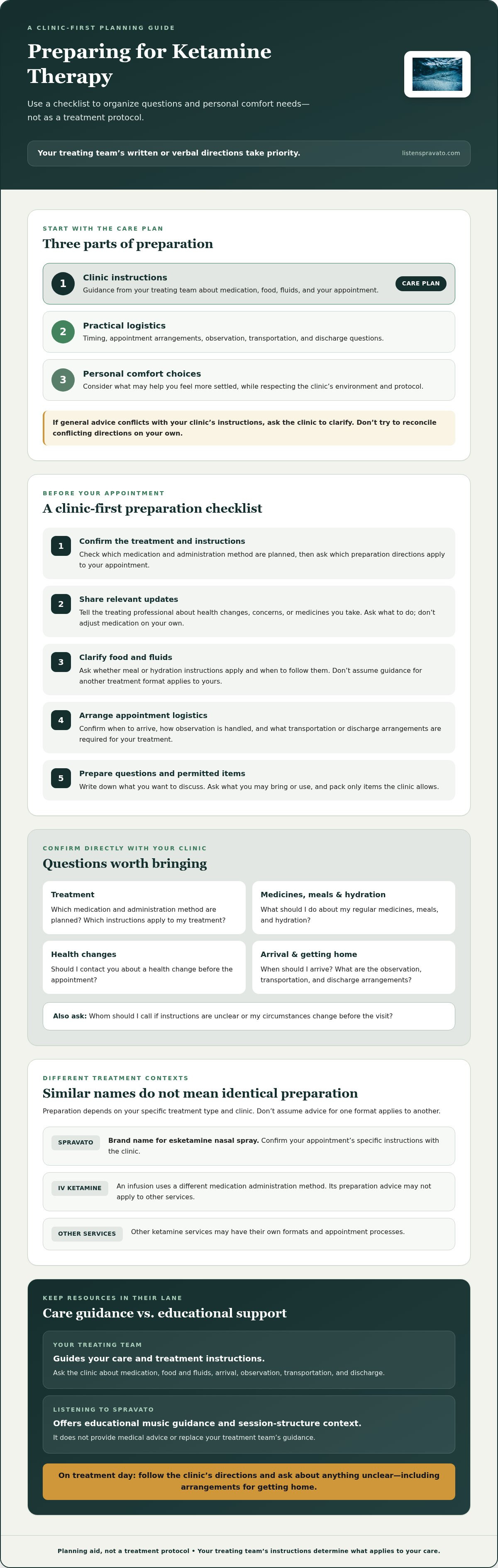
Think of preparation in three parts: clinic instructions, such as what the treating team tells you about medication, food, or fluids; practical logistics, such as timing and appointment arrangements; and personal comfort choices, such as what might help you feel settled. Only your treating team can advise you about medication changes or food and fluid restrictions. Use this checklist to plan, not to replace the clinic’s written or verbal directions.
Provider instructions define the care plan; personal comfort preparation helps you get ready within that plan. If advice you find elsewhere conflicts with what your clinic has told you, ask the clinic to clarify rather than trying to reconcile the instructions yourself.
Why Spravato and ketamine infusions may involve different instructions
Spravato is the brand name for esketamine nasal spray. An IV ketamine infusion uses a different medication administration method, and other ketamine services may have their own formats and appointment processes. Don’t assume that preparation advice for one applies to another.
Ask your clinic to confirm the requirements for your specific appointment, including observation, transportation, arrival timing, and what to expect at discharge. These details should come from the team overseeing your care, not a generalized checklist. If you’re preparing for Spravato, the Spravato treatment experience guide offers additional patient-oriented context, but it doesn’t replace clinic instructions or provide a clinical protocol.
A Clinic-First Ketamine Therapy Preparation Checklist
A clear plan begins with your clinic’s instructions, not a general checklist found online. Use this ketamine therapy preparation guide to gather questions and organize practical details. Your treating team’s written or verbal directions take priority. Don’t change medication or follow food and fluid restrictions based on general advice.
Before your appointment, work through these steps:
- Confirm the treatment and instructions. Check which medication and administration method are planned, then ask which preparation directions apply to your appointment.
- Share relevant updates. Tell the treating professional about health changes, concerns, or medicines you take. Ask what to do; don’t stop, start, or adjust medication on your own.
- Clarify food and fluids. Ask the clinic whether meal or hydration instructions apply and when to follow them. Don’t assume guidance for another treatment format applies to yours.
- Arrange the appointment logistics. Confirm when to arrive, how the appointment and observation period are handled, and what transportation or discharge arrangements are required for your treatment.
- Prepare questions and permitted items. Write down anything you want to discuss, then ask what you may bring or use during the visit. Pack only items the clinic allows.
Questions to ask the clinic before treatment
A short list can make the conversation easier, especially if you’re feeling uncertain. Ask: “Which instructions apply to my prescribed treatment?” “What should I do about my regular medicines, meals, and hydration?” “Should I contact you about a health change before the appointment?” Also confirm whom to call if instructions are unclear or your circumstances change before the visit.
Plan transport, timing, and practical needs
Make the appointment easier to approach by confirming the arrival time, expected appointment sequence, observation arrangements, and departure process in advance. Ask the care team directly what transportation plans or post-appointment restrictions apply. Requirements can depend on the treatment and clinic, so don’t infer them from someone else’s experience.
Keep your question list somewhere easy to find, such as on your phone or a piece of paper. Include practical details you might otherwise have to remember under stress. If you’d like an optional, music-focused educational companion for thinking about the Spravato session experience, explore Listening to Spravato resources. They can support personal preparation, but they don’t replace clinical instructions.
Prepare Your Comfort, Support, and Listening Environment
Comfort planning is personal. You might feel more at ease knowing what sounds or sensory details you prefer, while someone else may not want to make special preparations. Either way, your choices fit around the clinic’s environment and protocol. Ask before assuming you can use headphones, play a personal playlist, or bring other items into the treatment space.
Music may shape the atmosphere of a session, but it isn’t a substitute for treatment or your care team’s guidance. It also can’t guarantee a particular experience or outcome. The article what music can and cannot do in ketamine therapy explores this distinction and can help you approach listening with realistic expectations.
Choose music without expecting a guaranteed effect
Some patients may prefer instrumental or lyric-free music; others may find different sounds more comfortable or prefer quiet. These are personal preferences, not requirements or proven ways to produce a clinical result. If music matters to you, ask the clinic whether headphones or playlists are permitted, what volume options are available, whether the clinic has equipment, and whether there are limits on playlist length. Follow the clinic’s directions if its setup or process doesn’t accommodate your preference.
Create a simple personal comfort plan
A little reflection can make it easier to explain what would help you feel prepared. Note any sensory preferences, worries about the appointment, or questions for the care team. For example, ask whether the room is quiet, whether you can adjust the sound, or which personal items are allowed. You don’t need to resolve every concern beforehand; raising it with the team is part of preparation.
Keep your plan flexible. The clinic’s setting may differ from what you imagined, and its protocol takes priority. Bring only items the clinic has approved, and don’t assume a device, playlist, or comfort item will be permitted during treatment.
If you’d like to explore music and session structure before a Spravato appointment, the Spravato music and listening guide is an optional educational resource. It can help you consider listening preferences, but it isn’t a clinical protocol or medical advice. A ketamine therapy preparation guide is most useful when it helps you ask better questions while leaving treatment decisions with your care team.
What to Do on Treatment Day and After the Appointment
Treatment day doesn’t need an elaborate routine. Focus on the plan your clinic has given you, and contact the care team if anything is unclear or has changed since you last spoke. This ketamine therapy preparation guide can help you stay organized, but your clinic’s directions determine what to do before, during, and after your appointment.
A calm appointment-day checklist
Before leaving, recheck the clinic’s instructions and ask about anything you’re unsure of. Bring identification, appointment details, and only personal items the clinic has approved. Allow time for the clinic’s arrival and check-in process, following the timing it provided rather than assuming every appointment works the same way.
During the visit, follow the clinic’s process and ask questions if you need clarification. Rules about eating, drinking, observation, driving, transportation, and discharge can vary by treatment and appointment. Confirm each detail with your care team; don’t rely on a general online rule or another person’s experience.
Plan questions and follow-up before you leave
Before departure, ask what follow-up or support arrangements apply to your appointment and whom to contact if questions or concerns arise after you leave. If the clinician gives you next steps, write them down in your own words and repeat them back if you want to check your understanding. A personal account of how an appointment felt can be meaningful, but it isn’t a substitute for clinical follow-up.
Let your treating team’s instructions guide every post-appointment plan, including transportation, activity, and follow-up. If your circumstances change or you’re uncertain about a direction, contact the clinic for guidance rather than filling in the gaps yourself. Having the right contact information accessible can make the transition home feel more considered.
Music may be part of your personal listening environment, but keep it secondary to the clinic’s process. If you’re interested in exploring music guidance for Spravato, explore Spravato listening resources as an educational companion, not a replacement for your care team’s instructions.
Choose a Ketamine Therapy Preparation Resource That Stays in Its Lane
Preparation resources can be useful, but they don’t all have the same authority. Your treating clinic’s instructions apply to your medication and appointment. General educational material can explain terms or suggest questions to ask. A music-focused guide can help you consider listening preferences and session structure, but it can’t set a clinical plan.
How to evaluate a preparation guide
Look for clear distinctions between treatment formats and a direct reminder to take medical questions to the treating team. A dependable ketamine therapy preparation guide should make its limits plain, especially around medication, food, fluids, and appointment requirements. It should also avoid promising that a certain sound, playlist, or personal practice will produce a particular clinical result.
If online advice conflicts with your clinic’s directions, don’t choose between them on your own. Treat the mismatch as a reason to contact the clinic and ask which instruction applies to your appointment. The same caution applies to advice from someone who received a different medication or treatment format. Their account may offer perspective, but it isn’t a substitute for guidance from your own care team.
When a music-focused companion may be useful
Listening to Spravato is an educational music guide, not a clinical protocol or provider of medical advice. Its print, digital, and audiobook editions offer different ways to engage with music guidance and session tips. Curated Spravato playlists are another optional resource to consider, but they don’t replace treatment or guarantee an effect. If music is part of your preparation, ask your clinic what is permitted for your appointment.
If you’re considering a listening-focused companion, the Esketamine audiobook guide offers more context about the audio format. Choose an educational resource only for the questions it can help you explore, and keep treatment decisions with your clinician.
If music and session structure are areas you’d like to explore, read about the Spravato audiobook guide and consider whether print, digital, or audio is the format you prefer. For questions about your medication, instructions, or appointment, return to your treating team. That’s the right place to resolve clinical uncertainty.
Take Your Next Step with Clarity
A thoughtful ketamine therapy preparation guide helps you separate clinical instructions from personal comfort choices. Confirm treatment-specific details with your care team, plan arrival and follow-up logistics, and remember that music or other comfort preferences are optional and subject to clinic approval.
If you’d like a music-focused educational companion, Listening to Spravato was authored by Justin Page, a conservatory-trained musician and Spravato patient. Print, digital, and audiobook formats are available through global retailers. The guide offers music guidance and session tips, not medical advice or a clinical protocol.
Explore the Listening to Spravato guide and listening resources if you’d like to learn more. For questions about your medication, appointment, or care, contact your treating team. You can prepare one step at a time, with your care guided by the people who know your treatment plan.
Frequently Asked Questions
How do I prepare for ketamine therapy?
Start by confirming your exact treatment and appointment instructions with the clinic. Ask what applies to your medicines, meals, fluids, arrival, observation, transportation, and discharge. Share relevant health changes or concerns with your treating professional, and don’t adjust medication on your own. This ketamine therapy preparation guide can help you organize questions and practical details, but the clinic’s directions should shape your plan.
What should I avoid before ketamine treatment?
Don’t stop or change medication, fast, restrict fluids, or follow advice about supplements based on a general online checklist. What applies can depend on your treatment and individual care plan. Ask your clinic whether there are specific things to avoid before your appointment, including substances or activities they want you to discuss. If instructions are unclear or your circumstances change, contact the care team rather than guessing.
Can I drive myself home after ketamine therapy?
Don’t assume you can drive yourself home. Transportation and post-appointment restrictions depend on the treatment and the clinic’s instructions. Before your appointment, ask whether you need someone to accompany or collect you, and what guidance applies after discharge. Make a flexible transportation plan in advance, then follow the treating team’s direction on the day. If the plan is unclear, confirm it with the clinic before leaving.
Is preparation for Spravato the same as preparation for ketamine infusions?
No. Spravato is esketamine nasal spray, while an infusion uses a different administration method; other ketamine services may also have distinct appointment procedures. Don’t transfer preparation advice from one format to another. Confirm your medication, administration method, and appointment-specific instructions with the clinic, including requirements for arrival, observation, transportation, and discharge. Your treating team can clarify which guidance applies to your care.
Can I listen to music during ketamine therapy?
Possibly, but ask the clinic before bringing headphones or planning to use a playlist. The treatment setting, available equipment, and clinic process may affect what’s permitted. If listening is allowed, you can discuss preferences such as instrumental music, lyrics, volume, or playlist length. Music may shape your listening environment, but no genre or playlist can guarantee a clinical effect, and music isn’t a substitute for treatment or clinician guidance.
What should I bring to a ketamine therapy appointment?
Ask the clinic what’s permitted before packing. You may want to have identification, appointment details, and a short written list of questions ready, along with any personal items the clinic has approved. Don’t assume headphones, devices, or comfort items can be used during the appointment. Confirm the arrival process and any documents the clinic requests, so you can focus on following its instructions when you get there.
Can a ketamine therapy preparation guide replace advice from my clinician?
No. A guide can help you organize questions and understand general preparation topics, but it can’t provide instructions tailored to your treatment or health. Ask your clinician about medication, food, fluids, transport, and any conflicting advice you’ve encountered. A music-focused resource such as Listening to Spravato offers educational music guidance and session tips, not medical advice or a clinical protocol. Keep treatment decisions with your care team.


