

Can music meaningfully support a ketamine session, or does it simply make the experience feel more comfortable? The question behind sound healing ketamine therapy deserves a careful answer. Sound may shape the atmosphere of a session, but it is not a treatment in itself, and claims about its effects can go further than the evidence allows.
If the terms “sound healing,” “music therapy,” and “music-assisted treatment” seem interchangeable, you are not alone. They describe different things. Listening to music during care does not automatically make a session music therapy or prove that sound changes treatment outcomes. With Spravato® or other ketamine care, whether music is appropriate can depend on the setting and your care team’s guidance.
This article clarifies what music may contribute, what research can and cannot establish, and how to raise practical questions about sound with a qualified clinician. It also offers a framework for considering music during esketamine treatment while keeping supportive context distinct from medical care.
Key Takeaways
- Understand why “sound healing” is a broad wellness phrase, not a defined ketamine treatment.
- Consider how sound healing ketamine therapy may relate to comfort, attention, and personal meaning without assuming clinical benefit.
- Learn how supportive listening, clinician-led music therapy, and ketamine or esketamine treatment differ.
- Prepare focused questions for your care team about music, session audio, and clinic policies.
- Explore how Listening to Spravato can serve as an educational companion alongside professional care.
What Does Sound Healing Mean in Ketamine Therapy?
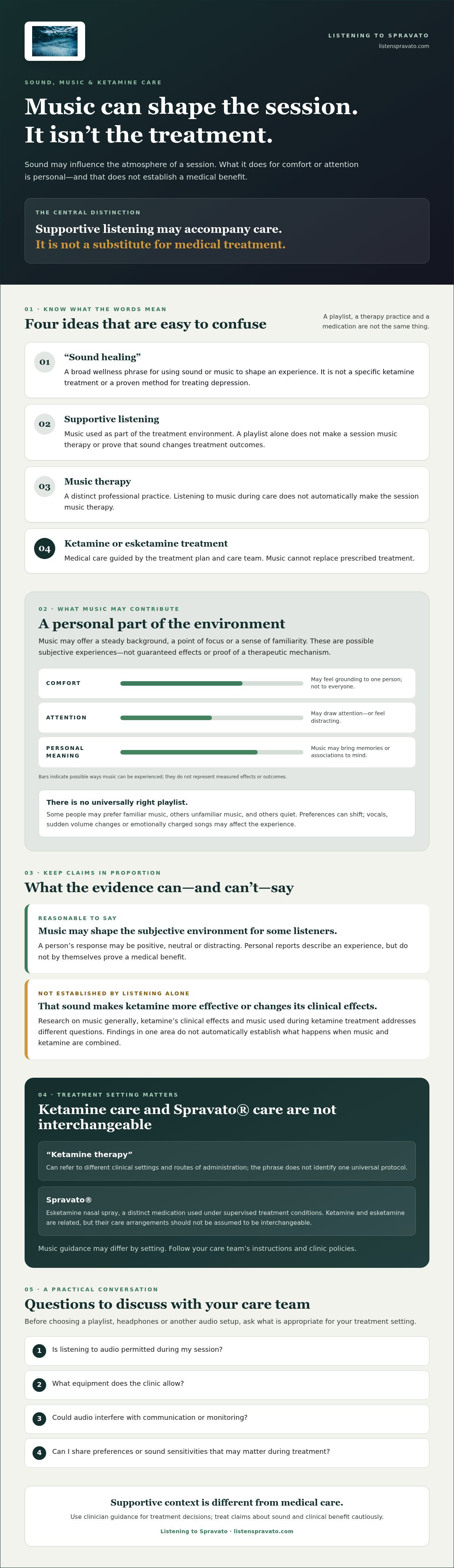
Curiosity about sound healing is understandable. Music can change the feel of a room, draw attention, or bring personal memories to the surface. But the phrase sound healing ketamine therapy can suggest a formal treatment that may not exist. Here, “sound healing” is best understood as a broad wellness term for using sound or music to shape an experience, not as a specific ketamine treatment or a proven method for treating depression.
In a session, music may be part of the environment, much like lighting or a quiet room. A familiar instrumental piece might feel grounding to one person, while another may prefer silence or different music. These choices can affect subjective comfort, but they do not establish that sound changes the medicine’s clinical effects. Music cannot replace prescribed treatment. Decisions about listening should follow clinician guidance and the treatment setting’s policies.
Sound healing, music therapy, and music-assisted care are not identical
These terms describe different activities and roles. “Sound healing” is a broad wellness phrase. Music therapy refers to a distinct professional practice, while music-assisted care may simply mean listening to music as part of a treatment environment. A playlist alone should not be described as music therapy. This article focuses on supportive listening, not a clinical intervention. For context on therapy involving ketamine, see this neutral overview of Ketamine-assisted psychotherapy.
How ketamine therapy differs from Spravato treatment
“Ketamine therapy” can refer to different clinical settings and routes of administration, so the phrase does not identify one universal protocol. Spravato® is esketamine nasal spray, a distinct medication used under supervised treatment conditions. Ketamine and esketamine are related, but their care arrangements should not be assumed to be interchangeable. Music guidance that applies in one setting may not apply in another.
Before choosing a playlist, headphones, or another audio setup, ask your prescribing clinician or treatment team whether listening is permitted, what equipment the clinic allows, and whether audio could interfere with communication or monitoring. These questions depend on the treatment setting. A general sound healing recommendation cannot answer them for you, but your care team can explain what fits your treatment plan.
How Might Music Support the Ketamine Therapy Experience?
Music can be one part of a treatment environment, offering a steady background, a point of focus, or a sense of familiarity. For someone exploring sound healing ketamine therapy, that possibility may feel meaningful. But a supportive atmosphere is not the same as a proven therapeutic mechanism. Music is not guaranteed to improve a session or change how ketamine or esketamine works.
A supportive sensory setting may accompany medical treatment, but it is not a medical treatment itself.
Why sound and personal preference may matter
Listening is personal. A familiar instrumental piece may feel reassuring to one person, while another may prefer unfamiliar music that brings fewer associations. Even gentle sound can feel distracting or uncomfortable, or simply make no difference. There is no universally right playlist or genre. Preferences may also shift, so tell your care team what you usually enjoy, what you avoid, and whether you are sensitive to sound or lyrics.
Consider specific listening details before discussing music with your team. Do vocals, sudden volume changes, or emotionally charged songs tend to pull your attention? Would you rather have quiet? Sharing these preferences gives clinicians useful context, but it cannot predict how you will feel during treatment. Follow the clinic’s guidance about whether audio is allowed and how it may be used.
What the evidence can and cannot support
Research on music in general, ketamine’s clinical effects, and music used during ketamine treatment addresses different questions. Findings about one do not automatically establish what happens when music and ketamine are combined. To show that a particular sound approach causes a better clinical outcome, research would need to examine that approach alongside appropriate comparisons. Personal reports can describe what an experience felt like, but they cannot by themselves prove that sound produced a medical benefit.
Claims that “sound healing” makes ketamine more effective should therefore be treated cautiously unless research directly tests that combination. The careful conclusion is more modest: music may shape the subjective environment for some listeners, while its clinical contribution remains uncertain. Your response may be positive, neutral, or distracting. None of those reactions means you have chosen incorrectly.
If you want a structured way to consider genres and listening choices for Spravato treatment, the Listening to Spravato guide offers educational ideas to discuss with your care team. It is not medical advice or a substitute for their guidance.
Sound Healing vs. Music During Treatment: How to Evaluate the Claims
Similar language can blur important differences. A person listening to music during a session, a clinician incorporating music into care, and a patient receiving ketamine or esketamine are not necessarily taking part in the same practice. When you encounter sound healing ketamine therapy claims, ask what is actually being offered and what evidence supports the claim.
| Approach | Purpose | Provider | Evidence and relationship to medical care |
|---|---|---|---|
| Supportive listening | Shape the atmosphere or offer a personal point of focus | The listener chooses music, if the clinic permits it | May affect subjective experience; it is not a medical treatment or proof of improved clinical outcomes |
| Clinician-led music therapy | Use music within a therapeutic process | A qualified music therapist | A distinct professional service; it does not replace medication or other prescribed care |
| Ketamine or esketamine treatment | Provide medical treatment within a clinical care plan | Qualified healthcare professionals | Medical care involving ketamine or esketamine; music is not the medication |
Music may accompany a session, but it is not a medication or a cure. Sound healing is not a substitute for ketamine treatment, prescribed care, or guidance from a clinician. A playlist may feel meaningful or soothing to an individual, but that personal value does not establish a clinical effect.
What sound healing claims should prompt careful questions?
Pause over promises to cure depression, guarantee a particular outcome, or replace professional care. Ask whether a statement describes someone’s personal experience, a general wellness practice, or clinical research that directly studied the claim. These are different kinds of support. If a practitioner presents sound as part of a service, check their relevant credentials and discuss treatment-related concerns with your clinician.
Does music-assisted ketamine care mean the same thing everywhere?
No. Treatment settings, medications, and audio policies can differ. Do not assume that a music practice described for IV ketamine applies to supervised Spravato® sessions. Confirm with your treatment team whether audio is allowed and what arrangements fit your care. For more Spravato-specific context, see this music and Spravato treatment guide. Its discussion can help you prepare questions, but your clinician and clinic policies should guide decisions about your session.
Questions to Discuss Before Using Music During a Ketamine Session
Music may seem like a personal choice, but a supervised treatment session has practical considerations. Before bringing a playlist or device, ask your care team what is permitted. Use this checklist to guide a conversation, not as a treatment protocol or a replacement for instructions from your clinician or clinic.
- Is audio allowed during my specific treatment? Confirm the clinic’s policy before choosing music. Do not assume the rules are the same for ketamine and Spravato® sessions.
- Can I use my own headphones or device? Ask what equipment is permitted and whether staff need to communicate with you or monitor you without obstruction.
- What should I do if listening feels uncomfortable? Find out how to pause or stop the audio and whom to alert if it causes discomfort or distress.
- What listening setup feels manageable? Consider volume, headphone comfort, lyrics, and whether you would prefer music, quiet, or the option to switch between them, if the clinic allows it.
- Are there accessibility needs I should discuss? Tell your care team about hearing sensitivities or other needs that could affect your experience with audio.
Questions about safety, supervision, and session setup
Let your treatment team guide decisions about the session environment. Do not change medication, dose, or monitoring because of music, and do not treat a playlist as a way to manage treatment effects. If sound becomes distracting or upsetting, follow the clinic’s instructions and contact staff as directed. A guide to navigating the Spravato treatment experience can help you prepare broader questions for your care team.
Choosing a listening resource that fits your needs
If your clinician approves music, focus on what you find comfortable rather than searching for a universal soundtrack. Some people may want a clear structure or music organized around treatment phases; others may prefer to choose familiar sounds themselves. An educational guide can help you explore options and prepare questions without prescribing what you should listen to. The Listening to Spravato Kindle guide offers related context to review alongside professional guidance.
For a structured starting point, explore the Listening to Spravato resources and bring any ideas that interest you to your care team. Thoughtful sound healing ketamine therapy discussions begin with your preferences, but session decisions belong with the clinicians responsible for your care.
Using a Sound-Informed Guide Alongside Professional Ketamine Care
Exploring music for treatment can raise practical questions: What kinds of sound might feel comfortable? How can you discuss preferences with your care team? An educational resource can help organize those questions and introduce listening ideas, while leaving clinical decisions to qualified clinicians.
Listening to Spravato is a guide to music-assisted esketamine treatment, not treatment itself. It does not provide medical advice or replace a clinician’s judgment. Its purpose is to help patients and clinicians explore music as a possible part of the treatment environment, without promising that a particular sound or playlist will change clinical outcomes. Whether music is permitted or appropriate depends on the treatment setting and care team.
What a patient-and-clinician guide can offer
The guide includes genre-by-genre guidance, playlists organized by treatment phase, and practical session considerations. These give patients and clinicians shared topics to discuss, such as listening preferences or whether audio fits the clinic’s setup. They are starting points for conversation, not treatment instructions. A clinic may have its own policies, and not every care team permits or recommends music during sessions.
Responsible sound healing ketamine therapy resources can help readers explore options, but they should not present a universal soundtrack or imply that music is required. Use the material to prepare questions, then follow the guidance of the professionals overseeing your care.
Choosing print, digital, or audiobook access
Choose the format that suits how you prefer to take in information. Print may suit readers who like to revisit passages on the page; a digital edition offers an electronic reading format; and the audiobook presents the guide in audio, including its music references and session stories. Curated Spravato® playlists are another listening resource, but ask the clinic whether they can be used during a session.
For details about the audio edition, see the esketamine audiobook guide. However you explore the material, treat it as educational context, not a clinical protocol. Bring ideas or questions to your care team before making plans for a session.
If you would like to explore the guide and its music resources, visit Listening to Spravato as an educational companion to professional care.
Bring Thoughtful Listening Into the Conversation
Music may shape the feel of a ketamine or esketamine session, but that does not make sound healing a medical treatment. Its role, if any, is personal and supportive. The evidence does not justify promises that a playlist will treat depression or improve clinical outcomes. Your preferences matter, and your care team’s guidance and clinic policies should lead decisions about session audio.
A useful next step is to bring specific questions to your clinician: whether music is permitted, what equipment is allowed, and what to do if listening feels uncomfortable. A focused conversation can help you explore sound without asking it to do more than it can.
Created by Justin Page, a conservatory-trained musician and Spravato patient, Listening to Spravato offers print, digital, and audiobook formats, along with curated playlists and practical session guidance. It is an educational resource, not medical advice or a replacement for professional care. Explore the Listening to Spravato guide and audio resources as you prepare questions for your care team.
Frequently Asked Questions
Can sound healing help during ketamine therapy?
Music may support the session environment for some people, but it is not a proven treatment for depression or a guaranteed way to improve ketamine therapy. “Sound healing” is a broad wellness term, not a standardized ketamine treatment. When considering sound healing ketamine therapy, distinguish a listener’s personal experience from evidence that sound causes a clinical benefit. Ask your care team whether audio is appropriate for your treatment setting.
Is music therapy the same as sound healing during ketamine treatment?
No. Sound healing is a broad wellness phrase, while music therapy describes a distinct therapeutic practice involving a qualified professional. Listening to a playlist during treatment does not, by itself, make the session music therapy. The purpose, provider, and relationship to clinical care differ. If someone describes a service as music therapy, ask who provides it and what qualifications they have, then discuss treatment-related questions with your clinician.
Can I listen to music during Spravato treatment?
Possibly, but confirm with your Spravato treatment team before bringing or using audio. Spravato is administered under supervised treatment conditions, and each clinic may have its own policies about headphones, devices, volume, and staff communication. Ask whether listening is permitted during your session and what to do if music feels uncomfortable or distracting. Do not assume that practices used in another ketamine setting apply to Spravato.
Does ketamine therapy work better with music?
It has not been established that ketamine therapy works better with music. Research on ketamine, music, and music used alongside ketamine addresses different questions, so findings about one do not automatically prove a benefit from combining them. Music may influence how a person experiences the setting, but that is not the same as demonstrating improved clinical outcomes. Treat claims of guaranteed benefit cautiously and follow your prescribing clinician’s guidance.
What kind of music is used during ketamine therapy?
There is no universal soundtrack or standard playlist for every ketamine setting. Instrumental, ambient, or classical music may be suggested as options, but preferences vary, and some people may prefer quiet. Lyrics, associations, volume, and sudden changes in sound can affect whether music feels comfortable or distracting. Ask your care team what is allowed before selecting music, and do not assume a playlist used elsewhere is right for your session.
Is sound healing a replacement for ketamine or esketamine treatment?
No. Sound healing or music listening should not replace prescribed ketamine or esketamine treatment, other recommended care, or advice from your clinician. Music may be a supportive part of the environment if your care team approves it, but it is not medication and should not be treated as a cure for depression. If you are considering a change to your treatment plan, discuss it with the professional responsible for your care.
How can I choose a music guide for Spravato treatment?
Look for an educational resource that distinguishes listening ideas from medical advice and encourages discussion with your care team. Listening to Spravato offers genre guidance, playlists organized by treatment phase, and practical session considerations in print, digital, and audiobook formats. Created by conservatory-trained musician and Spravato patient Justin Page, it can help you explore options and prepare questions, but it does not prescribe a soundtrack or replace clinical guidance.


