

What if the most critical component of your session isn't the medication itself, but the atmosphere you build around it? For many, the mandatory two-hour observation period feels like an unpredictable voyage into the unknown. It is common to feel a sense of trepidation about the dissociative "void" or to worry that a slamming door in the clinic might shatter your internal focus. You may have even discovered that your favorite songs suddenly feel abrasive or "wrong" once the esketamine begins to take effect.
We understand that this level of vulnerability requires a structured, intentional container. Selecting the right music for spravato treatment serves as a form of therapeutic scaffolding, providing a steady hand to hold while you navigate the peaks of neuroplasticity. This guide will show you how to curate a sonic environment that minimizes distraction and maximizes your healing potential. You will learn to move beyond random playlists toward a deliberate auditory architecture that ensures safety, fosters deep calm, and anchors your journey from the first mist to the final moments of the session.
Key Takeaways
- View sound as a structural container that maintains your internal focus and shields you from external clinical distractions.
- Understand the biological synergy between auditory stimuli and the heightened neuroplasticity triggered by increased glutamate levels during your session.
- Learn why selecting instrumental music for spravato treatment is vital for keeping language centers offline and avoiding unwanted narrative memories.
- Structure your two-hour session as a three-movement symphony, transitioning intentionally through induction, peak dissociation, and gentle integration.
- Utilize the "Listening to Spravato" protocol to bridge the gap between clinical requirements and a deeply resonant sensory experience.
The Role of Sound in Esketamine Therapy: Beyond Background Noise
Music isn't just a way to pass the time during a clinical session. It is the structural scaffolding for the entire journey. When using Esketamine (Spravato), the mind enters a state of profound vulnerability. In this space, the ego-mind often steps back, leaving you to navigate a vast internal landscape. Music acts as a reliable guide, offering a rhythmic thread that connects you to the present moment even when your sense of self feels fluid. This is why the choice of music for spravato treatment is so consequential; it determines the texture and direction of your experience.
Clinical settings are rarely perfectly quiet. A nurse might speak in the hall, or a door might click shut. These small sounds can trigger a startle response during treatment, which feels jarring when you're in a dissociative state. Music masks these interruptions. It ensures the transition into and out of the peak experience remains graceful rather than abrupt. By providing a consistent auditory floor, sound allows the brain to let go of its defensive vigilance.
The Concept of the 'Safe Container'
Consistent audio textures create a predictable environment for the brain. This predictability is vital for deep healing. If your mind knows what to expect from its sensory input, it can relax its guard. We call this holding space. Without curated sound, silence can become heavy with its own weight. Silence often invites anxiety because the brain searches for anchors that aren't there. A well-designed container of sound provides those anchors, allowing you to explore difficult emotions without feeling untethered.
Why Set and Setting Include Soundscapes
Set refers to your internal mindset, while setting is your external environment. While the clinic's lighting or furniture might be fixed, your auditory landscape is yours to shape. High-quality noise-canceling headphones are essential tools in this process. They create a private sanctuary, effectively muting the clinical world and focusing your attention inward. Sound-medicine is the intentional use of audio to facilitate clinical outcomes. By curating your music for spravato treatment, you transform a mandatory observation period into a deep, facilitated healing session. This intentionality shifts the experience from something that happens to you into something you actively navigate with purpose and dignity.
The Neuroscience of Sound and Spravato: Shaping Neuroplasticity
Spravato functions by modulating glutamate, the brain's primary excitatory neurotransmitter. This process opens a critical window of neuroplasticity where the neural architecture becomes more flexible and receptive to change. During these two hours, your brain is essentially in a state of rapid "rewiring." Because the mind is so sensitive during this period, the sensory input it receives becomes the blueprint for new connections. Choosing the right music for spravato treatment ensures that this growth is guided by intentionality and calm. The amygdala, which regulates our fear response, remains active during these sessions. Curated sound helps soothe this region, signaling to your nervous system that it's safe to engage with the experience.
Music and the Default Mode Network (DMN)
The Default Mode Network acts as the brain's ego center. It's responsible for self-referential thought, rumination, and the "inner critic" that often fuels depression. Spravato temporarily suppresses the DMN, which is why patients experience a sense of dissociation or a "stepping back" from their usual identity. When this ego center goes quiet, music provides a new focal point for consciousness. It fills the space left by the retreating ego, offering a non-narrative structure for the mind to follow. This synergy between pharmacological dissociation and auditory immersion allows you to observe your thoughts from a fresh perspective. For those looking to master this internal navigation, the Listening to Spravato protocol provides a structured approach to this neurobiological window.
Enhancing Emotional Resonance through Frequency
Sound frequencies interact directly with your physiological state during treatment. Low-frequency "drone" sounds are particularly effective at grounding the body when the physical self feels distant or light. These deep, steady vibrations provide a sense of gravity and security. In contrast, neo-classical strings can evoke specific emotional releases. The swell of a cello or the reach of a violin mimics the cadence of human emotion, facilitating a cathartic experience without the need for language. Music colors the neuroplastic window with intentional emotional tones. By selecting specific frequencies, you can prime your brain for the exact type of emotional processing required for your healing journey.
The Golden Rule: Why Lyric-Free Music is Essential
The most common mistake patients make is choosing their favorite songs for their session. While a cherished track provides comfort in everyday life, it often becomes a source of profound agitation during the peak of dissociation. This happens because the brain shifts from active listening, where we analyze and categorize sounds, to receptive immersion. In this state, your mind is exceptionally sensitive to external stimuli. A familiar lyric or a heavy drum beat can feel like an intrusion, pulling you out of your internal journey and forcing you back into a rigid, everyday reality. To maximize the therapeutic window, your music for spravato treatment should be entirely instrumental.
When you listen to words, your brain's language processing centers, specifically Broca's and Wernicke's areas, must stay "online" to decipher meaning. This creates an unnecessary cognitive load. The goal of esketamine therapy is to allow these analytical parts of the mind to rest so that deeper emotional processing can occur. Lyrics often trigger "narrative hijacking," where a single phrase forces the brain into a specific memory or a pre-defined story. This limits the "blank canvas" effect of the medicine, preventing your mind from wandering where it needs to go for genuine healing. Instrumental music, by contrast, provides the emotional swell without the restrictive narrative.
Language Processing and the Distraction of Words
Even non-English lyrics or vocalizations like glossolalia can be distracting. The human brain is evolutionary hard-wired to seek out the human voice and extract meaning from it. If your mind is busy trying to figure out if a sound is a word, it isn't fully immersed in the internal experience. Purely instrumental music removes this barrier. It allows you to feel the texture of the sound rather than the meaning of the message. This creates a more spacious environment where your thoughts can flow without being tethered to a specific linguistic anchor.
Selecting the Right Genres: Ambient, Drone, and Neo-Classical
Curating the right atmosphere requires a move away from traditional song structures. We recommend focusing on three specific genres that facilitate a deep, narrative-free journey:
- Ambient: These soundscapes prioritize atmosphere over melody. They create a sense of vastness and open space, which is ideal for the expansive feelings often encountered during treatment.
- Drone: Characterized by steady, sustained tones, drone music provides a rhythmic "anchor" to the physical world. It offers a sense of security and gravity when the ego-mind feels most fluid.
- Neo-Classical: Utilizing piano and strings, this genre allows for a high degree of emotional resonance. It mimics the cadence of human feeling, allowing for catharsis and release without the interference of lyrics.
By selecting these textures, you ensure your music for spravato treatment acts as a supportive companion rather than a demanding narrator.
Orchestrating Your Session: Mapping Music to the Three Phases
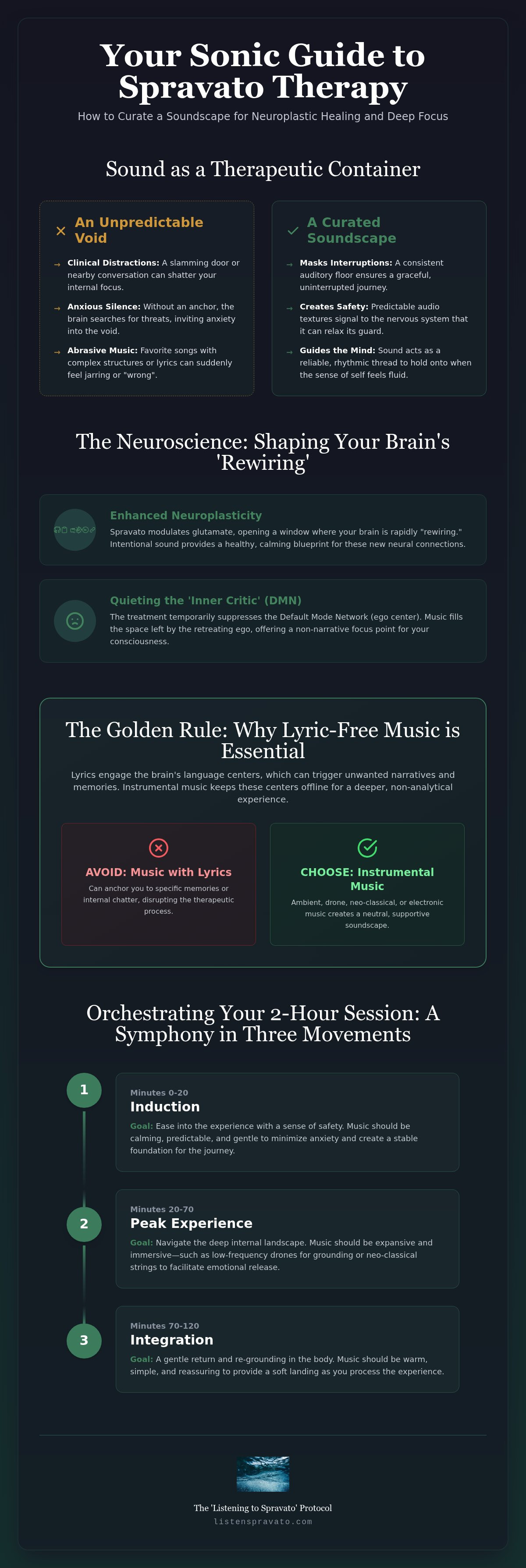
A successful session requires viewing the two-hour observation period as a three-movement symphony. You shouldn't treat this time as a single, static block of silence or random sound. Instead, the music for spravato treatment must evolve alongside the medication's metabolism in your system. To achieve the necessary depth, high-quality noise-canceling headphones are a non-negotiable requirement. They serve as your primary tool for blocking out clinical distractions while providing the high-fidelity resonance required for deep immersion. Before the first spray, establish a dedicated buffer period. Set your playlist, adjust your volume, and settle into your seat. This preparation ensures you won't need to fumble with a device once the dissociation begins, allowing the transition into the experience to remain fluid and dignified.
The Onset Phase (0–20 Minutes): Inviting Calm
The first twenty minutes are about conscious preparation and physiological grounding. As the medication enters your system, your heart rate may rise slightly due to natural anticipation. Use gentle, repetitive melodies to signal to your nervous system that it's safe to let go of external vigilance. This period acts as the bridge between the busy outside world and your internal landscape. For a deeper look at specific tracks for this window, explore our guide on the Spravato Onset Phase: Music for the First 20 Minutes.
The Peak Phase (20–60 Minutes): Holding the Dissociative Space
During the peak, the ego-mind recedes most significantly, and the sense of time often becomes fluid. You need vast soundscapes here; music that lacks a driving, predictable rhythmic pulse which might feel too demanding. Deep drone elements provide a subtle, steady tether to the physical world without requiring analytical thought. In this window, the peak is a weightless state supported by sound. The music shouldn't tell you where to go or what to feel, but should instead provide the very air you breathe while you're there. This is where the therapeutic scaffolding is most vital, preventing the experience from feeling chaotic or ungrounded.
The Integration Phase (60–120 Minutes): Returning to Center
As the peak subsides, the music should shift to reflect your gradual return to the physical body. Introduce subtle rhythms and more defined melodic structures to help you feel your limbs and surroundings again. This is the crucial time for meaning-making, where the abstract insights from the peak begin to take a more concrete shape in your mind. For more information on navigating this transition, see our resource on Coming Back: Music for the Spravato Integration Phase. To ensure your session flows seamlessly without interruption, consider using Curated Spravato Playlists designed specifically for this three-phase arc.
Elevating Your Journey with the 'Listening to Spravato' Protocol
While understanding the theory of sound-medicine is helpful, applying it within a clinical setting requires a refined methodology. The book 'Listening to Spravato' serves as the definitive guide for this process. It provides a structured framework that helps you move from simply playing music to curating a targeted therapeutic environment. By following this protocol, you ensure that every minute of your session is supported by intentional sound. This resource helps both patients and clinicians speak a shared language of sound, ensuring that the auditory environment is treated with the same clinical respect as the medication itself.
The Justin Page Approach: Artistry Meets Medicine
Justin Page brings a unique dual perspective to the field of esketamine therapy. As a conservatory-trained musician, he understands the technical nuances of frequency, timbre, and resonance. However, his most valuable insights come from his experience as a patient. He has navigated the dissociative landscape himself, learning firsthand how a specific chord progression or a sustained drone can provide safety during a peak experience. This artistry meets medicine approach bridges the gap between a clinical trial and a deeply personal human experience. He isn't just an instructor; he's a peer who has carefully studied the intersection of sound and neurobiology to provide an elegant solution for those seeking relief.
Integrating the Guide into Your Treatment Plan
Success in the clinic begins with preparation at home. We recommend reading the Spravato Book: Guide for Esketamine Therapy well before your first appointment. This allows you to set your intentions and understand the genre-by-genre protocols included in the text. For those who prefer a more immersive experience, the audiobook version offers a narrated journey that mirrors the pacing of a session. To complement the text, we offer Curated Spravato Playlists that align perfectly with the three-movement session symphony described in the earlier sections. These tools transform the search for music for spravato treatment into a refined, professional practice that prioritizes your dignity and long-term healing.
Anchoring Your Path to Recovery
The journey through esketamine therapy is a profound act of vulnerability and courage. By viewing music for spravato treatment as a vital therapeutic tool rather than background noise, you reclaim agency over your internal landscape. You now understand that instrumental textures prevent narrative hijacking, while a three-phase session symphony provides the necessary structure to navigate the peaks of neuroplasticity safely. This intentionality ensures that your two-hour observation period becomes a focused window for genuine transformation.
Authored by conservatory-trained musician Justin Page, the Listening to Spravato protocol offers detailed genre-by-genre guides used by patients and clinics worldwide. It bridges the gap between clinical data and the human heart. To deepen your experience and master the language of sound, order the Listening to Spravato guide on Amazon or your favorite retailer today. You deserve an environment that honors your dignity and facilitates your healing with grace. Step into your next session with the confidence of a well-prepared traveler.
Frequently Asked Questions
Can I listen to my favorite music during Spravato treatment?
While it's tempting to reach for familiar favorites, most patients find that their usual music for spravato treatment feels intrusive during the peak. Familiar songs often carry specific memories or emotional triggers that can force the brain into a rigid narrative. This prevents the mind from exploring the new perspectives offered by the neuroplastic window. Instead, we recommend music that provides an open, expansive atmosphere without personal associations, allowing for a more profound and uninterrupted internal journey.
Why is lyric-free music recommended for esketamine therapy?
Lyric-free music is essential because words engage the brain's language processing centers, such as Broca's and Wernicke's areas. During esketamine therapy, the goal is to allow these analytical parts of the mind to rest. Lyrics can inadvertently trigger "narrative hijacking," where a single phrase pulls you into a specific memory or worry. Instrumental sounds allow for a purely emotional and sensory journey, providing the necessary space for deep, non-linear healing without the interference of a linguistic anchor.
What are the best genres of music for a Spravato session?
The most effective genres are those that prioritize atmosphere and texture over traditional song structures. Ambient music creates a sense of vastness and open space. Drone music provides a steady, rhythmic anchor that grounds the physical body during deep dissociation. Neo-classical pieces, featuring strings and piano, allow for emotional resonance without the distraction of a heavy beat. These genres provide the structural scaffolding needed to support the different phases of your session without demanding analytical thought.
Do I need noise-canceling headphones for my Spravato treatment?
High-quality noise-canceling headphones are a fundamental requirement for a successful session. Clinical environments are often filled with unpredictable noises like clicking doors, staff conversations, or medical equipment. These sounds can trigger a startle response, which is jarring during a dissociative state. Using noise-canceling technology creates a private, predictable sanctuary. This allows you to remain fully immersed in your internal landscape, ensuring your music for spravato treatment remains a steady and supportive anchor throughout the session.
How loud should my music be during the session?
Your volume should be set at a level that effectively masks the sounds of the clinic without becoming overstimulating. It's best to find a "goldilocks" zone where the music feels like a warm, enveloping presence. If the volume is too low, external distractions might leak in. If it's too high, it can feel aggressive or cause physical discomfort as the medicine heightens your sensory sensitivity. Adjust your volume during the onset phase before the peak begins.
What happens if the music stops or my battery dies mid-session?
If your music stops abruptly, it can feel like a sudden, jarring "crash" back into the physical world. This loss of scaffolding can cause temporary anxiety or confusion. To prevent this, always ensure your devices are fully charged or use wired headphones to avoid Bluetooth connectivity issues. We recommend setting your device to "Do Not Disturb" mode. If a failure occurs, try to remain still, focus on your breath, and notify a clinician if necessary.
Is it okay to listen to guided meditations instead of music?
While guided meditations are helpful for daily stress, they are often less effective during the peak of an esketamine session. The human voice requires the brain to process language, which can interfere with the deep, non-verbal states of dissociation. Meditation can be useful during the initial onset or the final integration phase. However, for the most significant portion of the treatment, pure instrumental sound provides a more reliable and less restrictive container for the mind to wander.
Can clinicians use these music protocols in their Spravato clinics?
Many clinicians and certified healthcare settings now integrate these protocols to enhance patient safety and comfort. The "Listening to Spravato" guide was designed to help both patients and providers speak a common language regarding the sensory environment. Clinics can utilize our curated playlists and genre-by-genre guides to standardize the auditory experience within their observation rooms. This professional approach ensures that the mandatory two-hour monitoring period is utilized for maximum therapeutic benefit and patient satisfaction.


