

What if the sterile walls of a clinical observation room could dissolve into a landscape of profound personal insight? For many, the prospect of the mandatory two hour monitoring period required for esketamine treatment brings a quiet anxiety. It is natural to fear a loss of control or to feel unsettled by the clinical environment. You aren't alone in wondering how to bridge the gap between a medical protocol and a meaningful therapeutic breakthrough, especially when considering the nuances of a spravato vs ketamine music experience.
Transforming your session from a passive medical event into an intentional journey requires a shift in perspective. While the 2026 REMS modifications ensure your physical safety, the internal architecture of your experience depends on sensory preparation. This guide provides the structure you need to feel empowered and prepared. We will explore how to prepare for the sensory shifts of dissociation and how to use curated sound as a supportive scaffolding for your mind. You'll learn how to orchestrate your surroundings to foster a sense of safety and resonance. By the end of this article, you will have a clear roadmap for your session, ensuring you move through the process with confidence and dignity.
Key Takeaways
- Learn to navigate the three distinct phases of your session, onset, peak, and integration, while adhering to the 2026 mandatory monitoring protocols.
- Prepare for the sensory shifts of dissociation by setting a gentle intention and understanding the biological basis of neuroplasticity.
- Assemble a practical Session Kit to transform the clinical environment into a structured, therapeutic sanctuary.
- Explore how the spravato vs ketamine music experience relies on lyric-free soundscapes to guide the mind without the distraction of language.
- Master the use of intentional sound as a scaffolding for your journey, ensuring a sense of safety and dignity throughout the experience.
What is the Spravato Treatment Experience? Beyond the Clinical Definition
The journey through a session is more than a medical appointment; it is a unique intersection where a rapid acting antidepressant meets a profound sensory shift. Clinically known as Esketamine (Spravato), this medication acts as a catalyst for profound internal shifts. For many, the experience feels like a temporary departure from the heavy, static nature of depression into a more fluid and expansive state of mind. It is a time when the brain moves beyond its usual patterns, allowing for a rare moment of quiet and reflection.
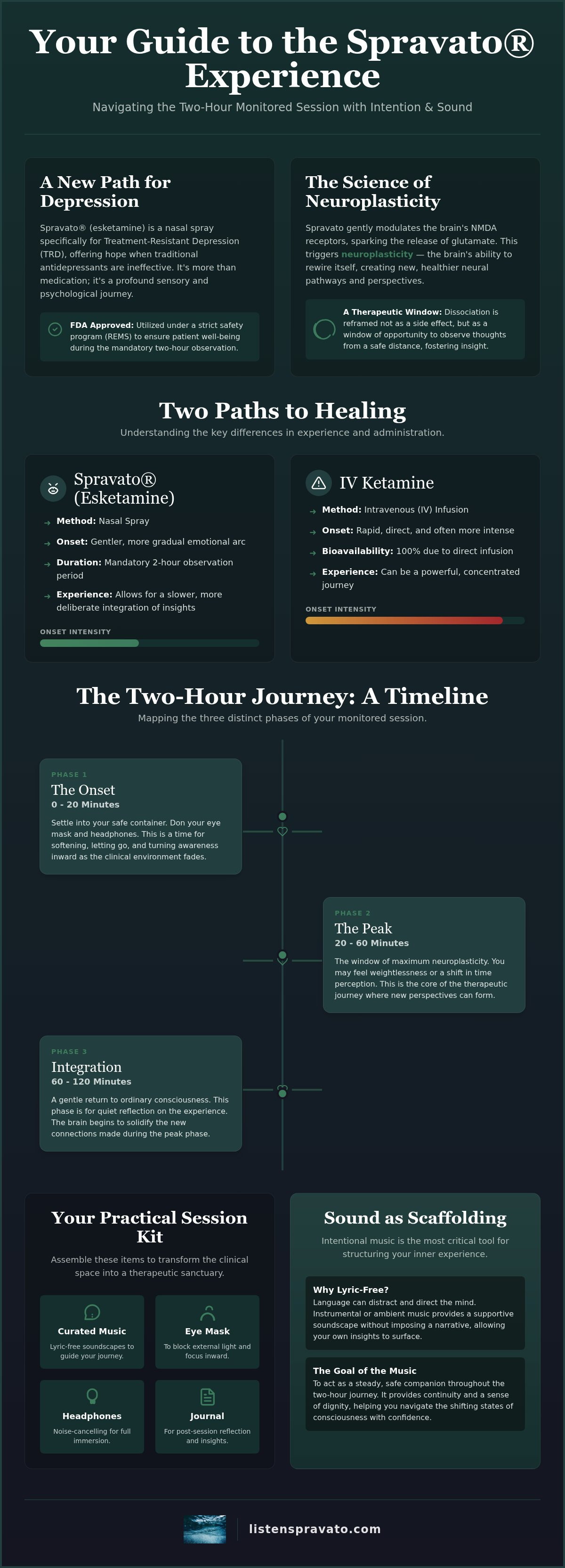
At the biological level, the process centers on the NMDA receptor. By gently modulating this receptor, the medication encourages the release of glutamate, which in turn sparks a process called neuroplasticity. You can think of this as the brain’s remarkable capacity to reorganize and rewire itself during the session, creating space for new perspectives to take root. Instead of viewing the resulting dissociation as a mere side effect to be endured, we can choose to see it as a therapeutic window. This state of altered perception provides the distance necessary to observe your thoughts without being overwhelmed by them.
Success in this environment relies heavily on "Set and Setting." While the clinic provides the physical setting, your "set" refers to your internal preparation and intention. Approaching the session with mindful intentionality transforms a clinical requirement into a dignified journey of healing.
The Role of Esketamine in Modern Mental Health
Spravato is specifically utilized for Treatment Resistant Depression (TRD), offering hope when traditional oral antidepressants haven't provided relief. There is a vital distinction between the physical act of using the nasal spray and the psychological journey that follows. While the medication does the biological work, the patient navigates the emotional landscape. Neuroplasticity represents the brain’s ability to rewire and form new, healthier neural pathways during the session, making the period of administration a fertile ground for change.
Esketamine vs. IV Ketamine: Two Paths to Healing
Understanding the spravato vs ketamine music experience requires recognizing how the administration method influences the session's rhythm. IV ketamine involves a direct intravenous infusion, resulting in 100% bioavailability and a rapid, often intense onset. In contrast, Spravato is a nasal spray with a different absorption profile, leading to a gentler emotional arc. Because Spravato requires a mandatory two hour observation period, the music you choose must act as a steady companion for a longer duration. This extended timeframe allows for a more gradual integration of the experience, where sound serves as the essential scaffolding for your shifting consciousness.
The Two-Hour Journey: A Step-by-Step Guide to Your Session
A Spravato session is a structured two hour commitment that requires both physical presence and psychological readiness. This isn't just idle waiting time. It's a clinical necessity mandated by the FDA approval history and the rigorous REMS safety program. During this period, healthcare providers monitor your physiological response at specific intervals. Blood pressure checks serve as vital clinical data points, but they also function as gentle anchors to the physical world. They remind you of your safety and the presence of care while you navigate your internal landscape. Viewing these checks as supportive milestones rather than interruptions helps maintain a sense of calm continuity.
Phase 1: The Onset (0-20 Minutes)
The first twenty minutes are foundational for the entire session. You might notice a slight metallic taste from the nasal spray or a cooling sensation in the back of the throat. These are normal physical signals that the medication is beginning its work. This is the time to settle into your "safe container." Put on your eye mask and adjust your headphones. The transition from the external clinic to the internal experience begins here. How you use these minutes often sets the tone for the entire spravato vs ketamine music experience. It is a time for softening and intentional letting go, allowing the clinical environment to fade as your awareness turns inward.
Phase 2: The Peak (20-60 Minutes)
This middle hour represents the window of maximum neuroplasticity and dissociation. You may feel a sense of weightlessness, a shift in time perception, or a feeling of being "unmoored" from your physical body. If the experience becomes intense, remember that you are in a controlled, safe environment. Music acts as the invisible hand that holds you during this deep work. It provides a non-verbal structure that guides the mind when thoughts feel fluid or abstract. For those who want a more immersive and guided session companion, the Listening to Spravato audiobook offers a refined way to navigate the complexities of this peak phase with confidence.
Phase 3: The Integration and Return (60-120 Minutes)
As the primary effects recede, you enter the integration phase. This is a gradual re-entry into the physical world. Your surroundings will slowly feel more solid and familiar. Use this time for quiet reflection or light journaling rather than digital distraction. It's vital to avoid checking your phone or responding to emails during this window. The brain remains in a sensitive, plastic state, and overstimulation can disrupt the settling process. Protecting this time allows the insights from your journey to take root, ensuring you leave the clinic feeling grounded and dignified.
Managing Sensations: What Esketamine Actually Feels Like
Dissociation is often the primary source of apprehension for patients beginning their journey. It is frequently described as an "out-of-body" feeling, which can sound intimidating without the proper context. In a therapeutic setting, this sensation is not a loss of control but a gentle uncoupling from the physical self. You might feel a pleasant numbness in your limbs or a sense of weightlessness, as if the usual pull of gravity has softened. Time perception often shifts; minutes may feel like hours, or an entire hour might pass in what feels like a heartbeat. These shifts are the physical manifestations of the medication opening a window of neuroplasticity, allowing the brain to step away from rigid, depressive thought patterns.
Visual experiences during a session are rarely true hallucinations. Instead, they are more akin to an enhanced internal imagination or a vivid, wakeful dream. With your eyes closed behind a mask, you may see fluid shapes, muted colors, or spatial depth that feels more vast than the room you are in. These sensations act as therapeutic scaffolding. They provide the distance necessary to process difficult emotions or past trauma without the immediate, sharp sting of the ego. By framing these sensations as tools for reflection, you can move from a state of fear to one of mindful curiosity.
Understanding Dissociation vs. Fear
Dissociation is a temporary detachment that allows for objective self-reflection. It's like sitting in a theater and watching the story of your life on screen rather than being trapped in the middle of the drama. This distance is where the healing happens. If you ever feel like you are drifting too far, a simple grounding technique can bring you back. Focus on the rhythm of your breath or the physical sensation of your hands resting on your lap. For more specific strategies on staying centered, you can explore Music for Spravato: Sound as Therapeutic Scaffolding, which details how to use your environment to maintain a sense of safety.
Spravato vs Ketamine Music Experience: Sensory Nuances
The spravato vs ketamine music experience is defined by its unique rhythm and delivery. Because esketamine is administered as a nasal spray, the onset is typically more gradual than the "flood" of an IV infusion. This creates a session that feels more structured and less jarring. Music serves as the rhythmic container for this experience, providing a steady pulse that mirrors the medication's arc. A well-curated playlist holds you during the peak and gently guides you back during the return. The Listening to Spravato book offers a comprehensive look at how to navigate these specific sensory shifts, ensuring your journey is both purposeful and dignified.
How to Prepare for Your Spravato Experience: A Practical Checklist
Preparation is the bridge between a routine clinical appointment and a transformative therapeutic journey. While your healthcare provider manages the medical protocol, you hold the power to curate your internal environment. A well-prepared patient moves through the two hour observation period with a sense of agency rather than passive endurance. This proactive approach begins with assembling a dedicated Session Kit, ensuring your physical and sensory needs are met before the first spray is administered.
The Essential Sensory Toolkit
Your surroundings in a clinic can be unpredictable. Staff may speak in the hallway, or medical equipment might beep. High quality, noise-canceling headphones are non-negotiable for protecting the integrity of your session. They create a private sanctuary, allowing you to focus entirely on your curated soundscape. The spravato vs ketamine music experience often requires more robust auditory shielding than at-home or private IV settings because clinical environments are inherently busier.
In addition to sound, consider these items for your toolkit:
- 100% Light-Blocking Eye Mask: Total darkness encourages the brain to stop processing external visual data and turn inward.
- Comfortable, Layered Clothing: Body temperature can fluctuate during dissociation. Soft fabrics and easy-to-remove layers ensure you stay regulated.
- Weighted Blanket or Scarf: A physical anchor provides a sense of safety and grounding if the feeling of weightlessness becomes too intense.
Setting Your Intention
There is a vital distinction between an expectation and an intention. An expectation is a rigid goal, such as "I must feel happy today," which can lead to frustration if the session takes a different turn. An intention is a gentle North Star. It is a soft invitation to the mind, such as "I am open to whatever arises" or "I am seeking a sense of peace." By setting an intention, you bridge the gap between clinical treatment and personal healing, giving your subconscious a dignified path to follow.
Logistically, you must adhere to the 2026 REMS safety requirements. This includes fasting from food for at least two hours and liquids for 30 minutes prior to your appointment to minimize nausea. Because esketamine can impair motor skills and judgment, you must have a mandatory ride home and refrain from driving until the next day. To deepen your preparation and ensure you have the right auditory support for these requirements, you can explore curated playlists designed specifically for the esketamine journey. Finally, keep a Session Journal nearby. Capturing even small fragments of insight during the integration phase can be invaluable for your long-term progress.
Sound as Scaffolding: Enhancing Your Journey with Intentional Music
Music serves as the invisible hand that guides your consciousness through the esketamine experience. It's far more than a simple distraction from the clinical environment; it's the very architecture of the journey itself. While the medication creates a biological window for change, intentional sound provides the necessary scaffolding to move through that window with purpose. By carefully selecting your auditory environment, you transform a clinical requirement into a curated, therapeutic event. This is especially true when considering the spravato vs ketamine music experience, where the extended observation period requires a more sustained and intentional approach to sound.
One of the most critical elements of this preparation is the "No Lyrics" rule. During the peak of your session, the language-processing centers of your brain need to rest. Lyrics can inadvertently pull you back into analytical, ego-driven thought, disrupting the fluid and non-verbal state required for deep emotional work. By choosing instrumental soundscapes, you allow the mind to process feelings and memories through resonance rather than logic. This allows for a deeper immersion into the internal landscape, where insights can emerge without the interference of verbal labels.
Why Music Changes Everything
The interaction between esketamine and music is rooted in how sound influences the limbic system and the brain's emotional centers. When your ego defenses are lowered by the medication, music can reach parts of the psyche that remain inaccessible during normal waking consciousness. A steady, predictable tempo helps stabilize a fluctuating mood during the peak, acting as a grounding anchor. Sound provides a rhythmic container for the mind, offering a sense of structure when your internal world feels fluid or expansive. This synergy between chemistry and frequency is what facilitates the profound emotional breakthroughs many patients seek.
The Listening to Spravato Collection
The Listening to Spravato methodology focuses on genre-specific protocols that mirror the biological arc of your session. Our print and digital guides offer meticulous playlist recommendations that account for the nuances of the esketamine peak, ensuring the music evolves as your state of consciousness shifts. Each selection is curated by a conservatory-trained musician to ensure the highest level of artistic and therapeutic resonance.
The audiobook, however, provides a truly immersive experience for those who desire a steady presence throughout their treatment. It places a Learned Guide directly in your ear, offering a refined blend of clinical reassurance and artistic resonance. This narrated support helps you navigate the two hour window with dignity, ensuring every phase of the journey is supported by expert curation. Whether you are in the onset, peak, or integration phase, these resources act as a supportive companion on your path to healing. Enhance your Spravato treatment experience with the official guide and audiobook.
Orchestrating Your Path to Healing
Navigating a session requires more than just showing up for an appointment. It involves a mindful preparation of your physical environment and an intentional surrender to the internal journey. By understanding the sensory shifts of dissociation and utilizing sound as a stabilizing force, you transform a clinical protocol into a profound therapeutic opportunity. The nuances of a spravato vs ketamine music experience highlight the need for a sustained, lyric-free soundscape that supports the brain’s period of maximum neuroplasticity. It's a structure that ensures you remain grounded as you explore the depths of your own mind.
To truly refine this process, you need a companion that understands both the clinical and artistic dimensions of the work. Authored by Justin Page, a conservatory-trained musician and patient, our resources provide the specific music protocols used by clinicians and patients worldwide. Master your session with the Listening to Spravato Guide and Audiobook to ensure every phase of your treatment is met with safety, purpose, and dignity. You have the tools to move through this experience with confidence. Trust in the process, and allow the music to hold you as you find your way back to yourself.
Frequently Asked Questions
How long does the Spravato treatment experience last?
A typical session lasts about two and a half hours from start to finish. This includes the time needed for check-in, the administration of the nasal spray, and the mandatory two-hour observation period. This observation window is an FDA requirement to ensure your safety as the medication takes effect. You will remain in a comfortable, monitored setting until the clinical staff determines it's safe for you to be discharged.
Can I drive myself home after a Spravato session?
You're strictly prohibited from driving until the morning after your session. Esketamine can significantly impair your motor skills and judgment, making it unsafe to operate a vehicle or heavy machinery. You must arrange for a trusted driver or a ride-share service to take you home. Planning these logistics in advance ensures you can focus entirely on your recovery without the stress of transportation concerns after your treatment.
What if I have a bad trip or feel anxious during the session?
Feeling anxious is a natural response to the sensation of dissociation. If you feel unmoored, remember that you're in a safe, controlled environment with medical professionals nearby. Grounding techniques, such as focusing on the rhythm of your breath or a soft physical object, can help. Many patients find that having a structured audio guide provides a sense of presence and safety that prevents fear from taking hold during the experience.
Why is music so important during esketamine treatment?
Music acts as a vital anchor during the session. In the spravato vs ketamine music experience, sound provides a non-verbal architecture that holds the mind as it enters an altered state. It helps stabilize your emotional register and prevents the brain from entering analytical loops. By using curated, lyric-free soundscapes, you create a supportive environment that facilitates deep introspection and the neuroplastic shifts necessary for lasting mental health improvements.
Should I talk to the nurse or doctor during my 2-hour observation?
While you can speak to staff if you need something, it's generally better to remain quiet and internal. Engaging in conversation activates the language-processing centers of the brain, which can pull you out of the therapeutic state. Your two-hour observation is a time for silent reflection. Staying within your safe container with your eye mask and headphones allows the medication to work most effectively on your neural pathways without external interference.
What should I eat before my Spravato appointment?
To minimize the risk of nausea, you shouldn't eat for at least two hours before your appointment. You should also stop drinking liquids thirty minutes before your session begins. These fasting requirements are essential for your physical comfort during the peak phase of the medication. Having a small, nutritious meal several hours before you arrive at the clinic can help maintain your energy without causing any unnecessary digestive distress.
Can I use my phone or watch movies during the session?
Watching movies or scrolling through your phone is counterproductive to the healing process. These activities provide external digital noise that interrupts the internal focus required for a successful session. Your goal is to move away from the distractions of daily life. Instead of looking at a screen, use this time to immerse yourself in a curated soundscape or a guided audio companion specifically designed for the sensory shifts of the experience.
How many sessions do I need before I feel a difference?
Every patient’s journey is unique. Some people notice a shift in their symptoms within the first twenty-four hours, while others may need several weeks of twice-weekly sessions to feel a significant change. The induction phase typically lasts four weeks, and it's vital to complete the full course as prescribed. Consistency allows the cumulative benefits of neuroplasticity to take root, leading to more sustainable improvements in your overall emotional well-being.


