

What if preparing for Spravato isn’t about controlling what you’ll feel, but knowing how you’ll support yourself if the experience is unfamiliar? Anticipatory anxiety is understandable, especially when you’re unsure what sensations may arise or how to ask for what you need. Spravato mental preparation can’t predict or guarantee a particular session, but it can help you arrive with a steadier, more flexible mindset.
You don’t need to feel perfectly calm or plan for every possibility. A few thoughtful questions and preferences shared with your care team can help you feel more oriented and supported. Your clinicians are the right people to guide you on medical concerns and session-specific instructions.
This guide covers setting realistic expectations, communicating your needs, and creating a simple support plan for before, during, and after your appointment. It also considers how music or other familiar comforts might fit into your preparation, without treating them as ways to control the experience or change treatment results. The aim isn’t certainty. It’s to give yourself a little more room to meet the session as it unfolds.
Key Takeaways
- Use spravato mental preparation to set flexible expectations, not to predict or control how a session will feel.
- Turn worries into questions for your clinic, and check that your preferences fit its guidance.
- Feeling nervous doesn’t mean you’re unprepared. Notice if expectations start becoming pressure to feel calm or transformed.
- Build a brief, adaptable plan around communication preferences and a low-pressure intention for the appointment.
- Consider educational resources, including music-related options, as companions for reflection, not substitutes for care from your clinical team.
What Does Mental Preparation for Spravato Actually Mean?
It’s understandable to feel uncertain before an unfamiliar treatment session, even under clinical supervision. You may wonder what the experience will feel like, what you’ll want from the care team, or whether you’ll know how to express a need in the moment. There’s no single emotional response you’re supposed to have.
Mental preparation means setting flexible expectations and identifying support you may want. It isn’t medical advice or a way to control the session. Spravato contains esketamine. For a general overview of the active ingredient, see Esketamine (Spravato). Your care team is the right source for guidance about your treatment and individual circumstances.
What mental readiness can, and cannot, do
Reflection can help you put questions into words and share preferences with clinic staff. You might ask whom to speak with if you feel uncomfortable, or explain what kind of communication helps you feel more at ease. These conversations make your needs clearer, even if you’re unsure what you’ll want once the session begins.
Preparation can’t guarantee comfort, a particular experience, or a treatment benefit. It also can’t determine whether Spravato is appropriate for you or how your care should be managed. Medication, eligibility, and clinical decisions belong with your healthcare team. Aim to be ready to communicate, not certain about what will happen.
Why uncertainty can feel difficult
Apprehension may come from not knowing what sensations to expect, being in an unfamiliar setting, or feeling unsure what to say if you need support. Some people may also feel pressure to have a meaningful or positive experience. Others may have different concerns, or none of these. There’s no required emotional script.
Feeling nervous doesn’t mean you’ve failed to prepare. Asking for clarification is a practical way to make uncertainty more manageable, not a sign that you’re doing treatment incorrectly. If a concern feels personal, share it privately with your clinician or clinic team before your appointment. You don’t need polished language. “I’m not sure what to expect, and I have a question” is enough to begin.
At its simplest, spravato mental preparation means noticing what matters to you, making room for uncertainty, and identifying what you’d like to discuss with your care team. It’s a framework, not a promise about how the session will unfold.
How to Prepare Your Mind for a Spravato Session
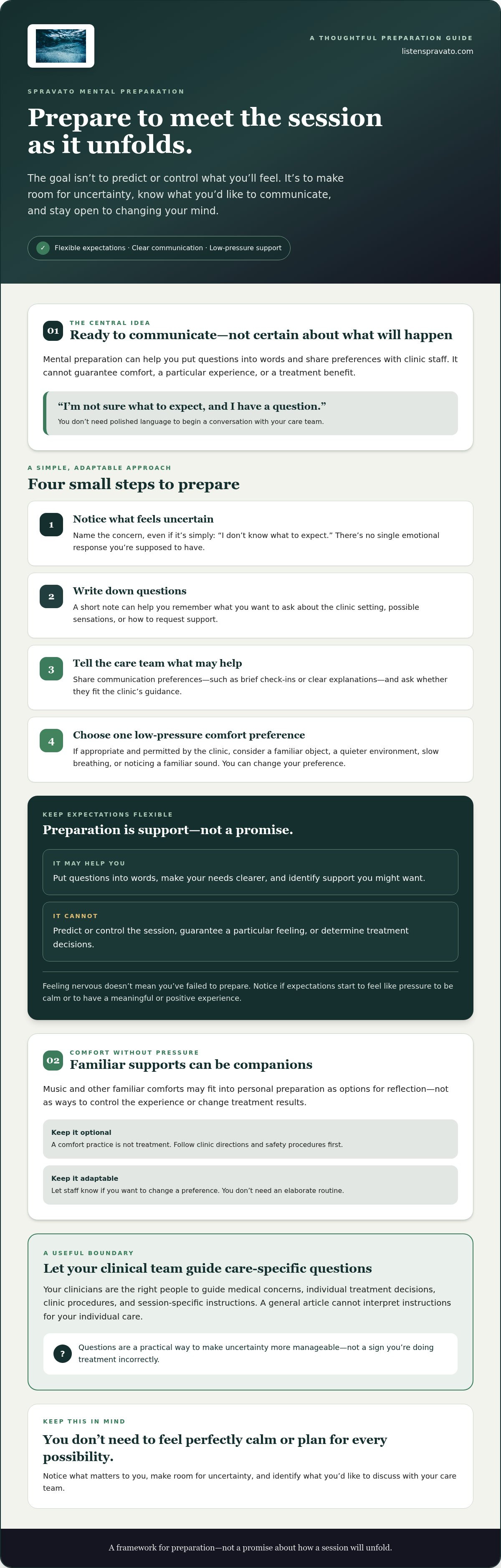
A little structure can make the appointment feel less like an unknown without turning preparation into another task you have to get right. These steps are optional. Adapt them to your circumstances and your clinic’s instructions, or use only what feels helpful.
A flexible plan is more realistic than trying to control every feeling. The aim is to notice what’s on your mind, make room for questions, and decide what support you might ask for, not to script the session.
- Notice your concerns. Name what feels uncertain, even if it’s simply “I don’t know what to expect.”
- Write down questions. A short note can help you remember what you want to ask.
- Discuss preferences. Tell clinic staff what kind of communication or support you think may help.
- Choose a simple comfort plan. Consider one familiar, low-pressure option while staying open to changing your mind.
Emotional preparation is separate from practical appointment requirements. If you’re unsure about clinic procedures or what to do before or after your visit, ask your clinic directly. Don’t rely on a general article to interpret instructions for your individual care.
Name the questions or concerns you want to bring
Your questions might be about the clinic setting, how to let staff know you need support, or what sensations people may experience. A trusted general reference, such as the Mayo Clinic guide to esketamine, may help you identify topics to discuss. For personal guidance or questions about medication and appointment logistics, check with your care team.
Choose a simple grounding preference
If it feels appropriate and the clinic permits it, you might bring a familiar object, ask for a quieter environment, or tell staff whether you prefer brief check-ins or clear explanations. Some people may find slow breathing or noticing a familiar sound comforting. These are optional comfort practices, not treatment. Follow clinic directions and safety procedures first, and let staff know if you want to change a preference.
You don’t need an elaborate routine. A sentence such as “Please explain what you’re doing before you do it” can communicate a useful preference. Spravato mental preparation is personal: your plan might be no more than a written question and a way to ask for support.
If you’d like to explore music as an optional part of preparation, Listening to Spravato’s book and curated playlists offer resources to consider alongside, not instead of, guidance from your care team.
How to Approach Fear, Expectations, and Difficult Feelings
Feeling nervous before a Spravato session doesn’t mean you’re unprepared, and it doesn’t predict how the session will go. People can respond differently, so there’s no single experience you need to expect or measure yourself against. You don’t have to feel calm, positive, or ready in a particular way to deserve support.
Thinking ahead can help you explain a concern, ask for reassurance, or tell clinic staff what kind of communication you prefer. But planning can’t control the experience or guarantee a particular outcome. If it starts to feel like pressure to prevent every difficult feeling, simplify your expectations and focus on what you can communicate.
Is it normal to feel anxious before Spravato?
Apprehension can arise when an appointment feels unfamiliar or you’re unsure what to expect. That feeling doesn’t, by itself, define what treatment will be like or say anything about your ability to cope. You might tell your clinician, “I’m feeling nervous and would like to talk through what support is available.” If your concerns feel intense or persist, share that with your treating clinician. Don’t change, delay, or stop treatment based on general information. Discuss treatment decisions with your care team.
Set intentions without demanding a specific outcome
An intention is a gentle reminder of how you’d like to approach the appointment, not a prediction or promise of progress. Consider asking yourself:
- What would help me feel listened to?
- Is there a preference I want to share with clinic staff?
- Can I allow the session to be different from what I imagined?
Your answer might be as simple as, “I want to ask for clarification if I need it,” or “I’ll try to meet the experience with patience.” Hold that intention lightly. It’s there to orient you, not set a standard you must meet.
Afterward, try not to judge the session only by whether it felt calm, profound, or immediately meaningful. Your care team can guide you on treatment questions and what comes next. For your own reflection, curiosity may be kinder than a verdict: What did I notice? What support felt useful? Is there something I want to discuss with my clinician? This flexible approach is central to spravato mental preparation. It makes room for difficult feelings without treating them as failure.
Create a Personal Spravato Mental Preparation Plan
A preparation plan doesn’t need to be a script. Think of it as a few notes you can adapt: what you want to ask, how you’d like to communicate, and one gentle intention for the appointment. Keep it brief enough to use and flexible enough to change.
Your clinic’s current instructions take priority over general preparation suggestions. If something you’ve read elsewhere conflicts with what your care team tells you, ask them to clarify what applies to your appointment.
Questions to ask your care team before the appointment
Writing questions down can make them easier to raise, especially if you feel uncertain or worry you’ll forget. Consider a short list like this:
- What does the session usually involve at this clinic?
- Is there anything you recommend I bring, or anything I should leave at home?
- How can I let staff know if I feel uncomfortable or need assistance?
- Are there medical or practical requirements I should confirm before my appointment?
Ask clinic staff about your individual care, appointment procedures, and any medical or practical requirements. If an answer isn’t clear, it’s reasonable to ask them to explain it another way. You don’t have to resolve every uncertainty before you arrive. Knowing whom to ask is part of preparing.
Decide whether music or a guide feels useful
Music may be a personal preference, not a required part of treatment. If you’re considering listening during the appointment, ask your clinic whether that fits its procedures and what it permits. You can also choose quiet. Neither choice needs to carry a promise about how you’ll feel or what treatment will do.
For a deeper look at music as a possible session preference, Listening to Spravato offers a guide, curated playlists, and other educational resources for people interested in music and esketamine treatment. These can offer ideas to reflect on and questions to bring to your care team, but they aren’t clinical guidance and make no promise about treatment outcomes.
Complete your plan with one low-pressure intention, such as “I’ll ask for help if I need it” or “I can take the appointment one step at a time.” That’s enough. To explore the guide as an educational companion, learn about the Listening to Spravato guide.
Use Supportive Resources Without Replacing Your Spravato Care Team
Educational resources can give you language for questions and help you think about what support you might want. Treat them as companions to preparation, not substitutes for clinical care. If a resource raises a concern about your personal treatment, bring the question to your clinic rather than relying on general information to make a medical decision.
Listening to Spravato offers a guide in print and digital formats, an audiobook, and curated playlists for people interested in music and esketamine treatment. The guide is independently authored by Justin Page, a conservatory-trained musician and Spravato patient. His perspective may offer one way to reflect on the subject, but an individual patient experience isn’t universal clinical evidence. Neither the author nor the business provides treatment or individualized medical advice.
What a patient guide can usefully offer
A guide can help you explore ideas, consider whether music is a preference you want to discuss with your clinic, and note questions. It can’t determine what’s appropriate for your care or promise a particular experience or benefit. For broader orientation, explore Listening to Spravato resources. Keep your care team’s advice at the center of treatment decisions.
Choosing a format that suits your preparation
Choose the format that fits how you prefer to take in information. You might read a print or digital book at your own pace, listen to the audiobook, or explore a playlist as a personal music preference. These are options, not requirements. Ask your clinic whether music is permitted during your appointment and follow its guidance.
Used thoughtfully, resources can support spravato mental preparation by helping you reflect and frame questions, not by controlling how a session unfolds. If you’d like to explore the educational guide and music resources, visit Listening to Spravato. Then bring personal needs or questions to your clinic team. That’s a practical next step, with clinical guidance where it belongs.
Carry a Flexible Plan Into Your Next Session
Spravato mental preparation isn’t about making fear disappear or deciding how a session should feel. It’s about approaching the appointment with flexible expectations, noting questions to discuss, and letting your care team know what support would help. A simple plan can offer direction while leaving room for the experience to unfold in its own way.
Keep your clinic’s guidance at the center of treatment decisions. If music or further reading interests you, Listening to Spravato offers print, digital, and audiobook guide formats, along with curated playlists and free educational resources. The guide is written by Justin Page, a conservatory-trained musician and Spravato patient. These resources can support reflection, but they don’t replace clinical care or individualized medical advice.
Explore the Listening to Spravato guide and music resources if they feel useful to your preparation. You don’t need every answer before you arrive. A question, a preference, or simply a willingness to ask for support is a meaningful place to begin.
Frequently Asked Questions
How do I mentally prepare for Spravato treatment?
Keep spravato mental preparation simple: notice what concerns you, write down questions, and decide what you may want to tell clinic staff. You might ask what the appointment involves or how to request support. Choose a gentle intention, such as staying open to asking questions, rather than expecting yourself to feel calm or have a particular experience. Follow your clinic’s specific instructions for treatment and appointment requirements.
Is it normal to feel nervous before a Spravato session?
Feeling nervous before an unfamiliar appointment can be understandable. It doesn’t mean you’re unprepared or predict how the session will go. You don’t have to force yourself to feel positive. If you’re worried, tell your treating clinician and ask for clarification or support. If concerns feel intense or persist, bring them to your care team. Don’t change or delay treatment without discussing it with them.
Can I listen to music during Spravato treatment?
Whether you can listen to music depends on your clinic’s procedures, so ask staff before bringing or using audio equipment. Explain your preference and check what’s allowed during your appointment. You might prefer familiar music or quiet; either is a personal choice. Follow clinic instructions and staff directions, and don’t assume music is required for treatment.
What should I ask my doctor before Spravato treatment?
Ask what to expect at your clinic, how to let staff know if you need assistance, and whom to speak with about concerns. You can also ask what to bring and which medical or practical requirements apply to you. Write questions down if that helps you remember them. Your doctor or clinic team can answer questions about your individual treatment and clarify instructions that aren’t clear.
What if I feel anxious during my Spravato session?
If you feel anxious or uncomfortable during the appointment, let clinic staff know using the communication approach you discussed with them. You can ask them to explain what’s happening or tell them what kind of support you need. There’s no need to judge yourself for having a difficult feeling. Follow staff directions, and raise ongoing concerns with your treating clinician before future sessions.
Can music help me mentally prepare for Spravato?
Music may be a personal comfort or preparation preference, but it isn’t a guaranteed way to change the treatment experience or results. You can explore music beforehand, note what you like, and ask your clinic whether listening during a session is permitted. Listening to Spravato offers educational resources and curated playlists for people interested in music and esketamine treatment. These resources complement, but don’t replace, clinical guidance.


