

What if the music in an esketamine session could do more than fill the quiet? If you’ve tried treatments without lasting relief, it’s understandable to wonder how sound might fit into care. A carefully chosen listening environment may provide a steadier frame for a session, while intrusive lyrics or abrupt changes can feel distracting. This esketamine therapy music guide explains how to choose and use music thoughtfully, without promising a particular outcome.
Esketamine treatment can feel intense, and music isn’t a substitute for clinical care or a guaranteed way to enhance results. Thoughtfully structured listening may offer a sense of continuity during a session, but the right approach is personal. Clear principles can help you make choices with less guesswork.
Here, you’ll find practical ideas for choosing music across the onset, peak, and return phases of a session, including why instrumental tracks may feel less intrusive and how sound can offer a point of focus. The aim is to help you prepare with greater intention and discuss preferences with your care team.
Key Takeaways
- Learn how structured listening differs from general relaxation music, and why a track that feels soothing to one person may feel intrusive to another.
- Explore what researchers understand about sound, esketamine, and neuroplasticity, while keeping the limits of current evidence in view.
- Use the esketamine therapy music guide to consider how Safety, Structure, and Support can shape a more intentional listening environment.
- Match musical qualities to different phases of a session, then discuss your preferences and concerns with your care team.
- See how Listening to Spravato, available as a print book, digital book, and audiobook, offers structured listening guidance for patients and clinicians.
Defining Music Therapy for Treatment Resistant Depression
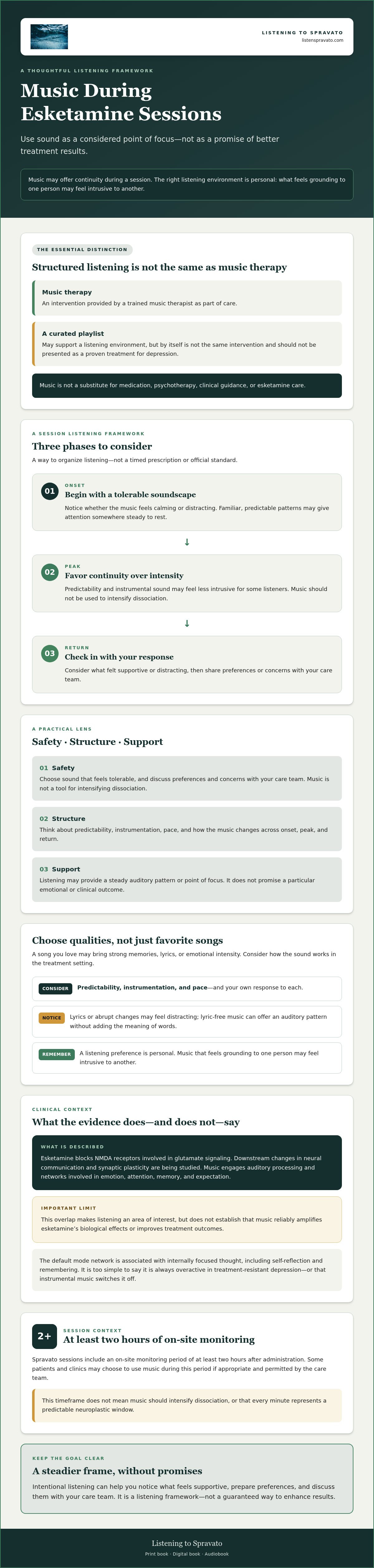
After treatments haven’t brought enough relief, being told to “put on something relaxing” can feel too simple for what you’re carrying. Music may offer more than a pleasant distraction during esketamine treatment, but its role needs careful framing. In clinical practice, music therapy is an intervention provided by a trained music therapist as part of care. Listening to a curated playlist on its own isn’t the same thing, and shouldn’t be presented as a proven treatment for depression.
The Limitations of Traditional Antidepressants
Treatment-resistant depression can leave someone feeling caught in familiar patterns of thought while they continue working with clinicians to find effective care. Medication remains central for many people, but care may also involve supportive practices that address attention, emotion, and the sensory experience of a session. Music can be one such support, not a replacement for medication, psychotherapy, or clinical guidance.
As a conceptual framework, TRD music listening treats sound as structural support for attention, rather than claiming that music directly changes or “resets” the brain’s default mode network. Familiar musical patterns may give attention somewhere steady to rest. For some listeners, that can provide a possible interruption to repetitive thoughts, without promising to break a depressive cycle.
Music as a Clinical Tool, Not Just a Comfort
Liking a song and choosing it for a treatment setting aren’t always the same. A favorite track may carry memories, lyrics, or emotional intensity that draws attention away from the present moment. Deliberate listening instead considers qualities such as predictability, instrumentation, pace, and how a person responds to the sound. The aim is to create a listening environment that feels tolerable, not to prescribe an emotional outcome.
The neuroscience of music helps explain why listening can engage interconnected processes involving emotion, memory, and attention. That complexity is also why personal response matters: music that feels grounding to one listener may feel intrusive to another.
Intentional Listening and the 120-Minute Window
Intentionality shifts listening from passive background sound to a considered part of session preparation. A person might notice whether a track feels calming or distracting, then share that response with their care team. Some listening frameworks organize music around the session’s onset, peak, and return, but no single playlist or sequence is an official standard or guaranteed to improve esketamine outcomes.
Spravato sessions include an on-site monitoring period of at least two hours after administration. This provides a practical timeframe in which some patients and clinics may choose to use music, if appropriate and permitted by the care team. It doesn’t mean music should be used to intensify dissociation, or that every minute represents a predictable neuroplastic window. For a structured discussion of listening in this setting, see this Spravato guide for clinicians. An esketamine therapy music guide can help readers understand a listening framework, while treatment decisions remain with qualified healthcare professionals.
The Neurobiology of Sound: How Music Enhances Esketamine
Esketamine and music act through different pathways. Esketamine blocks NMDA receptors, which are involved in glutamate signaling. Downstream changes in neural communication and synaptic plasticity are being studied as part of its antidepressant effects. Music engages auditory processing alongside networks involved in emotion, attention, memory, and expectation. This overlap makes listening a compelling area of interest, but it doesn’t establish that music reliably amplifies esketamine’s biological effects or improves treatment outcomes.
The Default Mode Network and Musical Attention
The default mode network (DMN) is a group of connected brain regions associated with internally focused thought, including self-reflection and remembering. Its activity varies across people and situations, so it’s too simple to say the DMN is always overactive in treatment-resistant depression or that instrumental music switches it off. During an altered or inward-focused experience, lyric-free music may give attention a clear auditory pattern to follow without adding the meaning of words. That can be a useful listening preference, not a proven way to quiet an “ego-center.”
Dissociation can occur during esketamine treatment, but it isn’t a required step toward a breakthrough, and music shouldn’t be used to intensify it. A better goal is a listening environment that feels tolerable and steady. Gentle rhythm or familiar musical textures may help some people feel oriented. For others, even these sounds may feel distracting. The individual response matters more than a supposedly therapeutic frequency.
Sound, Emotion, and the Thalamus
The thalamus helps route and filter sensory information, including sound, before it reaches wider networks involved in perception and emotion. Esketamine may alter how sensory information is experienced during a session, but it hasn’t been established that it lowers an auditory “gating threshold” or opens a direct route from sound to emotional centers. This distinction matters: a vivid response to music is a real experience, but it doesn’t by itself prove a specific mechanism.
Rhythm, timbre, and changes in intensity can shape how music feels, and emotional responses can involve structures such as the amygdala. Yet no specific beat, frequency, or harmonic progression is established as a way to regulate the amygdala during Spravato treatment. Likewise, complex harmonies shouldn’t be described as proven to stimulate hippocampal neurogenesis. Research into music, emotion, and brain plasticity is promising, but these precise treatment claims remain unconfirmed.
An esketamine therapy music guide is most useful when it helps patients and clinicians make informed, individual choices rather than promising a neurological shortcut. For a structured listening framework, explore curated Spravato listening resources, and discuss session preferences with the treating care team.
Auditory Scaffolding: A New Framework for TRD Recovery
Music during an esketamine session is often treated as background comfort. Auditory scaffolding offers a more deliberate way to think about it: sound can provide a steady point of reference when attention and perception feel altered. This is a practical framework, not a formally validated treatment model, and music cannot guarantee a positive experience or prevent distress. Its value lies in thoughtful choices that support a person’s sense of safety and agency.
The framework rests on three connected principles:
- Safety: Choose sounds that feel tolerable and emotionally steady, and agree on the listening setup with the care team.
- Structure: Use a considered sequence rather than random track changes to create a sense of continuity across the session.
- Support: Keep the patient’s preferences, ability to pause or stop listening, and access to clinical staff central.
Safety: The Sensory Container
Predictability can make a listening environment feel less intrusive. A consistent soundscape without abrupt volume changes or unexpected lyrics may help some patients settle into the experience. Over-ear headphones can reduce surrounding noise, but comfort and communication come first. Use them only if the clinic permits, and make sure the patient can alert staff and hear instructions. Headphones are not a way to block out clinical observation. For a closer look at music as a structured support, see this overview of music for Spravato treatment.
Music may offer an anchor during an intense or emotionally difficult moment, but it can’t reliably prevent a “bad trip” or stop challenging thoughts. If a track increases unease, the patient should be able to stop or change it in line with the care team’s guidance. The aim isn’t to push through discomfort. It’s to preserve choice and communicate when the sound no longer feels supportive.
Structure: Guiding the Journey
A musical arc can mirror the broad progression of a session: gentler, familiar sounds at the beginning; more spacious instrumental passages later; and calmer, grounding music as the experience recedes. These are listening options, not a fixed clinical sequence. A slower tempo may feel settling to some people, but music doesn’t reliably regulate heart rate or breathing. A person’s response can also differ from one session to another.
A Learned Guide approach treats curation as an act of respect. It avoids assuming what a patient should feel, allows for individual preference, and keeps music in a supportive role rather than presenting it as a cure. An esketamine therapy music guide can help patients and clinicians discuss these choices, while clinical decisions remain with the treatment team.
Choosing the Right Music: Esketamine Therapy Music Guide
There isn’t one universally “right” sound for an esketamine session. Genre can offer a useful starting point, but personal response matters more than a rule that ambient, neo-classical, or minimalist music is always best. A track’s lyrics, associations, volume, and changes in intensity can all affect how it feels. Consider these phase-based ideas as options to discuss with the care team, not a prescribed sequence or a guarantee of a particular experience.
Three Phases to Consider
- Onset: Familiar, gentle instrumental music may help create a sense of continuity as the session begins. Avoid sudden changes or sounds you already associate with distress.
- Peak: Some people prefer spacious, lyric-free music with a steady texture and few abrupt transitions. This can reduce verbal content competing for attention, though it won’t control the experience or ensure emotional “deep work.”
- Integration and return: Warm, measured rhythms may feel grounding as the session winds down. Choose music that feels clear and comfortable to you rather than assuming a particular tempo will regulate your body.
Why Lyrics May Not Fit
Words can draw attention toward meaning, memories, or emotional associations. During an altered state, lyrics may feel especially prominent for some listeners, while others find familiar vocals reassuring. There isn’t a proven rule that language processing conflicts with dissociation or that lyrics necessarily anchor someone to painful problems. Instrumental music is a common option because it reduces verbal content, but non-lyrical vocals, such as wordless singing, may suit some people. Test your preferences outside a session and discuss them with the care team.
Genre labels are only shorthand. An ambient piece can still feel tense; a familiar classical passage can bring up difficult memories. Notice how a specific track affects you, and prioritize emotional safety over what a playlist is supposed to sound like.
Practical Setup
High-resolution audio or a particular bitrate isn’t a therapeutic requirement. Clear, comfortable playback matters more than technical specifications. If your clinic permits personal devices, downloaded playlists can avoid streaming interruptions. Confirm device and headphone policies in advance. Over-ear headphones may reduce background noise, but they must not prevent you from hearing staff or communicating if you need help.
- Choose music you’ve previewed and feel comfortable hearing.
- Check the volume, playback order, and battery before the appointment.
- Prepare an option to pause or stop listening.
- Ask the clinic what equipment is allowed and how to reach staff while listening.
This esketamine therapy music guide is a starting point for thoughtful choices, not medical advice. To explore phase-based listening options, browse curated Spravato playlists.
Implementing the 'Listening to Spravato' Protocol
A music framework can help carry the conversation beyond the clinic visit. Listening to Spravato brings together phase-based listening ideas and genre-by-genre guidance for patients and clinicians. It’s an educational resource, not an official FDA-mandated protocol or a substitute for individualized clinical care. Clinics decide what fits their setting, and patients can use the material to better express what feels supportive, distracting, or uncomfortable.
A Guide for Patients and Clinicians
For clinicians, a shared guide can provide consistent language for discussing music choices, session phases, and patient preferences. That can support a more organized conversation without requiring every person to hear the same playlist or respond in the same way. Genre-by-genre guidance also gives patients a starting point for exploring sound while leaving room for personal history and sensory needs.
Patients can use the Listening to Spravato book as a listening companion alongside, not in place of, their care team’s guidance. Authored by Justin Page, a conservatory-trained musician and Spravato patient, it brings musical knowledge and lived experience together. The audiobook offers narrated guidance for those who prefer listening to reading, including during reflection and recovery outside the clinic. Print and digital editions are also available.
Clinics considering how to incorporate music can explore this resource on integrating music into Spravato clinic protocols. Any use should fit clinic policies, preserve communication with staff, and remain responsive to each patient.
Beyond the Session: Music for Daily Integration
Returning to a piece of session music later may bring back memories or feelings associated with that listening experience. That doesn’t mean the music reliably “triggers” neuroplastic change or retrieves a therapeutic state. It may simply offer a familiar cue for reflection. Patients can notice their response, choose whether to continue listening, and discuss meaningful reactions with their care team or therapist.
A sustainable practice doesn’t need to be elaborate. Someone might keep a short list of tracks that feel grounding, make room for quiet when music isn’t welcome, or write down how different sounds affect their mood. The aim is attentive self-observation, not a promise that music will extend medication effects or prevent future depressive symptoms.
An esketamine therapy music guide can help turn broad questions about sound into a thoughtful, personal listening plan. Explore Listening to Spravato for genre-by-genre guidance, phase-based playlists, and practical session tips, then discuss questions about treatment or recovery with your care team.
Make Listening Part of a More Intentional Journey
Music can’t replace clinical care or guarantee a particular esketamine outcome. A thoughtful listening plan can, however, give patients a practical way to consider what feels grounding, what may distract, and how sound might support a more intentional session. Personalization matters more than assuming one genre or track works for everyone.
This esketamine therapy music guide brings together ideas for choosing music, understanding its possible role during treatment, and carrying reflection beyond the clinic. Listening to Spravato is authored by Justin Page, a conservatory-trained musician and Spravato patient. Explore the print, digital, and audiobook editions to find a format that suits how you prefer to read or listen.
Explore the Listening to Spravato book and playlists, and bring your questions about music and treatment preferences to your care team.
Frequently Asked Questions
Is music therapy effective for treatment-resistant depression?
Music may support some people’s experience during esketamine treatment, but it hasn’t been established as a standalone or proven treatment for treatment-resistant depression. Formal music therapy is delivered by a qualified music therapist, while listening to a playlist is not automatically music therapy. Curated sound can offer a focus for attention or a sense of comfort, but responses vary. Discuss its use with your care team, and don’t use music in place of recommended clinical care.
Why is lyric-free music recommended for esketamine sessions?
Instrumental music is often suggested because lyrics add words and meaning that may draw attention, evoke memories, or feel distracting during an altered experience. It’s a preference, not a universal clinical rule: some people find vocals comforting, while others don’t. Wordless singing may also suit some listeners. If you’re considering music, preview it beforehand and ask your care team what’s appropriate in the clinic. Stop or change a track if it feels uncomfortable.
What are the best genres of music for ketamine therapy?
There’s no single best genre for ketamine or esketamine sessions. Ambient, neo-classical, and minimalist music can offer sustained textures and fewer abrupt changes, but an individual track may still feel unsettling or emotionally charged. Consider qualities such as lyrics, volume, predictability, and personal associations rather than relying on genre labels alone. A phase-based playlist can be a starting point, not a prescription. Choose options you’ve previewed and discuss them with your care team.
Can I use my own favorite music during a Spravato session?
You may be able to use music you choose, but first check the clinic’s policies and discuss your plan with the care team. A favorite song can feel reassuring, yet it may also carry memories or lyrics that become distracting. Preview the playlist in advance, avoid tracks that feel emotionally charged, and make sure you can pause or stop listening. Headphones or personal devices must not interfere with communication or clinic instructions.
How does music affect the brain during an esketamine treatment?
Listening to music engages auditory processing and can involve brain systems related to attention, memory, and emotion. Esketamine affects glutamate signaling, and researchers continue to study its effects on neural plasticity. How these processes interact with music during treatment isn’t fully established. Music may feel vivid or emotionally meaningful, but that experience doesn’t prove it enhances medication effects or changes a specific brain network. Think of listening as a possible support, not a guaranteed mechanism or outcome.
Do I need a professional music therapist for TRD?
No, you don’t necessarily need a music therapist to listen to music during treatment, but listening to a playlist is different from formal music therapy. A qualified music therapist provides structured care within their professional scope. Patients and clinicians can also use educational resources, such as an esketamine therapy music guide, to discuss listening preferences and session planning. For treatment decisions or concerns about depression, speak with your healthcare provider rather than relying on a playlist or guide.
What kind of headphones are best for esketamine therapy?
Comfortable headphones that provide clear sound at a moderate volume may work well, but the clinic’s rules matter most. Some people prefer over-ear headphones because they reduce surrounding noise; they should not prevent you from hearing staff or asking for help. Ask the clinic whether personal headphones and devices are permitted, and test comfort and playback beforehand. Avoid a setup that isolates you from instructions or makes communication difficult during the monitored session.
How do I choose music for the integration phase of treatment?
Choose music that feels steady, familiar, and comfortable as you reflect after a session. Gentle rhythmic or instrumental tracks may suit some listeners, while others prefer silence or different sounds. There’s no evidence that replaying session music reliably retrieves a therapeutic state or extends medication effects. Notice how the music affects you, stop if it becomes uncomfortable, and bring meaningful reactions or questions to your care team or therapist.


