

What if the most critical component of your two hour clinical observation isn't the medication itself, but the invisible architecture of the sound surrounding you? Many patients approach their sessions with a quiet sense of trepidation, worried that a sterile clinic room might amplify the intensity of dissociation or lead to a "bad trip." It's a valid concern. A medical environment often feels cold, and without the right sensory support, the experience can feel fragmented or even overwhelming. You deserve a space that feels as intentional as the treatment itself.
By adopting a structured music protocol esketamine treatment, you reclaim agency over your therapeutic environment. We understand that sound acts as a vital scaffolding for the mind during these 120 minutes. This guide will help you master the art of therapeutic sound to ensure your Spravato® sessions are safe, structured, and profoundly restorative. You'll learn how to align specific auditory textures with the pharmacological arc of the medicine, reducing peak phase anxiety and facilitating a deeper sense of integration. We'll explore the science of resonance and provide a clear plan to move from the initial onset through to a grounded, peaceful return.
Key Takeaways
- Learn how a structured music protocol esketamine treatment creates a "therapeutic container," providing the safety and scaffolding needed for a restorative session.
- Discover how to map the 120-minute Spravato® session into three distinct phases-Onset, Peak, and Integration-to mirror the medicine's pharmacological arc.
- Understand the science behind the "lyric problem" and why specific tempos are essential to prevent physical agitation and cognitive interference.
- Prepare your clinical environment with a practical checklist for hardware selection and non-negotiable technical settings like "Offline Mode."
- Identify how the "Listening to Spravato" resource serves as the essential roadmap for patients and clinicians to achieve deeper therapeutic integration.
Understanding the Music Protocol for Esketamine Treatment
A music protocol esketamine treatment is much more than a casual selection of songs. It is a meticulously curated sequence of sound designed to mirror the medicine's pharmacological arc. Spravato® has a distinct physiological curve: a rapid onset, a deep peak of dissociation, and a gradual return to the room. The audio must follow this same path. When the music is synchronized with the drug's metabolism, it facilitates a smoother journey rather than working against it.
Sound creates what clinicians call the "Therapeutic Container." During dissociation, your connection to the physical world can feel distant or entirely absent. In this state, a structured acoustic environment provides a vital sense of safety. It acts as an auditory anchor. It reminds the mind that it is held within a secure, intentional space even when the ego feels fluid. This level of intentionality is what separates modern clinical standards from the "background music" of the past. In the context of Ketamine-Assisted Psychotherapy (KAP), every sensory input is treated as a clinical variable. Your choice of audio matters as much as your dose because it shapes the quality of the internal landscape.
The Role of Sound in Neuroplasticity
Esketamine opens a brief, profound window of neuroplasticity. During this time, the brain's ability to form new neural connections is heightened. Structured sound doesn't just provide comfort; it helps guide the "re-wiring" process. When you synchronize chemical dissociation with deep auditory immersion, you create a synergy. This synergy allows the brain to process emotional data without the usual interference of the analytical mind. The music acts as a gentle guide through the newly opened pathways of the subconscious.
Why a Standardized Protocol Matters
Relying on a "random" shuffle or a generic playlist is a clinical risk. A sudden shift in tempo or an unexpected lyric can trigger a spike in heart rate or a surge of anxiety. Consistency across sessions is vital for long term success. By using a standardized protocol, you build a Pavlovian response to relaxation. Over time, the first few notes of your session audio signal to your nervous system that it's safe to let go. For clinicians, this standardization ensures that every patient receives a predictable, high quality experience. It removes the uncertainty of "bad trips" caused by jarring transitions in the music.
The Three Phases of a Spravato Music Protocol
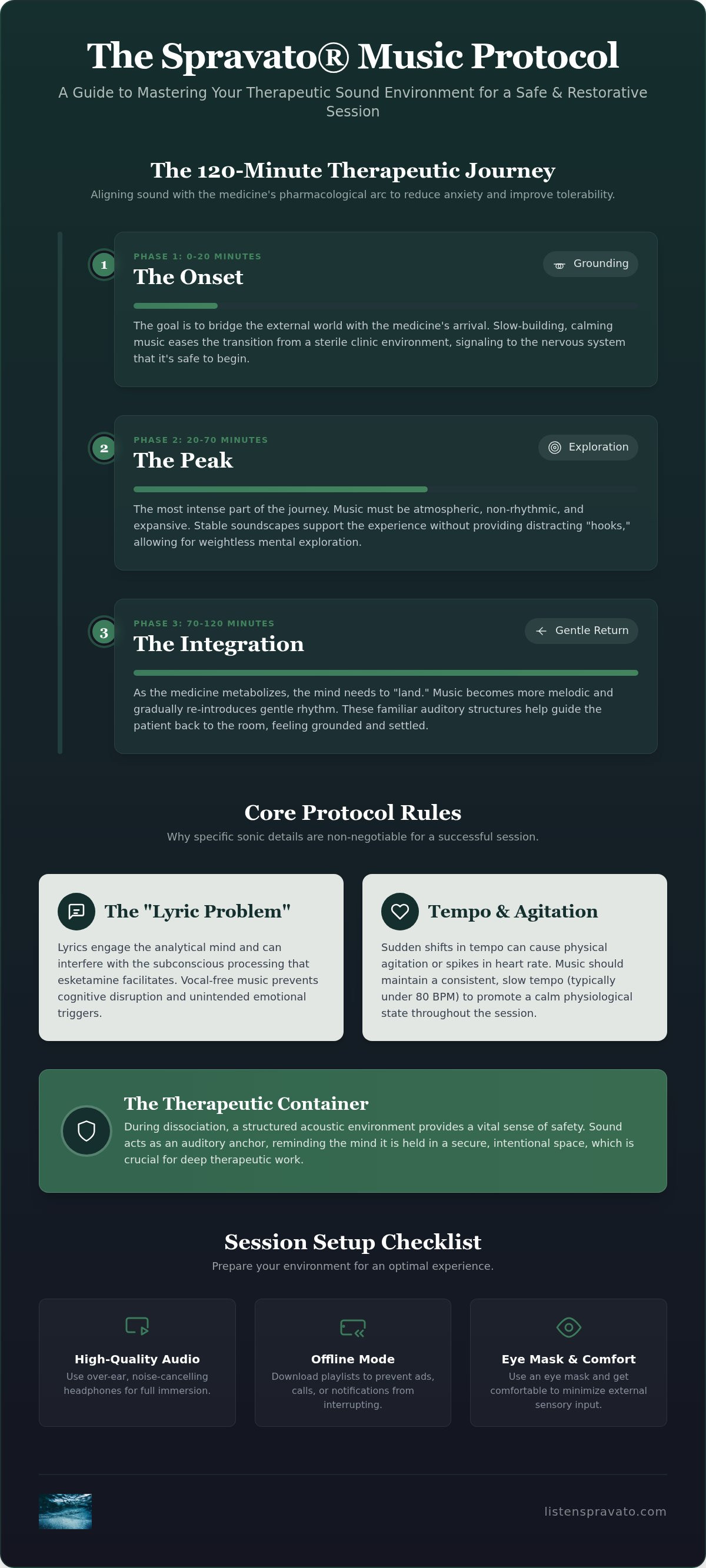
A Spravato® session is not a static event. It's a dynamic experience that lasts exactly 120 minutes per regulatory requirements. While some view this time as a monolithic block, a successful music protocol esketamine treatment breaks this down into three distinct psychological and physiological phases. Recent research on music and esketamine tolerability confirms that aligning sound with these phases correlates with reduced anxiety and better overall tolerability. By shifting the energy of the audio at specific transition points, we provide the mind with a reliable map for the journey ahead.
Phase 1: The Onset (0-20 Minutes)
This is the entry point. The Onset acts as the bridge between the external world and the medicine's arrival. During the first 20 minutes, the goal is grounding. The music should be slow-building and calming. These textures help ease the transition from the sterile clinic environment to the internal experience. It's about setting the stage for safety and signaling to the nervous system that the work has begun. A gentle, upward trajectory in the sound helps the patient move away from the distractions of the waiting room and into a more receptive state.
Phase 2: The Peak (20-70 Minutes)
This is the most intense portion of the journey. For these 50 minutes, the music must be atmospheric, non-rhythmic, and expansive. This phase requires the deepest music in the protocol because the mind is at its most vulnerable. Beats act as anchors. They can tether the mind to the physical world, which often disrupts the fluid nature of dissociation. The most intense 40 minutes of the session require the most stable soundscapes to support the experience without providing distracting "hooks" for the analytical brain. This stability allows for a sense of weightless exploration.
Phase 3: The Integration (70-120 Minutes)
As the medicine begins to metabolize, the patient needs to land. This is the integration phase. The music becomes more melodic and gradually more rhythmic. These familiar sounds help re-establish a sense of self and provide a platform for processing the insights gained during the peak. This return to the body is a critical part of the healing process. It ensures the patient doesn't feel "rushed" back into reality. For a deeper look at how these transitions work in practice, the curated Spravato playlists are designed to handle these shifts automatically, allowing you to stay present in the experience without checking the clock.
Protocol Rules: Why Lyrics and Tempo Can Disrupt Healing
A successful music protocol esketamine treatment requires strict boundaries to be effective. Sound is a physiological input that directly influences the nervous system's state of arousal. When you're in a state of deep dissociation, your brain becomes hyper-sensitive to external stimuli. Sudden shifts in volume, jarring transitions, or unexpected changes in genre act as "sonic anchors." These anchors don't just distract; they can physically jolt a patient out of a therapeutic state, causing a spike in heart rate and a sense of disorientation. To maintain a "safe container," the audio must utilize predictable, looping textures that provide a steady sense of calm.
Tempo is equally critical. High-tempo music with a fast beats-per-minute (BPM) count can cause physical agitation. The body tends to entrain its internal rhythms, such as heart rate and breathing, to the external pulse of the music. Scientific rigor is catching up to clinical intuition in this area. For instance, the clinical trial protocol for music and esketamine examines how specific auditory stimuli impact the brain's state during treatment. By keeping the tempo slow and the rhythms subtle, we prevent the physiological "fight or flight" response that often accompanies high-energy tracks.
The Problem with Lyrics in Psychedelic Therapy
Lyrics are perhaps the most common disruptor in a clinical session. They create a competition for cognitive resources. The language-processing centers of the brain, specifically Broca’s and Wernicke’s areas, attempt to decode words and meaning. This process tether the mind to a specific narrative. When the medicine is trying to facilitate a non-verbal, visceral experience, lyrics "force" a story on the patient. This prevents them from accessing their own internal insights and symbolic imagery. While a familiar song might feel comforting in daily life, it becomes a barrier to the deep, wordless work of the peak phase. Lyrics are generally only appropriate during the very late stages of integration, once the patient has firmly returned to their sense of self.
Selecting the Right Genre for Your Protocol
Ambient and Neo-Classical music are the gold standards for the peak phase of a session. These genres prioritize atmosphere over intellectual complexity. They provide a neutral, organic environment that allows the medicine to do its work without interference. In contrast, genres like Jazz or complex Classical music can be too intellectually stimulating. The intricate melodies and frequent time-signature changes require the brain to "work" to keep up. Nature sounds and world music can also be effective, provided they don't contain sudden, startling noises like bird cries or thunder. The goal is to choose sound that feels resonant and deep, facilitating a sense of expansive space rather than a performance to be analyzed.
Setting Up Your Protocol: A Practical Checklist
Setting the stage for a session requires more than just picking a playlist. It involves a meticulous check of your physical and digital environment. To master a music protocol esketamine treatment, you must treat your hardware with the same respect as the medication. Practicality ensures the safety and depth of the experience, allowing you to let go of the external world with confidence.
The gold standard for these sessions is over-ear, noise-canceling headphones. While earbuds are convenient, they often shift or fall out during the peak phase of dissociation, causing a jarring return to physical awareness. High-quality over-ear models provide a physical sense of containment; they effectively muffle the clinical hum of beeping monitors or hallway conversations. This auditory isolation works in perfect synergy with a high-quality eye mask. By blocking visual input, you encourage the brain to redirect its processing power toward the internal soundscape. This sensory deprivation deepens the immersion. Before the first spray, adopt a "set it and forget it" rule for your volume. Fumbling with a phone while the medicine is taking hold is difficult and distracting.
Preparing Your Device and Playlists
Technical friction is the enemy of a peaceful session. Before you enter the clinic, ensure your device is fully prepared. A 100% battery charge is a non-negotiable part of the protocol. It eliminates the latent anxiety of a mid-session shut-down. Equally important is downloading your audio for offline use. Buffering or a dropped Wi-Fi connection can shatter the therapeutic container we've built. Within your app settings, enable cross-fading for at least five to twelve seconds. This ensures there are no cold gaps of silence between tracks, maintaining a continuous, reliable flow of sound. Finally, activate "Do Not Disturb" or "Airplane Mode." A single notification chime can act as a sharp, unwanted anchor to the outside world.
The Clinicians Role in the Protocol
Providers play a vital role in facilitating this auditory environment. It's helpful to introduce the music protocol to a new patient during their intake; explain it as a supportive tool rather than just background noise. During the session, notice when a patient might be "fighting" the music. If they are repeatedly adjusting their headphones or showing visible agitation, they may need a gentle adjustment. A quiet reminder that the music is there to hold them can be profoundly grounding. By creating a clinic-wide standard for auditory environments, providers ensure every patient feels the quiet confidence of a structured journey. For those looking for a comprehensive guide to these technical and therapeutic nuances, the Listening to Spravato audiobook offers an immersive roadmap for both patients and clinicians.
Mastering the Experience with "Listening to Spravato"
Listening to Spravato acts as the essential roadmap for this complex therapeutic journey. Authored by Justin Page, a conservatory-trained musician and patient, it provides a vital bridge between clinical requirements and the human experience. While the science of neuroplasticity and the logistics of hardware are foundational, the actual music protocol esketamine treatment requires a level of curation that is often difficult for patients or busy clinics to achieve on their own. This resource eliminates the dozens of hours of trial and error that can lead to anxious or "wrong" feeling sessions. It replaces uncertainty with a structured, artistically informed plan.
Inside the Guide: Genre-by-Genre Protocols
The guide offers a sophisticated look at how different auditory textures address specific emotional states. It isn't a one-size-fits-all approach. For those struggling with acute anxiety, the protocol emphasizes grounding, low-frequency ambient sounds that provide a sense of heavy safety. Conversely, for those feeling a sense of emotional numbness, the guide introduces neo-classical and world music textures that gently invite resonance and movement. Having a physical or digital companion during the integration phase provides a steadying influence. It helps the patient move from the wordless peak back into the world of narrative and meaning. The audiobook edition is particularly valuable; it offers an immersive experience of the protocol's principles, allowing the listener to absorb the concepts with the same intentionality found in the curated playlists.
Support for Clinics and Providers
For providers, standardization is the key to safety and scalability. Listening to Spravato helps clinics establish a reliable auditory standard across all observation rooms. By providing patients with these pre-vetted resources, staff can reduce the burden of troubleshooting individual playlists or managing patient anxiety related to unexpected shifts in sound. It allows the nursing staff to focus on monitoring vitals while the music handles the emotional scaffolding of the 120-minute session. This clinical-grade intentionality transforms the observation period from a time of passive waiting into a period of active, structured healing. It ensures that every patient, regardless of their musical background, has access to a safe and restorative environment.
A better session starts with a better protocol. Whether you're a patient preparing for your induction phase or a clinician looking to refine your center's environment, the right roadmap makes all the difference. You can find Listening to Spravato (Print, Digital, and Audiobook editions) available for international distribution. Investing in the protocol is an investment in the long-term success and dignity of the treatment experience.
Cultivating a Sanctuary of Sound
Transforming your treatment from a clinical obligation into a restorative journey requires a shift from passive listening to active intentionality. By understanding the three distinct phases of a music protocol esketamine treatment, you move beyond the risks of a random shuffle and into a space of curated safety. You've learned how the right hardware, the removal of lyrics, and technical preparation work in harmony to protect your therapeutic window. These aren't just technical details; they're the scaffolding for your healing. Every intentional choice you make before the session begins serves to honor the depth of the work you're doing.
To deepen this practice and ensure every session is as effective as possible, Order "Listening to Spravato" on Amazon and Master Your Protocol. This resource offers curated playlists for every treatment phase and is narrated by the author for a truly immersive experience. It's a guide already used by clinics worldwide to improve patient outcomes and provide a sense of steady confidence. You don't have to navigate the complexities of therapeutic sound alone. With the right roadmap, your session becomes a place of profound resonance and dignity. You're ready to step into your next appointment with clarity and peace.
Frequently Asked Questions
Does it matter what kind of music I listen to during Spravato?
The auditory environment acts as the invisible architecture of your session. High-arousal music or jarring transitions can trigger a "fight or flight" response, while a structured music protocol esketamine treatment provides a sense of safety. Choosing sound that mirrors the medicine's pharmacological arc ensures that your nervous system feels supported rather than startled. This intentionality transforms a sterile clinic room into a sanctuary for deep, restorative work.
Can I listen to a podcast or audiobook instead of music during my session?
Spoken word content is generally discouraged during the active phases of treatment. Narratives engage the brain's language-processing centers, which can tether you to a specific story and block the wordless, visceral insights of dissociation. To fully utilize the window of neuroplasticity, it's best to avoid the cognitive "work" of following a plot. Instrumental sound allows your mind to wander freely without the distraction of an external narrative.
What happens if I don’t use music during esketamine treatment?
Without an intentional soundscape, you're left with the "clinical hum" of the office, such as beeping monitors or hallway conversations. A scoping review of 37 studies found that music consistently reduces stress and increases enjoyment during sessions. Silence or random office noise can make the 120-minute observation feel sterile and ungrounded. Music provides the necessary scaffolding to help you feel held within a secure, therapeutic container.
Why is lyric-free music recommended for the peak of the session?
Lyrics force an external narrative onto your internal experience. During the peak phase, which typically occurs between 20 and 70 minutes, your mind is most receptive to abstract, atmospheric textures. Words act as anchors that can prevent the fluid, ego-dissolving exploration that the medicine facilitates. By removing lyrics, you allow your own symbolic imagery and emotional processing to take center stage without interference from another person's story.
How loud should my music be during the dissociation phase?
Aim for a volume that is immersive but not overwhelming. It should be loud enough to mask environmental distractions like office equipment but quiet enough to avoid causing physical agitation. It's vital to use a "set it and forget it" approach before the medicine takes hold. Fumbling with volume controls during deep dissociation is difficult and can pull you out of the experience, breaking the sense of continuity.
Should I change my playlist for every session or keep it the same?
Consistency is a powerful tool for building a Pavlovian response to relaxation. Using a familiar music protocol esketamine treatment allows your nervous system to recognize the sounds as a signal of safety. Over time, the first few notes of your protocol tell your body it's time to let go. While you might occasionally swap tracks for variety, maintaining a core structure helps ensure a predictable and high-quality experience every time.
Are there specific Spotify playlists designed for Spravato treatment?
The "Listening to Spravato" resource offers curated playlists specifically designed to match the 120-minute pharmacological arc of the medicine. These are pre-vetted to avoid the "lyric problem" and ensure smooth transitions between the onset, peak, and integration phases. Using these resources saves patients and clinicians the dozens of hours of trial and error often required to find music that feels "right" and supports the therapeutic goal.
Can the music protocol help reduce the side effects of esketamine?
While music isn't a medical treatment for physical side effects, research indicates it significantly improves the tolerability of the session. Studies of nearly 500 sessions found that music was associated with reduced anxiety and lower blood pressure during treatment. By managing the psychological environment, a structured protocol helps mitigate the fear and agitation that can sometimes accompany intense dissociation. It turns a potentially scary experience into a structured, manageable journey.


