

What if the most critical element of your treatment isn't the dose itself, but the environment you build around it? Most patients entering a REMS-certified clinic feel a quiet tension between the hope for relief and the fear of the unknown. It's natural to feel anxious about the "dissociative" side effects or to worry that you aren't "doing it right" during those mandatory two hours of observation. This spravato patient guide exists to bridge the gap between clinical safety and a transformative, intentional experience.
Safety is the floor, but sensory curation is the ceiling. You deserve more than just a sterile room and a blood pressure cuff; you deserve a session that feels resonant and purposeful. We'll show you how to move from passive observation to active engagement by using a specific protocol for sensory optimization. By the end of this guide, you'll have a clear framework for using music as a structural anchor. This approach reduces anxiety and allows you to reclaim a sense of agency over your healing journey. We will move logically from the science of sound to the practical application of your next session.
Key Takeaways
- Learn why a comprehensive spravato patient guide must address both clinical safety requirements and the subjective internal experience of dissociation.
- Discover how music acts as a sensory anchor to mitigate the clinical "noise" of the treatment environment and stabilize your auditory perception.
- Understand the distinction between medical monitoring and experiential optimization to reclaim a sense of agency during your two-hour observation.
- Master a three-phase music protocol designed to support the specific biological and psychological shifts that occur from onset to integration.
- Explore how curated resources can serve as the "missing manual" for your treatment, bridging the gap between prescription and personal transformation.
What is a Spravato Patient Guide and Why Do You Need One?
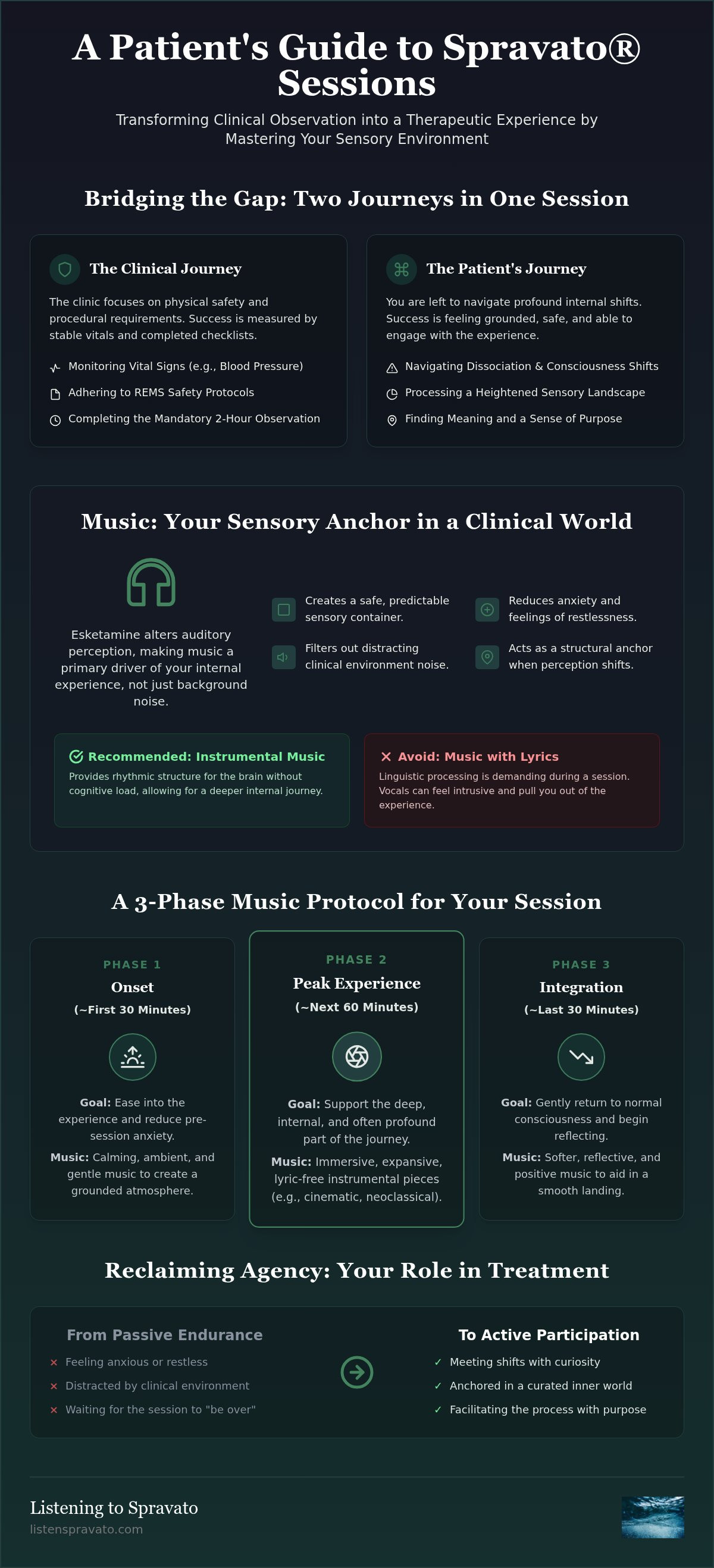
A comprehensive spravato patient guide serves as a roadmap for two distinct journeys occurring simultaneously. The first journey is logistical. It covers the clinical requirements, the mandatory two hour observation period, and the REMS safety protocols that were most recently modified in late 2025. The second journey is internal. While your healthcare provider monitors your vitals, you are left to navigate the profound shifts in consciousness that characterize Esketamine (Spravato) therapy. Official manufacturer materials are designed to ensure your physical safety, yet they often leave the patient without a plan for the psychological and sensory landscape they are about to enter.
In 2026, the standard of care has evolved. We no longer view the treatment window as a period of mere observation where a patient simply waits for the effects to wear off. Instead, we recognize it as a period of intentional session curation. A session guide provides the structure necessary to transform a clinical appointment into a therapeutic experience. Without this framework, the silence of a medical office can feel heavy, and the onset of dissociation can trigger restlessness or anxiety. By preparing for the internal experience, you move from a state of passive endurance to one of active participation.
The Gap Between Clinical Safety and Therapeutic Experience
There is a visible disconnect between what a clinic monitors and what a patient feels. To a nurse, success is a stable blood pressure reading and a completed REMS checklist. To you, success is the ability to stay grounded while your perception of time and space shifts. This is where a spravato patient guide becomes essential. It provides the "how-to" for the mind. A Learned Guide approach demystifies the onset of the medication, offering a steady hand to those who fear the loss of control often associated with esketamine. Proper preparation ensures that the sensory shifts are met with curiosity rather than resistance.
Defining Your Treatment Goals Beyond the Nasal Spray
Setting intentions is a vital part of the process. In 2026, the set and setting framework, once reserved for specialized therapeutic environments, is now a cornerstone of effective clinical esketamine use. Your mindset (set) and the environment (setting) dictate the quality of your session. Having a structured companion like Listening to Spravato allows you to bridge this gap. Whether you use the print edition as a workbook or the audiobook for an immersive, narrated preparation, you are building a container for your healing. This level of curation ensures that your treatment is not just something that happens to you, but a process you facilitate with dignity and purpose.
The Sensory Container: How Music Acts as Your Session Anchor
Esketamine significantly alters how the brain processes sound. During a session, your auditory perception becomes heightened and more fluid, making music a primary driver of your internal experience rather than just background noise. A proper spravato patient guide must account for this shift. Without intentional curation, the clinical environment's noise, such as the hum of an air conditioner or a distant conversation, can become an intrusive distraction. Music creates a sensory container. It filters out the sterile reality of the clinic and replaces it with a structured, predictable atmosphere that fosters a sense of safety and dignity.
The concept of a safe container is not just about comfort; it's about facilitation. When you are in a state of dissociation, the boundaries of your physical environment can feel blurred. Music acts as a structural anchor, providing a familiar path for your mind to follow. This intentional audio curation ensures that your environment supports your therapeutic goals rather than competing with them. It allows you to lean into the medicine's effects with the quiet confidence that your sensory world is being managed with care.
The Intersection of Neuroscience and Sound
The interaction between sound and esketamine is grounded in neurobiology. As the medication modulates NMDA receptors and encourages neuroplasticity, the brain becomes more receptive to external stimuli. Music provides a rhythmic structure that the brain can lean on while processing these rapid changes. However, lyrics often disrupt this process. During the peak of a session, your linguistic processing centers are under significant demand. Vocal tracks can feel intrusive or confusing, pulling you out of your internal journey to decode words. Auditory anchoring is the practice of using consistent soundscapes to maintain a sense of safety during dissociation. By choosing wordless, resonant textures, you allow your mind to remain focused on the therapeutic process.
Why 'Random' Playlists Often Fail Spravato Patients
Relying on an uncurated shuffle is a common mistake that can lead to challenging sessions. A sudden shift from a gentle ambient track to a high-energy pop song can feel like a physical jolt when you're in a state of deep relaxation. High-fidelity sound is equally important. When your senses are amplified, the thin, tinny audio of basic earbuds can become agitating. A successful session requires genre-specific protocols, such as Neo-Classical or deep Ambient music, which are designed to mirror the arc of the treatment. These structured soundscapes provide the steady, reliable rhythm your nervous system craves. To better understand how to align your audio with your treatment phases, you can explore curated Spravato playlists specifically designed for this sensory journey.
Official Safety vs. Experiential Optimization
Medical monitoring is a rigorous necessity. During your session, the clinic staff follows the strict 2026 REMS program regulations, ensuring your blood pressure remains stable and your physical safety is prioritized. However, these protocols represent the baseline of your care. While the clinic focuses on your vitals, you are the one inhabiting the experience. A truly effective spravato patient guide must help you navigate the space between these clinical checks. If you treat the session as a two hour wait, you miss the opportunity for profound meaning-making. By adopting an "internal guide" approach, you can transform a clinical observation period into a deep, two hour meditation.
A common question from new patients is whether they can simply watch Netflix or scroll through social media to pass the time. While this might feel like a way to manage anxiety, it often acts as a barrier to the therapeutic process. Digital distraction pulls your attention outward, away from the internal shifts the medicine is facilitating. Choosing to stay present requires more effort, but it allows you to engage with the treatment rather than just enduring it. It moves you from being a passive subject to an active participant in your recovery.
The Pitfalls of Digital Distraction During Treatment
The neuroplastic window opened by esketamine is a delicate state. Rapid-fire content and blue light from a smartphone screen can interfere with this process. These stimuli force the brain to process external, often chaotic information when it should be focused on internal reorganization. There is a significant difference between distraction and engagement. Distraction seeks to escape the moment; engagement seeks to understand it. By avoiding screens, you maximize the therapeutic afterglow, allowing the insights and calm of the session to linger long after you leave the clinic.
A Framework for Session Optimization
Optimizing your session involves balancing clinical requirements with personal comfort. Since the room is a shared medical space, you must create your own "internal environment." High-quality, noise-canceling headphones and a contoured eye mask are essential tools. These items help you maintain a consistent sensory container, even when staff members enter to perform blood pressure checks. It's helpful to communicate your needs to your clinical team beforehand. Let them know you'll be using an eye mask and music to stay focused. Most providers appreciate a patient who is prepared, as it often leads to a more stable and predictable session. This level of preparation is the hallmark of a modern spravato patient guide, ensuring that you remain the protagonist of your own healing journey.
Step-by-Step: Preparing Your Personal Music Protocol
A successful session isn't a single, flat experience. It's a dynamic arc with a beginning, a middle, and an end. To navigate this effectively, your audio must mirror the biological shifts occurring in your brain. This spravato patient guide provides the tactical steps to align your sensory input with the three distinct phases of the 120 minute observation period. By preparing your playlist in advance, you ensure your focus remains internal rather than on your device.
Phase-Specific Music Selection
Phase 1, the Onset, occurs during the first 20 minutes after administration. During this time, the goal is to reduce pre-session jitters. Choose music with grounding, steady rhythms and a gentle tempo. This acts as a bridge, easing you out of the clinical environment and into a relaxed state of receptivity. It sets the tone for the deeper work to follow and helps you settle into the chair with quiet confidence.
Phase 2 is the Peak, typically lasting from minute 20 to minute 60. This is the period of deepest dissociation. You need expansive, lyric-free soundscapes that provide a sense of vastness. The ideal music here has a predictable structure to maintain safety, but an unpredictable texture to encourage exploration. Without lyrics to decode, your mind's free to move through the experience without linguistic interruptions or the need to process complex thoughts.
Phase 3, the Integration, covers the final hour of your session. As the peak effects begin to subside, you transition from internal focus back to external awareness. Integration Phase Music is audio designed to gently re-orient the patient to their physical surroundings while preserving therapeutic insights. Use uplifting, melodic tracks that feel like a warm welcome back to the world. You can find these specific transitions already mapped out in our Curated Spravato Playlists.
Practical Tech Preparation for the Clinic
Your "Spravato Kit" is your primary tool for session curation. It should include your high-quality headphones, a contoured eye mask, and your companion guide. Technology should be a silent facilitator. Ensure your device is fully charged and your playlists are downloaded for offline use. Clinic Wi-Fi is notoriously unreliable, and you don't want a buffering track to be a jarring disruption during a peak moment. Set your headphones to noise-canceling mode to preserve the integrity of your sensory container. By following this spravato patient guide, you turn potential stressors into a seamless, supportive routine.
Integrating 'Listening to Spravato' into Your Journey
While medical literature provides the safety parameters for your treatment, it often stops at the clinic door. This leaves you to navigate the internal landscape alone. The book Listening to Spravato serves as the essential connection between your prescription and your personal experience. It's the "missing manual" for your journey. By offering a comprehensive spravato patient guide, it provides the structural support that clinical documents lack. You deserve a session that feels resonant and purposeful. Integrating this resource into your treatment plan transforms your sessions from a medical requirement into a curated therapeutic journey.
The Advantage of a Patient-Authored Guide
Justin Page brings a unique duality to this work. He is a conservatory-trained musician. He is also a patient who understands the emotional weight of treatment-resistant depression. This perspective builds a bridge of trust where clinical documents often create distance. Peer-led resources resonate because they acknowledge the human element of the experience. When you walk into your clinic with this guide, you aren't just a patient following orders. You're an informed participant who's meticulously prepared for the sound-medicine intersection. This preparation supports your clinical team by ensuring you remain calm and grounded throughout the observation period.
Next Steps: Accessing the Guide Globally
In 2026, accessing this support is simple. The guide is available globally in print, digital, and audiobook editions through major retailers like Amazon and Apple Books. For those who prefer a narrated, immersive preparation, the audiobook offers a way to internalize these concepts before the session begins. It allows you to familiarize yourself with the rhythm of the treatment while you're in a comfortable, safe environment. This preparation removes the "fear of the unknown" that often accompanies the first few doses.
The print edition provides a physical space for journaling, which is vital for capturing insights during the integration phase. Writing down your experiences helps bridge the gap between the session and your daily life. Beyond the text, you can leverage the Curated Spravato Playlists designed specifically for each treatment phase. These resources allow you to join a community of patients who prioritize intentionality and dignity in their healing. Enhance your next session with the 'Listening to Spravato' guide.
Reclaiming Your Session Experience
The transition from clinical compliance to personal transformation begins with a shift in perspective. You've seen how sensory curation, particularly through intentional soundscapes, acts as the structural anchor your mind needs during the peak of treatment. By moving beyond the baseline of medical monitoring, you transform the mandatory two hour observation period into a space of purpose and dignity. This spravato patient guide is designed to help you navigate those internal shifts with quiet confidence.
Written by conservatory-trained musician Justin Page, Listening to Spravato provides the phase-specific music protocols necessary to facilitate a resonant healing journey. It's a resource used by patients and clinicians worldwide to bridge the gap between science and art. Whether you're preparing for your first session or your fiftieth, having a curated roadmap ensures you remain the protagonist of your recovery. Secure your copy of Listening to Spravato on Amazon or Apple Books. You possess the agency to shape your environment. With the right tools, your path toward relief can be both steady and profound.
Frequently Asked Questions
Is there a specific Spravato patient guide provided by the doctor?
Doctors provide the official Medication Guide, which is the 2026 standard for safety and REMS compliance. It details risks like sedation and blood pressure spikes but rarely addresses the internal experience. For a comprehensive spravato patient guide that covers sensory optimization and emotional preparation, patients often turn to specialized resources like Listening to Spravato. This fills the gap between clinical safety and a truly transformative session.
Can I listen to my favorite songs during a Spravato session?
While you can listen to any music you choose, your favorite songs might carry emotional baggage or jarring structures that disrupt the experience. During dissociation, your perception of sound is heightened. High-energy tracks or songs with deep personal associations can trigger unexpected anxiety. It's often more effective to use curated, neutral soundscapes that provide a steady, safe container for the duration of the session.
Why is lyric-free music recommended for esketamine treatment?
Lyric-free music is recommended because vocal tracks engage the brain's linguistic processing centers. During an esketamine session, these areas are often taxed by the dissociative state. Attempting to decode words can pull your attention outward, away from the internal journey. Instrumental textures, such as ambient or neo-classical genres, allow the mind to drift freely without the cognitive load of processing language or narratives.
How do I prepare my phone or device for a 2-hour session?
Preparation is key. Ensure your device is fully charged and that you've downloaded your playlists for offline use. Clinic Wi-Fi is often unreliable; buffering is a jarring disruption. Activate "Do Not Disturb" to block notifications. If you use noise-canceling headphones, verify the battery life beforehand. A reliable tech setup ensures that your sensory environment remains stable and supportive throughout the observation period.
What happens if I get anxious during the peak of the treatment?
If anxiety arises, use your music as a structural anchor. Focus on the rhythm of the sound and your breath to stay grounded. Remember that the staff is monitoring your vitals and you're in a safe, clinical setting. A high-quality spravato patient guide often includes grounding techniques specifically for these moments. Gently acknowledging the feeling rather than resisting it can help the sensation pass as the medicine continues its course.
How much of the Spravato patient guide should I read before my first appointment?
Reading the introductory chapters and the specific protocols for the onset and peak phases is ideal before your first session. Understanding the arc of the experience helps reduce fear of the unknown. Many patients find the audiobook edition helpful for immersive preparation. It allows you to process the information in a relaxed state. Being well-informed allows you to enter the clinic with a sense of agency and calm intentionality.
Can the 'Listening to Spravato' guide be used for IV Ketamine infusions as well?
Yes, the principles of sensory optimization apply to IV Ketamine infusions as well. While the delivery method and dosage timing differ, the neurobiological interaction with sound remains consistent. Both treatments involve a dissociative window where music acts as a critical therapeutic tool. The genre-by-genre guides and phase-specific protocols in Listening to Spravato offer a reliable framework for anyone seeking to curate their internal environment during ketamine-based therapies.
Does music actually change the effectiveness of the esketamine?
Music doesn't replace the biological action of the medication, but it facilitates the environment where healing occurs. By reducing anxiety and providing a structured sensory container, music helps you stay present during the neuroplastic window. This engagement can lead to more meaningful sessions and a more positive therapeutic outlook. While esketamine does the biological work, music provides the artistic and emotional support that makes the journey more manageable and dignified.


