

What if the two hours you spend in a clinical observation room weren't just a mandatory wait, but a sacred window for profound neurological restructuring? It's common to feel a sense of apprehension when the fluorescent lights flicker or the sterile silence of a medical office begins to feel heavy. You might feel like a passive participant in a cold procedure, watching the clock while waiting for the dissociation to pass. Learning how to get the most from spravato begins with reclaiming this time as your own. This feeling of being unmoored is a frequent hurdle, but it is one you can overcome through intentional preparation.
This guide will show you how to transform your esketamine sessions by shifting your focus from the clinical to the sensory. You have the agency to transform a sterile environment into a curated sanctuary that supports deep, internal work. By viewing the medicine as the catalyst and your surroundings as the scaffolding, you can move from a state of uncertainty to one of mindful intentionality. We'll explore the precise steps for session orchestration, from choosing auditory anchors to managing environmental triggers. We'll also preview how the "Listening to Spravato" protocols can help you navigate the neuroplastic window with grace, ensuring every session feels like a purposeful step toward resonance.
Key Takeaways
- Curate your internal "set" and external "setting" to transform a sterile medical office into a supportive sanctuary for healing.
- Understand how to get the most from spravato by using music as a therapeutic scaffolding that provides safety and structure during the dissociation phase.
- Prepare a personalized "Go-Bag" of sensory tools to manage the transition through the onset, peak, and integration phases of your treatment.
- Leverage the 24 to 48 hour neuroplastic window following your appointment to solidify new perspectives through intentional integration.
- Shift from a passive observer to an active participant by learning to capture fleeting insights before the post-session window closes.
Mastering the 'Set and Setting' for Esketamine Therapy
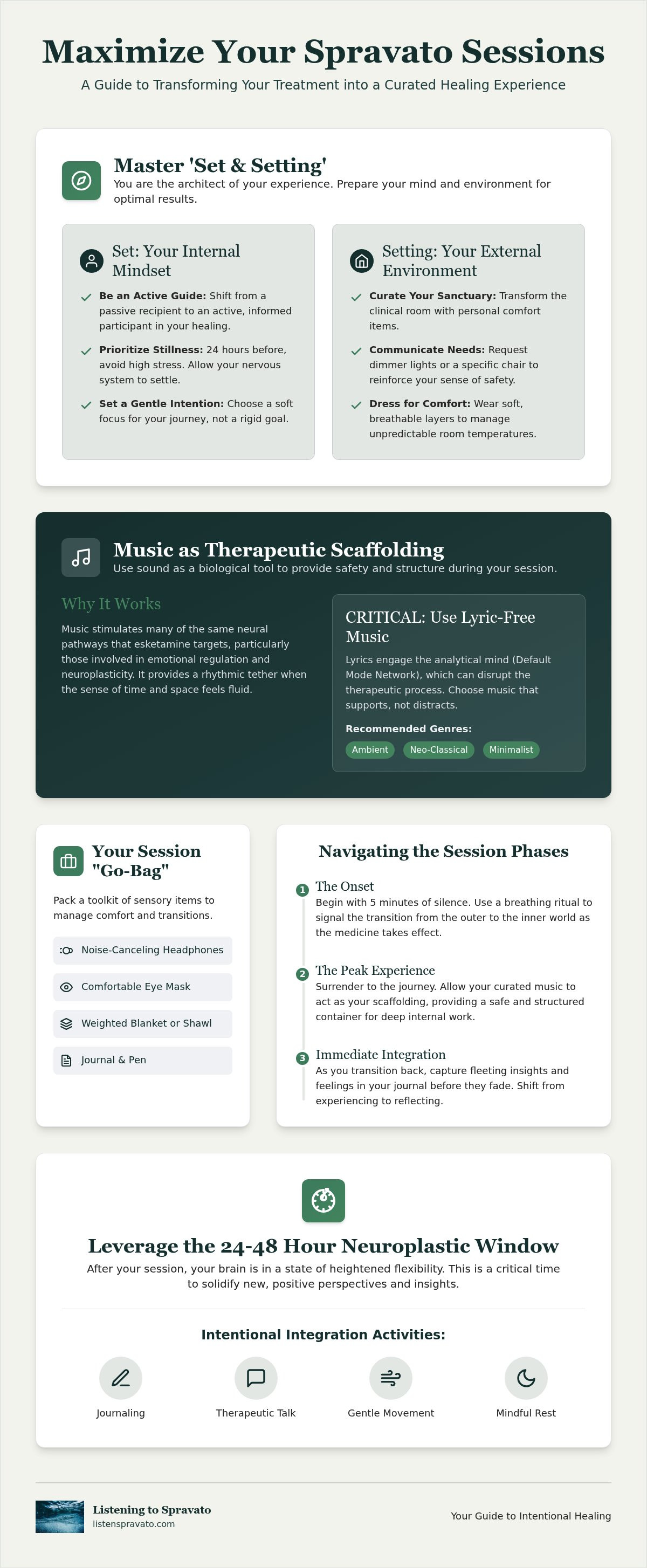
The efficacy of an esketamine session is not solely a product of chemistry. It is a delicate orchestration of two distinct but inseparable elements: "Set" and "Setting." While many clinical environments focus primarily on physical amenities, true optimization requires you to look inward. Understanding how to get the most from spravato begins with acknowledging that you are the primary architect of your experience. Your internal "set," or mindset, serves as the lens through which the medicine's effects are filtered. Conversely, the "setting" acts as the container that holds you during the period of dissociation.
Approaching your treatment as a "Learned Guide" rather than a passive recipient fundamentally changes the dynamic. This perspective involves studying the process and preparing with meticulous care. It replaces session-day anxiety with a sense of quiet confidence. In the 24 hours preceding your appointment, prioritize stillness. Avoid high-stress social interactions or demanding cognitive tasks. This period of intentionality allows your nervous system to settle, creating a fertile ground for the neuroplastic changes to take root. By arriving with a regulated nervous system, you provide the medicine with a stable foundation to do its work.
Mental Preparation and Intention Setting
An intention is a therapeutic anchor that provides a gentle direction for your journey without imposing the weight of a rigid goal. It's a soft focus rather than a destination. In the waiting room, practice a grounding exercise: identify three soft textures you can feel and three subtle sounds in the room. This shifts your focus from anticipatory thoughts to the present moment. If the clinical environment feels sterile or cold, don't hesitate to communicate your needs to the staff. Requesting a dimmer light or a specific chair placement is an act of agency that reinforces your sense of safety and dignity.
Physical Readiness for the 2-Hour Observation
Physical comfort is the foundation upon which psychological depth is built. To minimize the risk of nausea, follow the standard protocol of avoiding food for at least two hours and liquids for 30 minutes before your first spray. Wear layers of soft, breathable clothing. Clinical spaces are notoriously unpredictable in temperature, and being too cold can pull you out of a deep experience. Finally, establish a transition ritual. This might be a specific breathing pattern you use once you sit in the treatment chair, signaling to your brain that the transition from the outside world to the internal space has officially begun. Learning how to get the most from spravato is about these small, rhythmic choices that build a sense of profound purpose throughout the process.
Using Music as Therapeutic Scaffolding
Music is not merely a distraction during your esketamine session. It is a biological tool. In the context of esketamine therapy, we define music as "therapeutic scaffolding." Just as a physical scaffold supports a building during renovation, a curated auditory environment provides a safe container for the mind while the ego's boundaries soften. When dissociation occurs, the familiar structures of time and space can feel fluid. Music offers a rhythmic tether. It provides a sense of direction and safety, allowing you to surrender to the experience without feeling lost. Understanding this relationship is essential to learning how to get the most from spravato.
The neuroscience of sound reveals why this partnership is so effective. Research indicates that music stimulates many of the same neural pathways that esketamine targets, particularly those involved in emotional regulation and neuroplasticity. By engaging the auditory cortex and the limbic system, sound can help facilitate the "opening" of the brain's window for change. Transitioning from the clinical silence of the initial sprays to a curated auditory experience should be a mindful act. Start with five minutes of silence to allow the medicine to begin its ascent, then slowly introduce your audio to guide your descent into the peak experience.
Why Lyric-Free Music is Essential
Lyrics are the language of the analytical mind. When you hear words, your brain naturally engages in "narrative thinking," attempting to decode meaning and context. This activity can disrupt the neuroplastic window by tethering you to the Default Mode Network, the very system we aim to quiet during treatment. Therapeutic audio differs from background music because it lacks these linguistic demands. Focus on genres like ambient, neo-classical, or minimalist electronics. These styles offer a consistent structure that supports the medicine's flow without demanding your cognitive attention.
Creating Your Personal Spravato Playlist
Your playlist must be a minimum of 120 minutes to cover the full duration of the clinical observation period. This prevents the jarring experience of the music stopping while you are still in a deep state of dissociation. Avoid "favorite" songs or tracks that carry heavy emotional baggage or specific memories. You want to create a neutral, expansive space for new insights to emerge rather than revisiting old emotional loops. For a deeper dive into specific selections and genre-by-genre guides, you can explore our resource on music for spravato treatment.
A well-curated playlist is a key pillar in how to get the most from spravato sessions. If you find the task of curation daunting, the Listening to Spravato audiobook offers a sensory-rich way to internalize these protocols before your next appointment.
Optimizing Your Sensory Input and Comfort
Many patients find that the key to a transformative experience lies in the "Sensory Deprivation Paradox." While it might seem counterintuitive, reducing the amount of external information your brain has to process allows for a significant increase in internal depth. In a bright, clinical room, your mind remains tethered to the physical world. By intentionally dampening these external signals, you create space for the medicine's neuroplastic effects to flourish. Learning how to get the most from spravato requires you to curate this silence and darkness with the same precision a musician uses to tune an instrument.
Success begins with a dedicated "Go-Bag." This is your portable sanctuary, containing everything needed to maintain a state of "hands-off" immersion. Once the session begins, you shouldn't have to fumble for a charger or a mint. Address the physical discomforts early. The bitter taste of the medication can be a jarring distraction; keep ginger chews or sour hard candies within reach to neutralize the "Spravato taste" immediately after administration. Arrange your immediate vicinity so that your water, tissues, and devices are accessible without needing to open your eyes.
The Essential Spravato Comfort Checklist
- High-quality eye masks: A contoured mask that provides total darkness is a game-changer. Total light blockage encourages the brain to transition from external scanning to internal visualization.
- Noise-canceling headphones: These serve as a physical barrier against clinic sounds. They allow your curated soundtrack to remain the sole focus of your auditory field.
- Weighted blankets: The gentle, distributed pressure provides proprioceptive feedback to the nervous system. This "grounding" sensation can be incredibly comforting when the sense of the physical body begins to feel fluid or distant.
Managing Clinical Distractions
Clinical environments are often loud, with staff voices or equipment humming in the background. If your headphones aren't enough, consider a small white noise machine or simple foam earplugs underneath your headset. If your clinic permits it, a single drop of lavender or sandalwood oil on a tissue can provide a subtle, grounding scent. For a comprehensive list of environmental adjustments, refer to our guide on spravato treatment room setup. By meticulously managing these inputs, you move from being a victim of your environment to being the conductor of your own healing journey. This level of preparation is a core component of how to get the most from spravato and ensures your two-hour window is spent in meaningful reflection rather than environmental irritation.
Navigating the Three Phases of a Spravato Session
Understanding the temporal structure of your appointment is vital for anyone learning how to get the most from spravato. The two-hour observation period is not a stagnant block of time; it is a dynamic journey with three distinct physiological and psychological phases. By recognizing the transition points between the onset, the peak, and the return, you can align your sensory environment to match the shifting needs of your nervous system. This rhythmic alignment prevents the sterile feeling of the clinic from intruding on your internal experience. Navigating these shifts with intention is a hallmark of how to get the most from spravato.
The Onset: Managing the Transition
The first 20 minutes represent the "ascent." As you administer the nasal sprays, your focus should be on stabilizing your breath. Utilize a slow, four-count exhale to signal safety to your brain. It is natural to feel a sense of anticipation or slight lightheadedness during these initial moments. To better understand the physical nuances of this stage, you can read more about what does ketamine feel like. For this phase, select music that is exceptionally gentle and minimalist. High-energy tracks or complex compositions can feel abrasive as your sensory gates begin to open. Think of this music as the soft ramp that leads you into the deeper experience.
The Peak and the Return
Between 20 and 60 minutes, you typically enter the peak of dissociation. This is the phase of surrender. If you feel a sense of floating or a loss of bodily boundaries, lean into the structure of your music. It acts as a tether, reminding you that you are safe in your chair even as your mind explores new terrain. Stay calm by focusing on the consistency of the sound. As you hit the 60-minute mark, you begin the integration phase, gently landing back in reality. Your music should reflect this return by slowly transitioning from abstract ambient textures to more melodic, grounded sounds. This gradual reintroduction of melody helps you re-engage with your surroundings with a sense of grace. You may feel a "post-session glow" or significant fatigue; both are valid responses to the deep neurological work performed. To prepare your own auditory map for these phases, explore the guides in the Listening to Spravato print and digital editions.
Extending the Benefits Through Mindful Integration
The therapeutic journey does not conclude when you step out of the observation room. In many ways, the most vital work begins the moment you leave the clinic. This period is defined by a 24 to 48 hour neuroplastic window, a time when the brain remains uniquely receptive to new perspectives and structural changes. Understanding how to get the most from spravato involves treating this post-session time with the same reverence as the treatment itself. During this window, the biological "softness" of the brain allows for the consolidation of insights that might otherwise remain fleeting or abstract.
Capturing these insights requires an intentional method of reflection. You might choose the tactile act of journaling, which allows for a slow, structured translation of the experience into language. Alternatively, audio recording captures the raw emotional cadence of your voice before the analytical mind begins to filter the narrative. Over time, these records build a long-term therapeutic library. This collection of sound and reflection becomes a testament to your progress and a map for future sessions, ensuring the wisdom gained during dissociation isn't lost to the static of daily life.
The 24-Hour Integration Protocol
The hours following your treatment require a commitment to sensory hygiene. Limit digital noise, social media, and high-stimulation environments. These inputs can crowd out the subtle internal shifts you've just experienced. Instead, prioritize gentle movement or nature exposure. A quiet walk allows the nervous system to settle naturally into its new state. Re-listening to your session music during this period can trigger state-dependent memory. It acts as an auditory bridge, gently bringing back the sense of safety and clarity you felt during the peak of the experience. This practice is a practical application of how to get the most from spravato and its long-term effects.
Deepening the Journey with the Spravato Guide
Integration is rarely a linear process; it requires a supportive companion to help translate clinical science into personal meaning. The Listening to Spravato book serves as this essential guide, bridging the gap between your weekly appointments. While the print edition offers space for reflection and genre-specific music guides, the audiobook provides a sensory-rich way to internalize these protocols during your downtime. It allows you to prepare for your next session while resting in the post-treatment glow. To truly honor the work you've done in the clinic, consider how a structured approach to integration can solidify your growth. Purchase the full guide to maximize your healing journey and transform each session into a lasting foundation for change.
Orchestrating Your Path to Resonance
Transforming a clinical appointment into a profound therapeutic encounter is an act of intentional curation. By mastering the delicate interplay of set and setting, you move beyond the role of a passive observer. You become the active architect of your own healing. This guide has outlined the essential steps for using sound as a scaffold and sensory deprivation as a tool for depth. Understanding these nuances is the definitive way to learn how to get the most from spravato and its neuroplastic potential.
The journey toward resonance doesn't have to be navigated alone. The "Listening to Spravato" guide, authored by a conservatory-trained musician and fellow patient, provides the specialized structure needed to facilitate these experiences. With genre-by-genre music guides and protocols for every phase of treatment, it's available in print, digital, and audiobook formats to suit your personal needs. Get the most from your treatment with the 'Listening to Spravato' book and audiobook.
You possess the agency to reclaim your treatment window. Every session is a new opportunity to build a foundation of safety, purpose, and lasting change. Walk forward with the quiet confidence that you are prepared for the journey ahead.
Frequently Asked Questions
How can I reduce the anxiety I feel right before my Spravato session?
Reducing anticipatory anxiety begins with a transition ritual that signals safety to your nervous system. Arriving 15 minutes early allows you to settle into the physical space before the clinical process begins. Practice a simple grounding exercise, such as identifying three soft textures or focusing on rhythmic, four-count breathing. These small acts of mindful intentionality help regulate your heart rate and prepare your internal "set" for the upcoming experience.
Is it okay to listen to podcasts or audiobooks during the peak of the treatment?
It is generally best to avoid speech-based content like podcasts or audiobooks during the peak of your treatment. Spoken words engage the analytical parts of the brain, which can tether you to narrative thinking and disrupt the neuroplastic window. To learn how to get the most from spravato, prioritize lyric-free music that offers structural support without demanding cognitive processing. This allows your mind to surrender more fully to the medicine's restorative effects.
What should I do if I don't feel any dissociation during my session?
If you don't experience significant dissociation, it doesn't mean the treatment is ineffective. The antidepressant effects of esketamine are linked to neuroplasticity and the release of glutamate, which occur regardless of whether you feel "out of body." Focus on maintaining a supportive sensory environment and staying present with your breath. Your clinician can adjust your dosage protocol if needed, but remember that the biological work often happens beneath the surface of conscious awareness.
How much water should I drink before and after my Spravato appointment?
Adhering to hydration protocols is essential for your physical comfort during the session. Most clinics recommend stopping all liquids at least 30 minutes before your first nasal spray to minimize the risk of nausea or a full bladder during the observation period. Once the session concludes and your coordination returns, increase your water intake significantly. Proper hydration helps your body process the medication and can mitigate the fatigue felt during the integration phase.
Can I use my own music, or should I follow a specific Spravato playlist?
You can certainly use your own music, provided it follows the principles of therapeutic scaffolding. The key is to select tracks that are instrumental and lack strong emotional triggers or specific memories. Many patients find that using a curated Spravato playlist provides a more reliable structure for the two-hour window. If you choose your own, ensure the total length exceeds 120 minutes to prevent any jarring silence during your state of deep dissociation.
What is the best way to capture my thoughts after a session if I feel groggy?
Using a voice memo app is the most effective way to capture fleeting insights when you feel groggy or uncoordinated. Speaking your thoughts aloud requires less cognitive effort than physical writing and preserves the emotional resonance of your discoveries. These recordings serve as a vital bridge for your integration process. You can transcribe them later during your 24 to 48 hour neuroplastic window when your analytical clarity has fully returned to its baseline.
How do I explain my sensory needs (like dim lights) to the clinic staff?
Communicating your sensory needs to clinic staff is an essential act of agency that supports your safety and dignity. Briefly explain that dimming the lights or minimizing interruptions helps you stay focused on the internal therapeutic process. Most clinicians are supportive of these adjustments when they understand the goal is to enhance the session's efficacy. Frame your requests as part of your preparation to learn how to get the most from spravato through intentional curation.
Does the type of headphones I use really make a difference in the Spravato experience?
The quality and type of your headphones significantly impact the depth of your session. High-quality, noise-canceling headphones are preferred because they create a physical and auditory barrier against clinical distractions like staff voices or equipment hums. This isolation allows the curated music to function as the primary sensory input, guiding your experience without external interference. Over-ear models are often more comfortable for the full two-hour duration than in-ear buds, which can become physically irritating.


