

What if the most vital component of a successful esketamine session isn't found in a prescription bottle, but in the intentional curation of the space itself? You likely recognize that a sterile, fluorescent-lit environment often works against the very neuroplasticity you're trying to encourage. It's difficult for a patient to surrender to the dissociative experience when the hum of a cooling fan or the cold touch of a medical chair triggers a subtle "fight or flight" response. You want your patients to feel held, not just monitored.
This guide will show you how to master your spravato treatment room setup to transform a standard medical office into a sophisticated therapeutic sanctuary. By addressing the subtle interplay between biological states and sensory inputs, you can create a room that fosters profound psychological safety. We'll provide a comprehensive checklist for session preparation, covering everything from essential monitoring equipment to the delicate art of managing external distractions. You'll learn how to build a space where science meets art, ensuring every patient feels seen, safe, and supported throughout their journey toward healing.
Key Takeaways
- Understand why the physical environment acts as a clinical tool that directly influences the depth and quality of the therapeutic experience.
- Learn how to optimize sensory inputs, such as lighting and acoustics, to minimize external distractions during the dissociation phase.
- Discover the essential components of a spravato treatment room setup that balances clinical safety with deep ergonomic comfort.
- Access a practical checklist for session preparation, including hydration guidelines and the necessary items for a patient's "Go-Bag."
- Explore how curated soundscapes provide the final layer of therapeutic scaffolding, turning a clinical space into an internal sanctuary.
The Architecture of Healing: Why Spravato Room Setup Influences Outcomes
The concept of "set and setting" is often discussed in therapeutic circles, yet its application in a medical clinic requires a delicate, mindful touch. While "set" refers to the patient's internal mindset, "setting" is the physical environment you provide. In the context of Esketamine (Spravato), the room isn't merely a place where medicine is administered; it is a clinical tool that can either facilitate or hinder the healing process. A thoughtful spravato treatment room setup shifts the paradigm from a sterile observation period to a deeply facilitated experience.
When a patient enters a room that feels like a sanctuary rather than a laboratory, their nervous system begins to downregulate. This transition is essential. High levels of cortisol and adrenaline, often triggered by "white coat" anxiety, can create a psychological barrier to the treatment's effects. By intentionally designing the space, you reduce these triggers and foster a sense of dignity and purpose. The goal is to move beyond simple clinical monitoring toward a space that honors the patient's internal journey.
The Psychology of the Space
Healing requires a sense of "containment." This means the patient must feel entirely safe to let go of their usual cognitive defenses. Soft design choices, such as textured fabrics, ergonomic support, and warm color palettes, help dismantle the cold, detached atmosphere that many associate with medical trauma. There's a biological reason for this. When the body feels physically supported and secure, the brain is more receptive to the neuroplastic changes the medication aims to induce. Comfort isn't a luxury; it's a prerequisite for neural flexibility.
Environmental Impact on Dissociation
The dissociation phase is a sensitive state where the mind becomes highly attuned to sensory input. External noise, such as a ringing phone or a muffled conversation in the hallway, can pull a patient out of their internal journey, causing frustration or even mild distress. A stable, predictable spravato treatment room setup acts as a sensory anchor, allowing the patient to focus inward without the fear of being startled.
The transition from the busy waiting room to the treatment chair should be handled with grace. This movement marks the threshold between the outside world and the therapeutic space. By ensuring the room is prepared before the patient enters, you eliminate the frantic energy of last-minute adjustments. This quiet preparation signals to the patient that their experience is valued and that they are in capable, caring hands.
Sensory Scaffolding: Optimizing Sound, Light, and Touch
A well-considered spravato treatment room setup treats the senses as gateways to the subconscious. When you control the external environment, you provide a stable foundation for the internal journey to unfold. This sensory scaffolding isn't just about aesthetics; it's about reducing the cognitive load on a brain that is temporarily more sensitive to its surroundings. By meticulously curating what a patient hears, sees, and feels, you create a container that supports the therapeutic process.
The Audio Environment
High-quality, noise-canceling headphones are essential tools for any clinic. They serve as a vital barrier against the inevitable sounds of a working medical office, such as hallway footsteps or the hum of air conditioning. While wireless options offer freedom of movement, wired headphones often provide a more reliable connection in a professional setting where Bluetooth interference can occur. The choice of sound is equally vital. We recommend lyric-free, intentional soundscapes that act as a safety rail for the mind. Using the Listening to Spravato protocol helps ensure that the music facilitates rather than distracts, providing a structured emotional arc for the session.
Visual and Physical Anchors
Visual inputs should be minimized to encourage an inward focus. Harsh fluorescent lights can feel aggressive and clinical, potentially heightening anxiety. Dimmable LEDs or warm lamps allow you to create a soft, sunset-like glow that signals safety to the brain. Complement this with neutral wall colors and minimal decor to prevent visual overstimulation. These choices help the patient feel like they're in a living room rather than a laboratory.
Physical relaxation is the final piece of the sensory puzzle. A high-quality reclining chair is the focal point of the spravato treatment room setup, offering the necessary ergonomic support for a two-hour period. Many patients also find comfort in weighted blankets, which provide a grounding sense of "containment" through deep pressure stimulation. Eye masks are another simple yet powerful tool. By blocking out all external light, they help the patient transition from the physical room to their internal landscape. If you choose to incorporate scent, keep it subtle. A faint hint of lavender can be calming, but remember that some patients may experience nausea during treatment, so it's best to offer aromatherapy as an optional choice.
Essential Equipment: Balancing Clinical Safety with Patient Comfort
The FDA-mandated REMS program requires specific clinical protocols, including a mandatory two-hour observation period and regular monitoring of blood pressure and oxygen levels. However, these safety requirements don't have to define the aesthetic of the space. A sophisticated spravato treatment room setup integrates clinical necessity so seamlessly that the patient remains anchored in their internal experience rather than the medical process. The goal is to provide a safety net that feels supportive rather than restrictive.
The Patient Chair
The chair is the physical foundation of the session. We recommend a high-quality recliner capable of a near 180-degree recline, as many patients prefer a horizontal position during the height of dissociation. When selecting materials, prioritize antimicrobial, medical-grade fabrics that offer a "soft-touch" feel. This avoids the cold, clinical sensation of standard vinyl while meeting strict hygiene standards. Position the chair so the clinician has easy access to the patient's arm for blood pressure checks, but ensure there's enough space to maintain a sense of personal privacy and boundary.
Clinical Monitoring Integration
Checking vitals is a necessary interruption, but it shouldn't be a jarring one. Use silent blood pressure cuffs to prevent the aggressive whirring sound from breaking the patient's meditative state. If your monitor has a bright display, turn the screen away from the patient or dim the backlight. These small adjustments help maintain the trance and prevent the patient from feeling like a data point on a chart. A clean, professional aesthetic is maintained when cables are managed discreetly and monitoring equipment is tucked away when not in use.
Clutter often leads to a cluttered mind. Provide a dedicated, closed storage area for a patient's personal belongings, such as bags, coats, and silenced phones. This keeps the immediate treatment zone clear of distractions. Additionally, keep a comfort kit within reach for non-medical distress. This should include ginger chews for potential nausea, high-quality tissues, and a weighted lap pad. These items provide immediate tactile reassurance if the patient feels overwhelmed, reinforcing the sense that the room is a curated space designed for their total well-being.
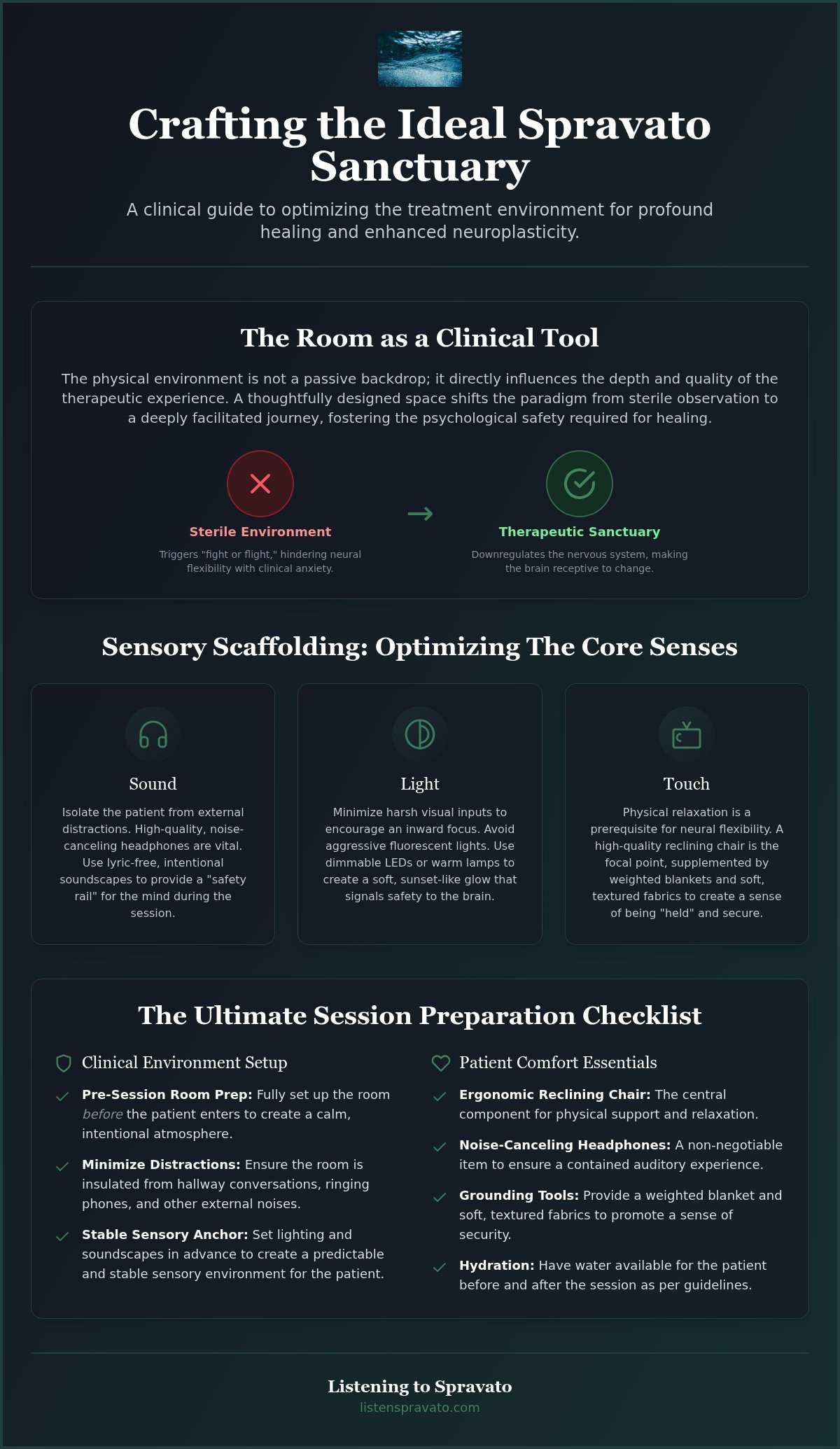
The Ultimate Esketamine Session Checklist: MOFU Preparation Guide
Preparation is the bridge between a clinical appointment and a transformative experience. While the physical spravato treatment room setup provides the foundation, the procedural flow ensures that both patient and clinician enter the session with a shared sense of calm. A structured checklist transforms the pre-dosing period into a mindful ritual, reducing last-minute friction and setting the stage for deep introspection. When every detail is accounted for, the patient feels held by the process rather than managed by a schedule.
The Patient Prep List
Success begins before the patient reaches the clinic. We recommend patients prepare a "Go-Bag" to ensure consistency across their treatment course. This bag should include a few essential items designed to support the sensory experience:
- Layered Clothing: Body temperature often shifts during the session. Loose, breathable layers allow for easy adjustment without disrupting the patient's focus.
- Smartphone Hygiene: Settings should be toggled to "Do Not Disturb" or "Airplane Mode." Ensure playlists are downloaded for offline use to prevent buffering or connection drops.
- Integration Tools: A dedicated journal and pen for capturing insights during the post-session "afterglow" when neuroplasticity is at its peak.
Patients should also adhere to standard fasting guidelines. This typically involves avoiding food for at least two hours and liquids for 30 minutes before dosing to minimize the risk of nausea. Hydration is encouraged earlier in the day, but it's best to pause just before the session starts to prevent unnecessary interruptions.
The Clinician Room Audit
A five-minute audit ensures the spravato treatment room setup is optimized before the first spray is administered. Clinicians should verify that the environment is physically and technologically ready to hold the patient's experience. This brief check prevents avoidable distractions that could disrupt the therapeutic window.
- Audio Verification: Test headphone battery levels and ensure the volume is set to a gentle, baseline level.
- Climate Control: Maintain the room temperature between 68 and 72°F. This range is generally considered optimal for resting patients who may be stationary for two hours.
- Lighting: Confirm dimmers are functional and visual distractions are cleared from the patient's immediate line of sight.
Careful preparation allows you to focus entirely on the patient's safety and emotional state. For a deeper look at managing these transitions, you can explore our guide on how to navigate the Spravato treatment experience. To ensure every session is supported by the right auditory scaffolding, consider including the Listening to Spravato guide as a permanent part of your preparation protocol.
The session doesn't end when the two-hour observation period concludes. The transition to the outside world should be paced with grace. Encourage patients to spend a few minutes in a quiet integration space before their ride arrives, allowing the nervous system to stabilize before they return to their daily routines.
Beyond the Physical: Integrating Music Protocols into Your Space
While a comfortable recliner and dim lighting provide the physical boundaries of a session, sound completes the environment by creating a necessary internal landscape. It acts as the final, invisible layer of a sophisticated spravato treatment room setup. Without intentional audio, the mind is left to navigate the dissociative state without a compass, which can lead to unnecessary anxiety or a sense of being untethered. Curated music provides a narrative structure, a steady pulse that reassures the patient they are moving through a purposeful process.
The Listening to Spravato protocol offers genre-by-genre guidance designed to mirror the biological arc of the esketamine experience. From the initial onset to the deep peak and the eventual return, the right soundscape functions as therapeutic scaffolding. It's perhaps the most cost-effective upgrade you can make to your treatment space. High-end medical equipment is vital for safety, but the right music is what often defines the patient's emotional memory of the session.
The Role of the Guide
Preparation isn't just about physical items; it's about shared understanding. Utilizing the Listening to Spravato book helps bridge the gap between clinical observation and the patient's internal journey. When both the clinician and the patient share a common language for the experience, the sense of isolation often felt in medical settings dissolves. This guide prepares the patient for the sensory shifts they will encounter, turning uncertainty into a curated exploration. For those who prefer a real-time companion, the audiobook edition can be used during the session itself to provide gentle, grounding guidance.
Final Session Tips
The "Coming Back" phase is a delicate transition that requires its own auditory signature. As the medication's primary effects begin to wane, the music should shift to reflect a sense of integration and return. Using specific music for Spravato treatment during this period helps anchor the insights gained during the peak. It provides a soft landing, ensuring the patient doesn't feel abruptly dropped back into their daily reality.
Encourage your patients to own their sensory space. While you provide the spravato treatment room setup, the patient is the ultimate curator of their experience. By offering them high-quality headphones and a choice of intentional playlists, you empower them to take an active role in their healing. This sense of agency is a powerful therapeutic tool in its own right, fostering a deeper connection to the treatment and improving long-term satisfaction.
Cultivating a Sanctuary for Transformation
Every choice you make within the four walls of your clinic serves as a subtle invitation for the patient to heal. By prioritizing sensory scaffolding and a methodical checklist, you transform the environment from a place of observation into a sanctuary of profound transformation. A thoughtful spravato treatment room setup ensures that clinical safety and personal dignity coexist. This allows the patient to focus entirely on their internal journey without the distraction of a cold, clinical atmosphere or external noise.
To provide the final layer of therapeutic support, Order the Listening to Spravato Guide to optimize your sessions. This resource is used by leading clinics worldwide and is available in Print, Digital, and Audiobook formats. The immersive audiobook edition, narrated by Justin Page, acts as a real-time session companion to anchor the patient through every phase of their experience. You have the power to curate a space where specialized science meets deep empathy, fostering a renewed sense of safety and hope for every individual who walks through your door.
Frequently Asked Questions
What is the best lighting for a Spravato treatment room?
Dimmable LED lighting is the gold standard for creating a healing environment. Harsh overhead fluorescent lights can trigger sensory overstimulation or clinical anxiety during the sensitive dissociation phase. By utilizing warm lamps or adjustable LEDs, you can create a soft, amber glow that encourages the nervous system to relax. This intentionality in your spravato treatment room setup signals to the brain that it is in a safe, non-threatening space.
Should I use speakers or headphones during an esketamine session?
High-quality, noise-canceling headphones are far superior to external speakers for esketamine sessions. Speakers often fail to block out common clinic distractions like hallway conversations or ringing phones, which can startle a patient. Headphones provide an immersive, private container that helps the patient stay anchored in their internal journey. High-quality audio equipment ensures that therapeutic soundscapes are delivered with the depth and clarity required for a meaningful experience.
What should I bring to my Spravato treatment session?
We recommend patients prepare a "Go-Bag" containing items that support sensory comfort and integration. This includes comfortable, layered clothing for temperature shifts, a smartphone with offline playlists, and high-quality noise-canceling headphones. An eye mask is also essential for blocking visual stimuli. Finally, bring the Listening to Spravato print edition or a journal to capture immediate insights during the post-session afterglow, a period when the mind is particularly open to new perspectives.
How can I make a clinical room feel more comfortable for patients?
Transitioning a clinical room into a sanctuary involves softening the environment's hard edges. Replace standard medical furniture with ergonomic recliners and provide weighted blankets for tactile grounding. Minimize visible medical clutter by storing supplies in closed cabinets. Integrating the Listening to Spravato audiobook as a session companion completes the atmosphere, moving the patient's focus away from the "white coat" effect and toward a sense of personal dignity and purpose.
Is it okay to talk to the patient during their Spravato session?
Minimize verbal interaction during the peak of the session to honor the patient's internal process. While you must perform mandatory vital checks, these should be done quietly and efficiently. Talking can pull a patient out of a deep dissociative state, potentially disrupting the therapeutic window. If a patient initiates conversation, respond with brief, grounding reassurance, but encourage them to return to their music and internal focus whenever they feel ready.
What kind of chair is best for ketamine therapy?
The ideal chair is a medical-grade recliner that allows for a near 180-degree horizontal position. Many patients find that lying flat helps them surrender more fully to the experience. Choose materials that are antimicrobial and easy to clean, yet have a soft-touch finish rather than a cold, plastic feel. Proper lumbar and neck support are essential for the two-hour observation period, ensuring physical discomfort doesn't become a distraction from the mental work.
Why is room setup important for esketamine outcomes?
Your spravato treatment room setup directly influences the patient's "set and setting," which are critical determinants of therapeutic success. A chaotic or sterile environment can increase treatment-related anxiety, causing the body to remain in a state of high cortisol. Conversely, a curated space fosters the psychological safety needed for neuroplasticity. When a patient feels physically and emotionally secure, they are more likely to engage deeply with the treatment's transformative potential.
How do I handle noise distractions in a busy clinic?
Effective noise management requires a multi-layered approach. Start with high-quality, over-ear noise-canceling headphones to serve as the primary barrier for the patient. You can also place white noise machines outside treatment room doors to mask hallway traffic and staff voices. Strategic scheduling can also help, ensuring that sessions occur during naturally quieter times of the day. These steps protect the sanctity of the room and maintain the patient's focus throughout the session.


