

Did you know that between 61% and 84% of patients encounter acute perceptual shifts during their treatment? This statistic often sparks a deep, quiet anxiety for those preparing for their first session. It’s natural to feel a sense of trepidation when facing the unknown, especially when that unknown involves a temporary departure from your typical sense of self. You might worry about losing control or feel confused about whether these sensations are helping or hindering your progress.
In this guide, we will explore spravato dissociation what to expect so you can approach your appointment with a sense of calm and readiness. We'll help you understand the internal shifts of esketamine and show you how to transform an intense experience into a structured therapeutic journey. You'll discover a framework for interpreting these sensations and learn how to use music as a professional scaffold to remain grounded. We'll walk through the timeline of the session, the sensory changes you may feel, and the practical tools needed to maintain your dignity and purpose throughout the process.
Key Takeaways
- Reframe dissociation from a side effect to a navigable therapeutic state by understanding the NMDA receptor's role in shifting your perception.
- Prepare for the sensory roadmap of spravato dissociation what to expect, including the heavy-limbed onset and the way time begins to feel expansive.
- Use lyric-free music as a supportive container to prevent cognitive narrative hijacking and maintain a sense of safety during the peak.
- Implement simple grounding tools like the "Grounding Breath" and eye masks to manage sensory over-stimulation and stay present.
- Capitalize on the post-session neuroplastic window to integrate your insights into a purposeful journey toward long-term relief.
Defining Spravato Dissociation: Beyond the Clinical Side Effect
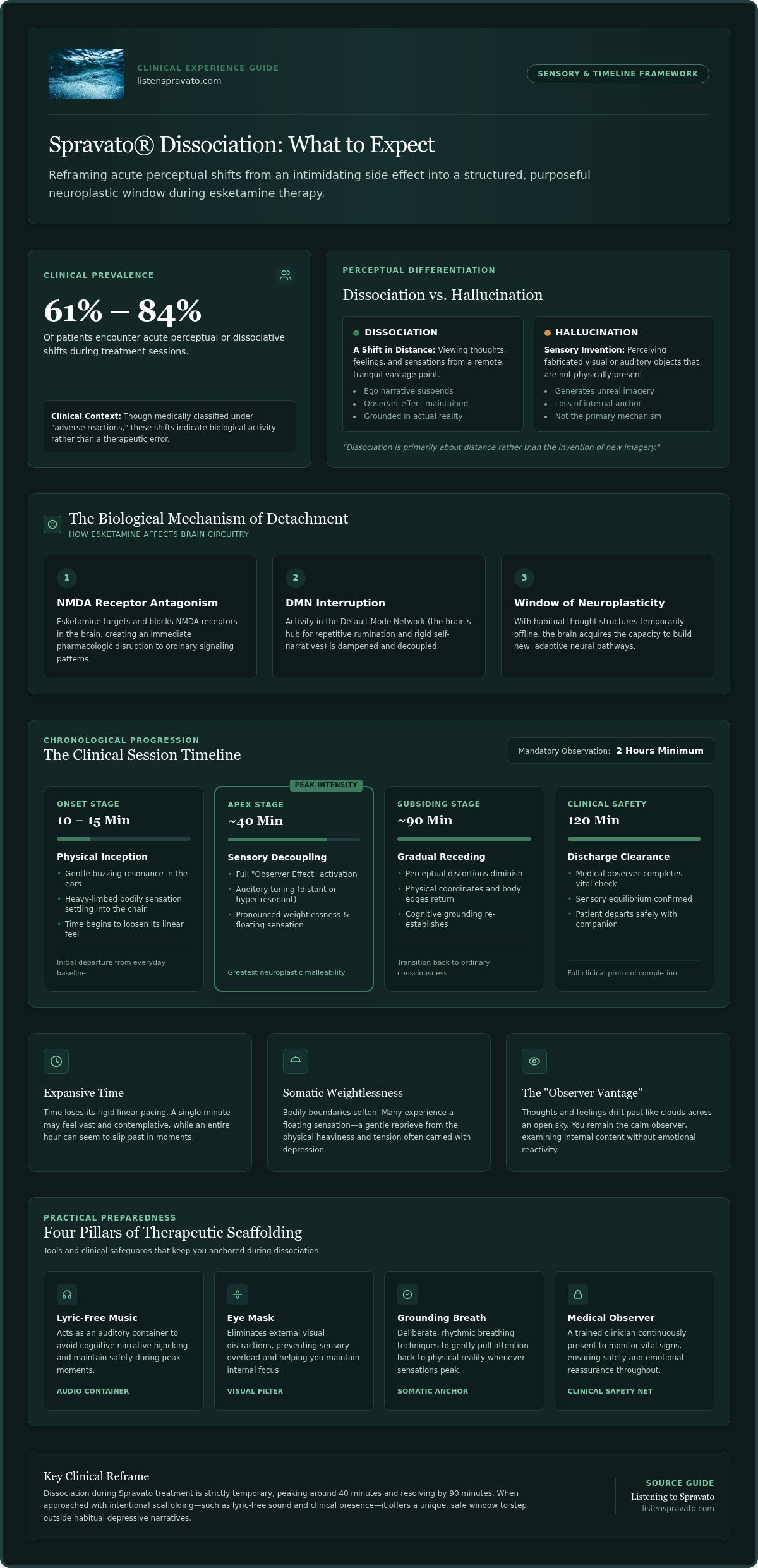
Clinical data indicates that between 61% and 84% of patients experience acute dissociative or perceptual changes during their treatment. This experience is often labeled as an "adverse reaction" in medical literature, which can understandably create a sense of anxiety. However, when exploring spravato dissociation what to expect, it's helpful to move beyond the clinical jargon. Dissociation is not a sign that something is going wrong. It's a temporary, intentional shift in the perception of time, self, and environment. Validating your apprehension is a necessary first step; it's natural to feel protective of your sense of reality. By reframing this state as a purposeful window of neuroplasticity, you can begin to see it as a tool rather than a hurdle.
The Biological Mechanism of Detachment
The sensation of "detachment" is rooted in the specific pharmacology of esketamine as an NMDA receptor antagonist. This process interrupts the activity of the Default Mode Network (DMN), which is the brain's center for self-reflection and habitual thought patterns. When the DMN is dampened, the usual boundaries of your internal narrative soften. This biological decoupling often manifests as a "floating" sensation, a feeling of being weightless or separate from the physical room. This state creates a unique opportunity for healing. Neuroplasticity is the brain's ability to forge new, more adaptive neural pathways while these old, rigid structures are temporarily offline.
Myth vs. Reality: Dissociation is Not a Hallucination
There's a significant difference between losing control and experiencing clinical detachment. Dissociation is primarily about "distance" rather than the invention of new imagery. Unlike a hallucination, where one might see objects that aren't present, dissociation feels more like viewing your life or your thoughts from a calm, remote vantage point. You remain the observer of your experience.
It's also vital to remember that this state is strictly temporary. Perceptual shifts typically reach their peak intensity at approximately 40 minutes post-dose and begin to resolve within 90 minutes. Throughout this window, you are never alone. A trained medical observer is always present to monitor your vitals and maintain a safe environment. Their presence acts as a steady anchor, ensuring that while your mind explores new perspectives, your physical safety remains uncompromised. This structure allows you to lean into the experience with dignity and quiet confidence.
The Sensory Roadmap: What Dissociation Actually Feels Like
Within 10 to 15 minutes of your dose, the environment may begin to feel subtly different. You might notice a gentle buzzing resonance in your ears or a heavy-limbed sensation as if your body is settling deeply into the chair. This is the beginning of the sensory roadmap. Understanding spravato dissociation what to expect involves recognizing these physical cues as the first steps toward a non-ordinary state of consciousness. Time often loses its linear quality. A single minute might feel expansive, while an hour passes in what seems like moments. This shift allows for a deep, contemplative space that is rarely accessible in the rush of daily life.
The "observer effect" is perhaps the most profound part of this journey. You may feel as though you are watching your thoughts drift by from a comfortable distance, like clouds moving across a vast sky. This detachment isn't a loss of self; rather, it's a suspension of the heavy, critical ego. Physical boundaries often soften, replaced by a sensation of weightlessness. For many, this feels like a quiet release from the physical density of depression. It's a reprieve that allows you to examine your internal world without the usual emotional friction.
Common Sensory Shifts During the Peak
During the peak, which usually occurs around 40 minutes post-administration, your senses become finely tuned. Sounds can feel either remarkably resonant or strangely distant. This is why many find a what ketamine feels like on a sensory level guide helpful for preparation. Visual input can become overwhelming, making an eye mask a vital tool for maintaining internal focus. As noted in the MedlinePlus guide to esketamine nasal spray, the required two-hour monitoring period ensures you are supported as these sensory distortions reach their height and then gently recede.
The Emotional Register of the Experience
The transition from initial anxiety to mindful intentionality is a hallmark of a well-prepared session. When you stop resisting the sensation of detachment, it often transforms into a profound relief. The "weight" of depressive thoughts feels less personal, providing a much-needed reprieve. Surrender is your most effective strategy here. By allowing the experience to unfold without judgment, you create space for healing. If you're looking for a way to navigate these moments with more grace, exploring the sensory guides and playlists authored by Justin Page can provide the scaffolding you need.
Music as Scaffolding: Supporting the Dissociative State
The dissociative window is not a void to be endured, but a space to be held. When considering spravato dissociation what to expect, it's essential to view the environment as an active participant in your healing. Music acts as a "container," providing a steady, invisible structure that keeps you safe while your typical sense of self is suspended. This concept of music as therapeutic scaffolding transforms a potentially disorienting experience into a guided journey. By aligning the rhythmic arc of a playlist with the medicine's pharmacokinetic curve, you create a reliable path through the peak and back to a grounded reality.
There is a rhythmic interplay between the medicine's onset and the music's structure. As the esketamine begins to interrupt the default mode network, the music should provide a gentle, unfolding texture. This prevents the mind from feeling "lost" in the silence of a clinical setting. Instead of a chaotic drift, the patient experiences a curated flow that mirrors the biological timing of the treatment, moving from the subtle heavy-limbed onset to the expansive 40-minute peak.
Why Instrumental Sound Matters
During dissociation, the brain's language centers are often less accessible. Attempting to process lyrics can create a "cognitive narrative hijacking," where your mind tries to tether itself to a story or emotion that isn't yours. This can be jarring and counterproductive. Instrumental sound eliminates this friction, allowing for a more authentic internal exploration. Consider these benefits of instrumental curation:
- Cognitive Ease: Lyric-free sound reduces the processing load on the brain.
- Emotional Resonance: Neoclassical and ambient genres provide a sense of depth without imposing a specific narrative.
- Atmospheric Stability: Subtle textures help maintain a consistent "set and setting" throughout the session.
A steady, predictable beat serves as a vital anchor that keeps the mind from drifting into distress.
Curation as a Safety Tool
Intentional curation is a primary defense against "thought loops" or sudden anxiety spikes. A well-designed session utilizes the protocols found in Listening to Spravato to ensure the music evolves alongside your internal state. Gentle, grounding textures during the onset transition into more expansive, resonant soundscapes at the peak. This methodical pacing prevents the sensory overwhelm that can occur in a silent clinical room. Ultimately, the sound becomes the bridge that facilitates your return to the present moment, ensuring you emerge from the session feeling integrated rather than fragmented. This level of meticulous curation respects the seriousness of the journey and provides the dignity every patient deserves.
Navigating the Peak: Practical Strategies for Patients
When the experience reaches its zenith, usually around 40 minutes post-administration, having a toolkit of practical responses is essential. Understanding spravato dissociation what to expect means preparing for the moment when the "observer effect" is strongest. If the sensations feel particularly intense, use the Grounding Breath. This is a simple physiological tool: a long, slow exhale that signals safety to your nervous system. By focusing on the breath, you maintain a tether to your physical presence without fighting the psychological expansion. It’s a way of saying "I am here" while your mind explores new horizons.
An eye mask is another indispensable tool for navigating this peak. By eliminating external light, you reduce the brain's need to process visual data, which can become distorted or overwhelming during the peak. This allows you to lean more fully into the internal resonance of the experience. Adopt the "Observer Mindset" by reminding yourself that these shifts are evidence of the medicine working. If you feel distressed, remember that your provider is there. A simple word or a hand raised can alert them to your need for a grounding presence, ensuring you never feel abandoned in the experience.
Setting and Atmosphere: The Room Setup
Your environment should reflect a sense of quiet confidence. A room that feels cold or clinical can heighten anxiety, whereas one designed for comfort facilitates surrender. Use blankets to manage the transient temperature shifts that sometimes occur, and ensure you are in a fully reclining position. To better understand how to navigate the Spravato treatment experience, consider how your physical "nest" supports your psychological safety. A well-prepared space acts as a silent companion, holding you steady as the medicine does its work.
Managing the 'Coming Back' Phase
As the 90-minute mark approaches, the intensity of the dissociation begins to recede. This is the "coming back" phase, a delicate period of transition into integration. Resist the urge to check your phone or engage in complex conversation immediately. Your brain is in a state of heightened neuroplasticity, and rushing back to digital noise can be jarring. Allow the music to fade slowly, and move your body with mindful intentionality. These gentle transitions preserve the insights gained during the peak and respect the dignity of the process. For a comprehensive guide on mastering these session techniques, you can order the Listening to Spravato guidebook and playlists to prepare for your next treatment.
Integration: Transforming the Experience into Healing
Integration is the quiet work of making sense of the dissociative window once the physical sensations have subsided. While clinical protocols often focus on the two-hour monitoring period, the therapeutic opportunity extends far beyond the office doors. This is the stage where you translate the expansive, detached perspectives of the session into meaningful changes in your daily life. Understanding spravato dissociation what to expect involves preparing for this "afterglow," a period defined by heightened neuroplasticity and emotional flexibility. Research indicates that the 24 to 72 hours following a session are critical; this is when the brain is most receptive to forging new pathways and breaking old, rigid thought patterns.
To capture these fleeting insights, many patients utilize "session stories" or structured journaling. By writing down the imagery, sounds, or emotional shifts you encountered, you preserve the dignity of the experience. This practice prevents the insights from fading into a dreamlike haze. It turns a transient state of consciousness into a durable foundation for recovery. When you approach integration with mindful intentionality, the session stops being something that simply happened to you and becomes something you actively facilitated.
The Power of a Guided Journey
There's a vast difference between an accidental experience and a curated one. Without a framework, the dissociative state can feel chaotic or confusing. The Listening to Spravato® guidebook provides the essential structure needed to navigate each session with quiet confidence. For those who prefer a more immersive approach, the Listening to Spravato® audiobook is uniquely suited for sound-medicine healing. It allows you to absorb the protocols through the very medium, sound, that serves as your therapeutic scaffolding. This curated approach ensures that every sensory detail, from the first spray to the final grounding breath, is intentional and supportive.
Taking the Next Step
Your journey with esketamine is a process of moving from fear to informed preparation. You don't have to be a passive recipient of these internal shifts. Instead, you can own your sensory experience by utilizing the right tools and resources. Beyond the core texts, you can access curated Spravato® Playlists and genre guides designed to match the medicine’s unique rhythm. These resources are crafted to help you remain grounded and purposeful. By embracing this preparation, you transform the unknown into a well-mapped path toward healing. You are the architect of your own recovery; the right soundscape is simply the bridge that helps you cross.
Empowering Your Journey Toward Relief
You now have a clearer understanding of spravato dissociation what to expect and the tools required to navigate this non-ordinary state with quiet confidence. By reframing these perceptual shifts as a window for neuroplasticity rather than a side effect to endure, you transform your treatment into an active, healing process. Remember that your sensory environment, especially the acoustic architecture of your session, serves as a vital anchor. It's the difference between a chaotic experience and a curated journey defined by mindful intentionality.
Justin Page, a conservatory-trained musician and fellow patient, developed these protocols to provide the dignity and structure every individual deserves. His work offers genre-by-genre music protocols for every phase of your treatment, supported by a global clinical resource blog. Discover the 'Listening to Spravato' Guide on Amazon to master your session integration today. You don't have to walk this path alone; informed preparation is the bridge to lasting change.
Frequently Asked Questions
Is dissociation during Spravato scary or painful?
Dissociation is not physically painful, though the sensation of detachment can feel unfamiliar at first. For many, this state provides a profound sense of relief from heavy emotional burdens. Preparing your sensory environment helps shift the experience from a source of fear to a tool for healing. Using the right scaffolding ensures you feel held rather than lost, allowing you to approach the session with quiet confidence.
How long does the dissociative feeling last in a typical session?
Perceptual shifts generally begin within 15 minutes of administration and reach their peak intensity at approximately 40 minutes. Most patients find that these sensations resolve within 90 to 120 minutes. Clinical monitoring lasts two hours to ensure you are fully grounded before discharge. Understanding this timeline helps you manage spravato dissociation what to expect with a sense of calm and predictability throughout the appointment.
Can I stop the dissociation if it feels too intense?
You cannot physically stop the medication's effect once it's administered, but you can navigate its intensity with practical tools. Simple physiological techniques, such as the Grounding Breath or adjusting your eye mask, help you stay present. Communicating with your healthcare observer provides an immediate anchor. Remember that the experience is temporary and medically supervised, allowing you to lean into the process with a sense of safety and dignity.
What should I do if I start to feel anxious during the peak?
Focus on your auditory environment and your breath to regain a sense of control. Instrumental music acts as a container, providing a steady structure when internal thoughts feel expansive. Long, slow exhales signal safety to your nervous system. If the peak feels overwhelming, remind yourself that the medicine is working and your provider is nearby. This mindful intentionality helps you move through the peak with grace.
Will I remember what happened during the dissociative state?
Most patients retain a clear memory of their thoughts and sensations, though time perception may be distorted. These session stories are valuable pieces of your recovery journey. Journaling immediately after the 120-minute monitoring period helps preserve these insights. Capturing these moments allows you to integrate the experience into your long-term healing plan with greater clarity and purpose, turning a transient state into a durable foundation.
Is it normal to feel weird or tired the day after dissociation?
Feeling fatigued or dreamy the following day is a common part of the recovery process. Your brain has undergone a significant neurobiological shift, and it needs time to rest and integrate. Prioritize a restful night's sleep and avoid demanding tasks. This afterglow period is actually a prime window for neuroplasticity, where gentle reflection and somatic grounding can lead to deeper therapeutic breakthroughs and lasting emotional relief.
Should I try to think about my problems while I am dissociating?
It is often more effective to let thoughts drift by without forcing a specific mental agenda. The dissociative state allows for cognitive defusion, where you can observe your life from a remote, compassionate vantage point. If a problem arises, look at it with curiosity rather than struggle. Let the music guide your flow, allowing insights to emerge naturally rather than through intense or forced mental effort.
Can my choice of music prevent a bad experience with dissociation?
While no tool can guarantee a specific outcome, lyric-free music significantly reduces the risk of distress. Lyrics can tether the brain to external narratives, causing confusion during the peak. Using the genre-specific protocols found in Listening to Spravato® provides a reliable scaffold. This intentional curation helps prevent thought loops and ensures the experience feels like a guided journey rather than a random or accidental event.


