

What if the very sensation you fear most, the feeling of losing your familiar footing in the world, is actually the quiet doorway to the healing you've been seeking? It's natural to feel a sense of trepidation when facing a treatment as unique as esketamine. Many patients arrive at this crossroad after years of trying everything else, carrying the heavy weight of spravato common fears like the worry of a sudden blood pressure spike or the unsettling nature of a dissociative state. You aren't alone in wondering if your mind will feel safe once the room begins to shift and the edges of reality soften.
You can transform this localized anxiety into a structured, therapeutic journey by shifting your perspective from a passive observer to an intentional participant. This article provides the practical tools you need to reclaim your sense of agency during the 90-minute session. We'll explore how to prepare your internal environment and use sound as a vital grounding anchor to navigate the unknown with dignity and grace. Validation is the first step toward safety; intentional preparation is the second. By the end of this guide, you'll have a roadmap to turn a daunting clinical experience into a resonant path for growth.
Key Takeaways
- Understand that encountering spravato common fears is an expected part of the journey toward relief, serving as a signal that you are ready to engage with a new form of healing.
- Reframe dissociation as a temporary, neuroplastic state that allows the mind to explore new pathways beyond habitual or restrictive thought patterns.
- Learn how to establish a "safe container" through clinical support and sensory preparation; this helps you manage the inherent anxiety of the 90-minute session with quiet confidence.
- Discover how music acts as a structural anchor, providing a rhythmic guide that prevents the mind from drifting into uncomfortable or fearful loops during the peak of treatment.
- Explore practical methods for session preparation found in the "Listening to Spravato" guide to transform clinical uncertainty into a mindful, intentional process.
Understanding Spravato Common Fears: Validating the Patient Experience
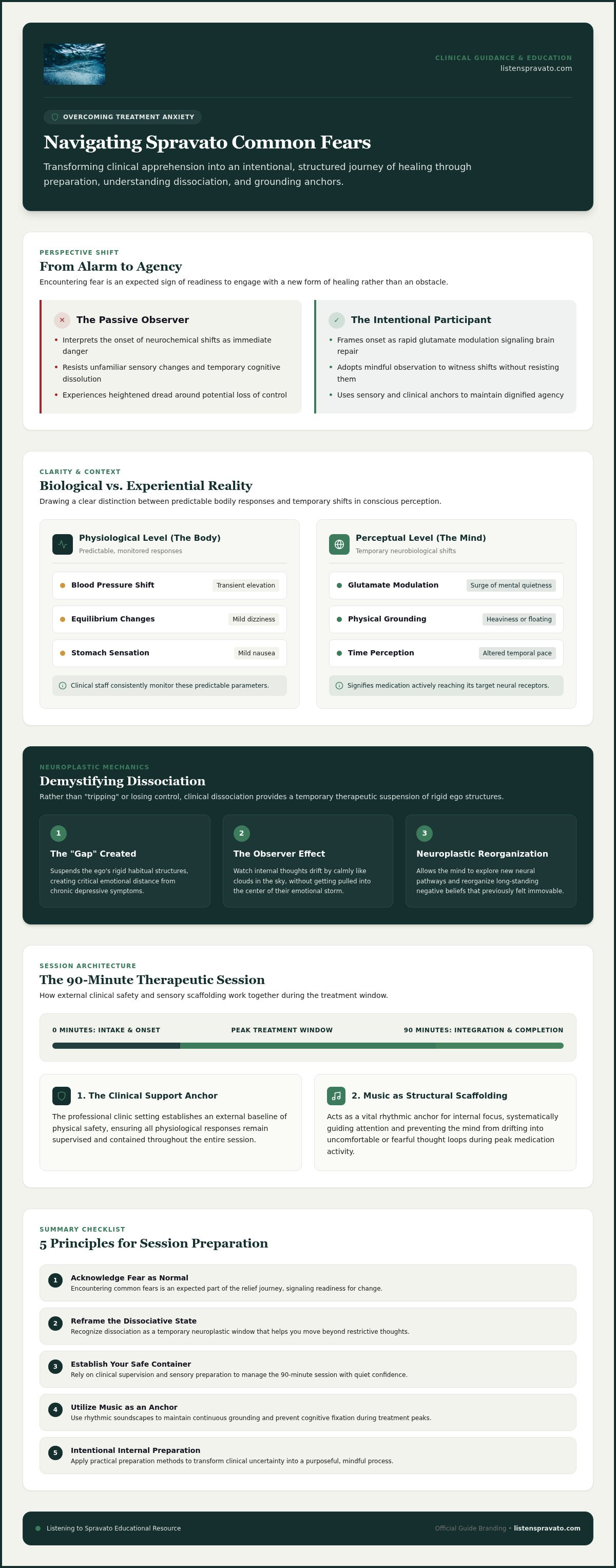
Fear is a natural guardian. When you've lived with treatment-resistant depression for years, the prospect of a new, potent intervention naturally triggers the brain's alarm system. These spravato common fears aren't just obstacles; they're evidence of your mind trying to keep you safe in a situation it doesn't yet understand. For many, the fear of the unknown is the single greatest barrier to starting this path. It's the worry that the dissociative state will be too much to handle or that the treatment simply won't work after so many previous failures. Acknowledging this dread is the first step toward moving through it. The clinical setting serves as your external anchor, providing a baseline of physical safety that allows your internal experience to unfold without genuine peril.
The Biological vs. The Experiential
It's helpful to draw a clear line between what the body feels and what the mind perceives. On a physiological level, esketamine (Spravato) can cause transient increases in blood pressure, dizziness, or mild nausea. These are predictable, short-lived responses to the medication that clinical staff monitor closely. The experiential shifts, such as changes in how you perceive time or a sudden sense of self-awareness, are different. They represent a temporary departure from your standard waking consciousness. When you understand that a sense of heaviness or floating is simply a sign of the medication reaching its target receptors, the fear of that sensation begins to dissolve. You aren't losing your mind; you're witnessing a neurobiological shift in real time.
Why "Scary" is Often Just "Unfamiliar"
The onset of treatment involves rapid glutamate modulation, which can feel like a sudden surge of mental energy or a profound quietness. For a brain accustomed to the heavy, static fog of depression, this sudden change can be misinterpreted as danger. Normalizing this onset phase is essential for a peaceful session. Instead of resisting the unfamiliar, we can frame it as the brain finally receiving the signal it needs to begin repair. Transitioning from a state of resistance to one of mindful observation allows you to witness these shifts without being consumed by them. This intentionality is the most effective way to quiet spravato common fears before they take root. Anxiety is a valid response to novelty, but with the right context, it doesn't have to be the defining feature of your journey.
Demystifying Dissociation: Moving Beyond the Fear of "Tripping"
Dissociation is often the most misunderstood aspect of esketamine therapy. While popular culture might label it as "tripping," the clinical reality is far more intentional and supportive. Unlike recreational experiences, a Spravato session occurs in a controlled environment where the goal isn't escape, but rather a temporary suspension of the ego's rigid structures. This shift is a key reason why patients can finally move past the spravato common fears that have kept them stuck in traditional treatment cycles. By creating a distance between yourself and your symptoms, you gain the perspective needed to reorganize your emotional landscape. You aren't losing yourself; you're simply stepping back to see the whole picture.
What Dissociation Actually Feels Like
Patients often describe a variety of sensory shifts that can feel strange but aren't inherently dangerous. You might feel a gentle heaviness in your limbs, as if you're deeply rooted in your chair, or conversely, a sensation of floating that softens the boundaries of the room. This is the "observer effect" in action. It's a state where you can watch your thoughts drift by like clouds without being pulled into their storm. Dissociation is a temporary thinning of the veil between the conscious and subconscious. Within this space, the "noise" of everyday anxiety recedes, allowing a quieter, more profound internal resonance to emerge. It's a unique sensory experience that, once understood, becomes a tool for discovery rather than a source of dread.
The Therapeutic Value of the "Gap"
This "gap" in normal consciousness is where the real work of neuroplasticity happens. When the ego steps aside, the brain can begin to reframe long-standing negative beliefs that previously felt immovable. Clinicians often view mild dissociation as a positive indicator of efficacy because it suggests the medication is successfully reaching the neural pathways responsible for mood regulation. If the intensity increases during the peak of your session, remember that it's a wave that will eventually break. You can manage these moments by focusing on your breath or leaning into the structured support of a curated audio guide designed for this specific journey. By embracing this temporary disconnection, you're actually building the bridge toward a deeper, more resilient emotional reconnection with yourself and the world around you. This intentional approach transforms spravato common fears into a sense of purposeful exploration.
Addressing the #1 Fear: Losing Control During Your Session
The sensation of "letting go" is perhaps the most profound challenge in any therapeutic process. For those exploring esketamine, the fear of losing control sits at the very top of the list of spravato common fears. It's a natural instinct to want to remain the captain of your own ship. However, the healing power of this treatment often lies in the paradox of surrender. By choosing to step into a passive state, you aren't actually losing your agency. Instead, you're intentionally delegating the management of your physical world to others so your mind can do its necessary work. This is a courageous act of trust, not a sign of helplessness.
Think of the clinical setting as a "Safe Container." This isn't just a room; it's a meticulously designed environment where every variable is held by professionals. When you feel the edges of your control slipping, remember that your physical safety is already secured. You have clinicians monitoring your vitals and a structured process guiding every minute. If you ever feel overwhelmed, a simple word or gesture to your provider is all it takes to reconnect. They are your external anchor, allowing you to drift safely within the therapeutic experience while remaining tethered to the present moment.
Setting Your Intentions
Preparation begins before the first dose. Establishing a pre-session "mantra" or focus point can provide a mental lighthouse to return to if the session feels intense. Simple phrases like "I am safe" or "I am open to this" act as grounding points that resonate through the experience. This is the essence of "Set and Setting." While the clinic provides the physical setting, you provide the internal mindset. Distinguishing between the medicine's effects and your emotional reactions helps you stay centered. The medicine provides the shift; you provide the observation. By setting a clear intention, you maintain your dignity and purpose even when the experience feels vast or unfamiliar.
The Role of the Sitter or Clinician
The presence of a clinical sitter is a fundamental component of your safety. Their role is to hold the space, ensuring you're comfortable and monitored throughout the mandatory 2-hour observation window. This window isn't just a regulatory requirement; it's a period of deep physiological and psychological transition. Trusting this professional environment allows you to release the burden of vigilance. For a deeper look at what to expect during this time, you can learn how to navigate the Spravato treatment experience from a patient's perspective. Understanding the structure of the session is the best way to quiet the noise of spravato common fears and reclaim your sense of agency.
Building Your Scaffolding: How Music Quiets Spravato Anxiety
Music serves as more than just a background element during your session; it acts as vital therapeutic scaffolding. When you encounter spravato common fears, your mind often searches for a familiar structure to cling to. Without a guided auditory path, the brain can begin to loop on anxious thoughts, replaying worries about safety or control. A carefully selected playlist provides the rhythmic consistency needed to break these cycles. It offers a predictable, evolving framework that supports your consciousness while the medication facilitates neuroplasticity. This is why sound is not an accessory, but a core component of a successful session.
The science of sound reveals that lyric-free music is essential for esketamine therapy. Language-based songs engage the analytical parts of the brain, potentially pulling you out of the abstract, healing state you're trying to reach. By choosing instrumental textures, you allow your mind to expand without being tethered to specific meanings or stories. To truly create a safe container, you should also curate your physical environment. Using an eye mask, a weighted blanket, and noise-canceling headphones helps minimize external clinical distractions, allowing the music to become your entire world.
The Anatomy of a Spravato Playlist
A well-structured session requires music that mirrors the biological stages of the treatment. During the onset, you need calm, inviting rhythms that ground your nervous system as the medication begins to take effect. As you move into the peak, the music should shift toward immersive, expansive textures that feel supportive rather than challenging. You can explore a deeper breakdown of how to choose music for spravato treatment to ensure your auditory environment is optimized for healing. This intentional curation ensures the music moves with you, providing a sense of momentum and safety as the experience unfolds.
Practical Session Tips for Maximum Comfort
One of the most effective ways to manage intensity is through the "breath-sound" connection. By consciously syncing your breathing to the tempo of the music, you can regulate your autonomic nervous system and stay centered. Music for Spravato is a reliable tether that guides the patient back to a state of calm. If you find yourself distracted by clinic noises or distant conversations, high-quality audio becomes your shield. It preserves the sanctity of your internal journey, ensuring that your focus remains on the process of recovery. To start building your own supportive auditory environment, you can access curated Spravato playlists designed specifically for this therapeutic journey.
Preparation is the Antidote: The "Listening to Spravato" Guide
Preparation isn't just about showing up for an appointment; it's about equipping yourself with a map for a territory you've never visited. The "Listening to Spravato" guide serves as this essential map. Authored by Justin Page, a conservatory-trained musician who has walked this path himself, the guide transforms clinical theory into a lived reality. By sharing his personal journey, Page provides a blueprint that helps new patients navigate their own spravato common fears with a sense of purpose. This isn't just about surviving the session; it's about thriving within it. It's about turning a clinical necessity into a resonant experience of self-discovery.
The core of this approach is a genre-by-genre music protocol that aligns with the neurobiological phases of esketamine treatment. This structure prevents the mind from drifting into the "looping" thoughts that often characterize the early stages of treatment. Instead of feeling unanchored, you follow a rhythmic path that provides constant, reliable support. This transition from uncertainty to intentionality is what moves a patient from a state of apprehension to one of confident healing. When you have a plan, the unknown becomes a space for potential rather than a source of dread.
A Patient-to-Patient Perspective
While clinicians provide the necessary medical framework, there's a distinct value in peer-led wisdom. A doctor can explain the pharmacology, but a fellow patient can describe the exact resonance of a cello note during the peak of a session. This perspective addresses the subtle nuances that a clinical manual might overlook, such as how to manage the sensory shifts in a bright clinic or how to breathe through a moment of intensity. The listening to spravato book bridges this gap, offering a supportive companion for your journey. It validates your experience while providing the structure needed to feel truly safe and seen.
Choosing Your Guide Format
The guide is available in multiple formats to suit your specific preparation style. The Listening to Spravato® (Audiobook) is particularly effective for those who want a sensory-aligned experience. Listening to the guide allows you to begin your auditory grounding before you even step into the clinic, familiarizing your nervous system with a calm, authoritative voice. For those who prefer a tangible reference, the Listening to Spravato® (Print Edition) or the Listening to Spravato® (Digital/Kindle Edition) offer a detailed resource that both patients and clinicians can use to refine their session protocols.
Whatever format you choose, the message remains the same. You aren't alone in your journey. These spravato common fears are a natural response to a profound experience, but they don't have to define your treatment. You don't have to navigate this unknown territory without a map. With the right tools and a structured approach, you can step into your session with dignity, curiosity, and a deep sense of calm.
Embracing the Path to Resonant Recovery
Facing your journey with esketamine requires a shift from apprehension to intentionality. You've learned that dissociation isn't a loss of self but a window for neuroplasticity. By building a "safe container" with clinical support and auditory scaffolding, you can navigate spravato common fears with a sense of quiet confidence. Music isn't just background noise; it's the tether that keeps you grounded when the edges of the room begin to soften. This structured approach, rooted in both science and art, allows you to reclaim your agency throughout the process.
Preparation is the bridge between uncertainty and healing. Order the Listening to Spravato guide today to prepare your mind and spirit for healing. Written by a conservatory-trained musician and patient, this guide includes curated playlist protocols designed to support your session. You can find it on Amazon, Walmart, and Kobo. You have the tools to transform a clinical treatment into a deeply personal journey of restoration. Your path to clarity is already unfolding, and you don't have to walk it alone.
Frequently Asked Questions
Is Spravato scary for the first-time patient?
It's natural to feel trepidation before your first session, but the experience is designed to be supportive rather than overwhelming. Most patients find that their initial anxiety dissolves once they settle into the clinical environment and the medication begins its work. By approaching the session with mindful intentionality and a structured plan, you can transform fear into a sense of quiet curiosity. Clinical monitoring ensures your physical safety remains the priority throughout the process.
What happens if I have a bad trip on Spravato?
While the term "bad trip" is common in recreational contexts, clinical esketamine sessions are carefully monitored to manage intensity. If you encounter challenging emotions or vivid imagery, remember that these are transient effects of the medication. You aren't alone; your clinical team is there to ground you. Using music as a therapeutic anchor can also prevent the mind from looping on difficult thoughts, providing a reliable path back to a state of calm and safety.
Can I stop the effects of Spravato if I feel too out of control?
You cannot immediately "stop" the pharmacological effects of esketamine once administered, but you can manage how you experience them. The peak intensity typically lasts about 40 to 60 minutes before gradually tapering off. If you feel out of control, communicating with your provider or focusing on a grounding anchor, like a curated playlist, can help you regain a sense of agency. Your clinical team has protocols to support you if the experience feels too intense.
How long does the dissociative feeling last during a session?
Dissociative effects are usually most prominent during the first hour after administration. While the entire observation period lasts two hours, the most intense sensory shifts typically begin to fade after 60 to 90 minutes. By the end of the session, most patients feel a return to their normal waking consciousness, though a sense of relaxation or "afterglow" may persist. This predictable timeline helps reduce spravato common fears by providing a clear beginning and end to the experience.
Will I say something embarrassing while under the influence of esketamine?
Most patients remain quiet and internally focused during their session, often wearing eye masks and headphones. While esketamine can lower inhibitions, it's rare for patients to speak extensively or say things they'll regret later. The experience is deeply personal and usually takes place in a private space where your dignity is respected. Your clinical team is trained to maintain a professional environment, ensuring you feel safe and protected throughout your 90-minute journey.
How does music help with Spravato common fears?
Music acts as a vital form of therapeutic scaffolding that provides structure to an otherwise fluid experience. It prevents the mind from drifting into anxious "loops" by offering a predictable rhythmic path. For many navigating spravato common fears, a curated playlist serves as a reliable tether to reality. By choosing lyric-free music that matches the phases of the treatment, you create a safe internal environment that supports neuroplasticity and emotional regulation without the distraction of language.
What should I bring to my first Spravato appointment to feel safe?
Creating a "safe container" involves bringing items that enhance your sensory comfort. We recommend a high-quality eye mask to block out clinical lights and noise-canceling headphones for your music. A weighted or familiar blanket can provide physical grounding as the medication takes effect. Bringing a copy of the Listening to Spravato® (Print Edition) or preparing with the Listening to Spravato® (Audiobook) can provide the peer-led wisdom needed to feel fully prepared and empowered.


